From a Boat Chettan’s Story to a Model Government School
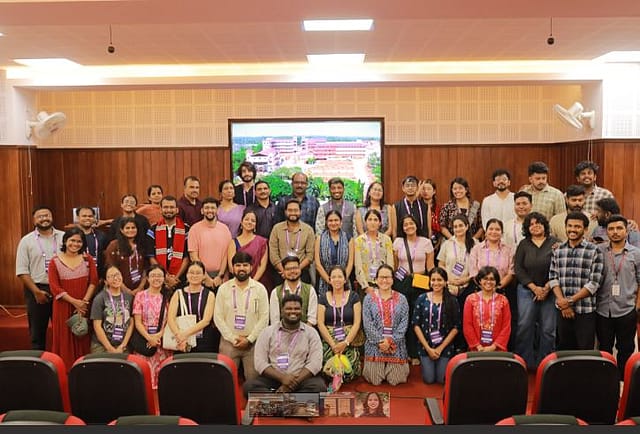
Recently, as a part of the ‘See Kerala, Know Kerala’ programme, I was in Kumarakom to understand what responsible tourism in the state looks like on the ground. While moving quietly through the backwaters, in the middle of that serene landscape, a simple conversation with the boat chettan (Brother in Malayalam) steering us became the most powerful takeaway of my journey. Out of curiosity, I asked him about his life, his earnings, his family, etc. He told me that he has two sons, the elder works in Italy, and the younger is employed with a tech company in Bengaluru. For a brief moment, I found myself surprised, perhaps even confronting an unconscious bias, at the idea that a boatman’s son could be working in Italy. What struck me even more was what followed: both of them had studied entirely in government schools in Kerala before pursuing higher education within the state and moving on to these opportunities.
I come from a middle-class family in Uttar Pradesh, where education is deeply valued, yet exposure often remains limited. I still remember being 17, reading a special feature on Delhi in Dainik Jagran, marking its 100th year as India’s capital, and feeling that the city, barely a few hundred kilometres away, was somehow out of my reach. Despite studying in a private school, the idea of accessing such spaces or opportunities did not feel real.

Losing Memory
16 Oct 2026 - Vol 05 | Issue 42
The making of a medical and social emergency
And here was a boat chettan, whose children, through the public education system, had not only imagined but achieved pathways that many young people across the country still struggle to access.
As I continued travelling across Kerala and visiting more government schools and local institutions, this contrast began to make sense. It became clearer where this confidence, exposure, and aspiration were coming from, and I found its most powerful expression at the Munderi Government Higher Secondary School in Kannur district of Kerala. This recently declared state’s first comprehensive international school by the government offers facilities at par with, and in some cases surpassing, elite private institutions - equipped with smart classrooms, robotics labs, digital library, a planetarium, science exhibition systems, an open-air theatre, biodiversity parks, and expansive playgrounds. As we walked through these spaces, we found ourselves increasingly awestruck. For many of us, it was difficult to reconcile that such infrastructure existed within a government school at the panchayat level. But what makes this school exceptional is not just its infrastructure; it is the model behind it.
At the heart of this transformation is Kerala’s strong Panchayati Raj system, where the Gram Panchayat did not merely support the initiative; it led it. Taking ownership, the Panchayat formed the Mudra Education Trust, bringing together elected representatives, district administration, teachers, parents, and community members into a single accountable platform.

Leveraging this institutional framework, the Gram Panchayat, under the leadership of KK Ragesh, former Rajya Sabha MP, mobilised nearly 20 CSR partners, largely public sector undertakings and banks operating in the state. Contributions came from organisations such as NTPC, NHPC, GAIL, ONGC, Power Grid, and Coal India. The Kerala Infrastructure Investment Fund Board (KIIFB) was also brought on board, playing a critical role in scaling the project. Together, these convergent efforts mobilised over ₹70 crore, resulting in the creation of a world-class public education institution at the grassroots level. Equally important was the convergence approach. The initiative combined CSR funding with MLA funds, MP-LAD allocations, departmental plan funds, district panchayat contributions, and even local community support, amounting to around ₹39 lakh.
This is where the Munderi model offers a crucial lesson for India. CSR investments in the country have grown substantially over the years, with annual spending crossing ₹30,000 crore, of which education consistently receives one of the largest shares, approximately 30–35%. A significant portion of this education funding is directed towards infrastructure development. However, in the absence of strong public institutions and robust accountability frameworks, such investments often remain fragmented and project-based. The Munderi model demonstrates that when CSR funding is strategically aligned with empowered local governance, participatory institutions, and community ownership, it can move beyond isolated interventions to enable systemic and scalable transformation. Moreover, public-private partnerships, when structured through accountable and locally rooted institutions, do not dilute public responsibility; they strengthen it. They ensure that resources are not just spent, but strategically invested.
At the same time, this model reinforces a fundamental principle: public education must remain free, accessible, and equitable, something Kerala had already moved close to achieving decades before it became a legal guarantee across India in 2009.
Infrastructure alone is not the end goal. But it is a powerful enabler. When a 15-year-old student in a government school has access to robotics, digital learning, and scientific infrastructure, it expands their imagination. It makes pathways visible. It builds confidence to aspire beyond immediate surroundings.
It is in this context that the story of the boat chettan comes full circle. His sons’ journeys are not accidents; they are outcomes of a system that consistently enables aspiration. And it is not going abroad that is being considered as a benchmark of success. Still, the ability to imagine such possibilities, the sense of vision and exposure, is what truly reflects the strength of a strong public education system.
In a country like India, where over 14–15 crore children rely on government schools as their primary source of education, public education is not just a service; it is the foundation of equity and opportunity. With national spending on education around 4–4.5% of GDP, the intent is visible, but the challenge lies in translating this investment into meaningful outcomes. The Munderi model underscores a critical insight: funding alone does not transform systems; accountability does, supported by a clear political will to ensure that citizens are informed, educated, and empowered. When financial resources are channelled through strong public institutions, empowered Panchayati Raj systems, and active community participation, they can create a far-reaching impact. If such convergent and accountable approaches are scaled, there is no reason why government schools across India cannot evolve into spaces offering world-class facilities and exposure, much like Munderi, where quality education is not a privilege, but a guaranteed public good.
Because ultimately, the distance between a small village and the world is not defined only by geography. It may also be defined by the strength, accessibility, and quality of its public education system. Public education is far more than a provision; it is the foundation of opportunity and a powerful instrument of egalitarianism in practice.
And perhaps that is the most powerful takeaway, the strength of public education lies in how it shapes not just learning, but the very horizon of what a child believes is possible; whether that means confidently aspiring to work across the world, like the boat chettan’s son, or growing up with limited exposure to even imagine opportunities closer to home, as I once did.