Disrupt Or Be Disrupted: The New Normal
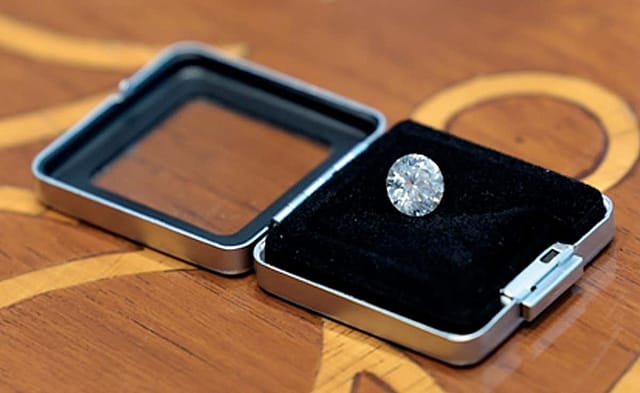
Who would have imagined that technology would disrupt an industry as old as civilization itself? I am referring to the “natural” diamond industry, which has been disrupted by lab-grown diamonds (LGDs).
LGDs or synthetic diamonds are at least 60% cheaper than natural diamonds and score highly on the four Cs—carat, colour, clarity, and cut. Above all, LGDs carry an ethical stamp. There is nothing illegal or questionable about their sourcing, unlike natural diamonds, where mining and trading practices in some cases have been ethically dubious.
One is reminded of the popular Hollywood movie Blood Diamond, which portrayed how diamonds are mined in war zones and sold to finance conflicts, enriching warlords and multinational diamond companies.
Perhaps it was this combination of ethical sourcing, quality, and competitive pricing that convinced Prime Minister Narendra Modi to promote India’s synthetic diamond industry globally. During his visit to the United States in June 2023, he gifted First Lady Jill Biden a 7.5-carat lab-grown diamond worth about $20,000. In one fell swoop, India’s synthetic diamond industry received worldwide publicity.
Technology-led disruption has made diamonds affordable for the burgeoning middle class. Naturally, this has deeply worried the natural diamond industry.
According to the late Professor Clayton Christensen of Harvard Business School, there are two primary types of disruptive innovation, often expanded into four or more categories depending on classification. According to him, these are: Technological Disruption, Business Model Disruption, Regulatory Disruption, and Social Movement Disruption.

India's Action Hero
27 Mar 2026 - Vol 04 | Issue 64
Riding the Dhurandhar Wave
Disruption is rapidly changing our lives; all of us experience it daily. Today, it is impossible to imagine life without the internet or mobile phones.
When was the last time you went to a bank to cash a cheque or to an ATM to withdraw money? UPI and digital payments have made cash, digital wallets like Paytm, and even credit cards increasingly irrelevant.
Digital payments have enabled e-commerce players such as Amazon, Jio, and Flipkart to disrupt traditional retail, mom-and-pop stores as well as malls. Sharp discounts and doorstep delivery have significantly impacted the margins of brick-and-mortar retailers.
In the entertainment world, disruption is an ongoing process. We have moved from theatres to cinemas, from VCRs to multiplexes, and now to OTT platforms like Netflix, Hotstar, and Prime Video. OTT platforms also received a major boost from smartphones. Traditional appointment viewing on television is passé. As a result, cable TV and DTH players are witnessing falling subscriptions and declining advertising revenues.
If you want more examples of disruption, just look around your neighbourhood. You will notice that once-ubiquitous radio and TV repair shops or small garages have largely vanished. When was the last time you visited a tailor? Who even remembers a typewriter?
Once upon a time, hailing a black-and-yellow taxi was a nightmare. Cab drivers often fleeced passengers, especially at airports and railway stations. Thanks to technological disruption, you can now call a taxi through apps like Uber and Ola. You no longer need to give directions, and the best part is that there is no haggling over fares, thanks to cashless payments.
I believe Indians got their first taste of disruption with the entry of the Maruti 800 in the 1980s. It disrupted the automobile sector, which was then dominated by the Premier Padmini and Ambassador cars.
Maruti launched a modern, fuel-efficient car using Suzuki’s technology and priced it aggressively. In 1983, the ex-showroom price of the Maruti 800 was Rs 47,500. No wonder it had a three-year waiting period. It became the quintessential family car, replacing two-wheelers.
There was no looking back after that. Today, Maruti Suzuki dominates the passenger car segment with over 40% market share. Both Premier Automobiles and Hindustan Motors eventually shut down. Maruti’s disruption paved the way for at least nine major global car manufacturers to enter India.
In the corporate world, it was the legendary Dhirubhai Ambani of Reliance Industries who first introduced large-scale disruption. His vision of building world-class plants with massive economies of scale disrupted the entire polyester yarn industry.
While its competitors built up plants with capacities of 15,000–20,000 tonnes per annum, Reliance set up a plant with an installed capacity of 145,000 tonnes per annum. This scale gave Dhirubhai immense pricing power. He sold polyester at prices that matched his competitors’ cost of production. The result was devastating: nearly 90% of competitors became sick companies.
His son Mukesh Ambani did likewise in the telecom sector. Jio disrupted the industry with free voice calls and ultra-cheap data. Average revenue per user (ARPU) collapsed, forcing consolidation and the exit of several players. Today, the sector has become an oligopoly, dominated by Jio, Airtel, and Vi.
Government policies have also caused significant disruption. Prohibition is an obvious example. Another that comes to mind is the case of SM Dyechem founded by SM Shetty.
SM Dyechem, which manufactured specialty chemicals, surfactants, and disinfectants, made a major investment in Mono Ethylene Glycol, setting up a plant at Kurkumbh, Maharashtra. The feedstock -- alcohol derived from molasses -- was tightly regulated and inexpensive when the project was conceived. However, by the time the plant was ready, the government decontrolled molasses prices, leading to a meteoric rise in costs. The business became unviable almost overnight, and SM Dyechem was declared a sick company.
Another positive disruption has been stock market reforms. Earlier, investors had to visit brokers’ offices at Dalal Street, with transactions taking 15–20 days and brokerage fees being exorbitant. Investors were entirely at their broker’s mercy, and share transfers were painfully slow.
The introduction of Demat accounts and the T+3 settlement cycle, now upgraded to T+0, revolutionised the system. Today, investors can trade online through apps with zero or minimal brokerage, enabling do-it-yourself investing. This disruption has significantly impacted traditional brokerage firms.
In the realm of consumer behaviour and social movements, two disruptions stand out.
The first is nationalism. Many Indians chose to boycott “Made in China” goods, especially during festive seasons like Diwali, in favour of local alternatives. This resulted in traders deliberately avoiding Chinese products.
The second is the behavioural shift away from bursting firecrackers during Diwali, driven by concerns about pollution and child labour. This self-imposed restraint has dented the fireworks industry in Sivakasi, Tamil Nadu, which accounts for nearly 90% of India’s production.
Disrupt or be disrupted is the new normal. Even Donald Trump, with his periodic tariff threats, disrupts global trade dynamics. However, in my view, the mother of all disruptions is Artificial Intelligence. To understand the scale of its impact, one only needs to look at the recently concluded World Economic Forum 2026 in Davos (January 19–23). With over 200 sessions, AI and technology dominated the agenda through panels, roundtables, and specialist discussions.
Finally, if businesses want to survive and thrive, they must become disruptors themselves. The names that come to mind are Bill Gates, Steve Jobs, Mark Zuckerberg, Elon Musk, Richard Branson, and Dhirubhai Ambani—all winners in their own right.