The Rise and Fall of Business Tycoons: A Cycle of Debt and Despair
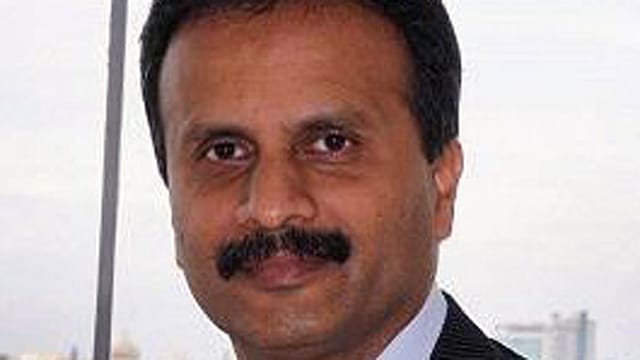
Call it my educated guess, but as a business journalist, I have always viewed the overnight success stories or meteoric rise of businessmen with suspicion. There’s a pattern to what they do. To my mind, it seems as though all of them are reading from the same textbook on how to con the public.
Suddenly, you see these businessmen — hardly with noble intentions — splashed across Page 3 parties. Soon after, business dailies start front-paging stories on their companies’ outstanding financial results, big acquisitions, fund-raising plans, or their supposed philanthropic activities. This short burst of scripted publicity creates the impression that this individual is now bigger than the Tatas, Birlas or Ambanis. He is everywhere… and the media stays friendly because he is spending top dollar on advertisements or sponsoring programmes across TV channels.
This hype cycle lasts for a little over two years before someone blows the whistle. Then begins the downsizing, as banks take away the proverbial umbrella. Negative reports start snowballing. Brokerage houses slap “sell” recommendations. Advertisements and sponsorships stop. Overnight, the darling of the media becomes a media pariah.
In my four decades in journalism, this “gaming the system” pattern has become as predictable as clockwork. Some get caught and are thrown into the slammer; a few, unable to face the loss of reputation, take their lives; many others escape by the skin of their teeth.
Between 2019 and 2025, at least five real estate developers and stockbrokers in Mumbai took their lives by jumping either from their buildings, the Atal Setu Trans-Harbour Link or the Worli-Bandra Sea Link. The reasons: financial distress, crushing debt and massive losses.

The Great Indian Male Makeover
03 Jul 2026 - Vol 05 | Issue 27
The craze for a perfect look is reshaping masculinity
In this column, however, I am confining myself to three-four big cases to highlight the issue. At the end of the day — whether it’s a proprietor or a tycoon — the central issue seems to boil down to money.
So it was neither shocking nor surprising when news broke that 57-year-old Bengaluru-based real estate tycoon C J Roy was found dead in his office on 30 January 2026 from an apparent self-inflicted gunshot wound, even as Income-Tax officials were conducting a raid at his premises.

The I-T team had been carrying out a multi-day search operation over alleged tax fraud and money laundering.
Founder-Chairman Roy had set up the Confident Group in 2005–06 and, in just 20 years, grew his real estate business manifold. He had unquestionably arrived, if optics were any measure; he was often seen driving high-end cars such as a Bugatti Veyron on Bengaluru’s streets.
Generally speaking, the shelf life of those who game the system is short. (See OPEN: “Gaming the System,” Nov 28, 2023.)
My earliest memory of a CEO committing suicide goes back to the eighties, when a Tata Group director, Khandvala, jumped from the Forbes Building on Charanjit Rai Marg, Fort, Mumbai. Various versions floated around about why he took the extreme step. One story doing the rounds then was that he had approached JRD Tata for help but was told to fight his own battle. Surely, it must have been related to some uncomfortable truth emerging.
While on the Tatas, two more cases made headlines over the last two decades.
Sixty-one-year-old Dilip Pendse, former managing director of Tata Finance, was found hanging from a ceiling fan at his private office in Dadar in 2017. Pendse, once the blue-eyed boy of the late Ratan Tata, headed Tata Finance from the early 1990s until 2001.
Insiders then told me he used his proximity to Tata to the hilt, often dropping Tata’s name whenever senior directors questioned him. His stock reply was that “he had informed Mr Tata” — and nobody dared check with Mr Tata.
He ultimately betrayed the trust reposed in him. In 2001 he was fired when it came to light that he had diverted Tata Finance depositors’ funds to two subsidiaries — Nishkalp Investments and Inshallah Investments — which had invested heavily in tech stocks like Himachal Futuristic Communications, Global Telesystems and Veerangana Software.
An upset Ratan Tata engaged AF Ferguson, an independent auditor, to scrutinise Tata Finance’s books. Their report concluded that investments in the two subsidiaries had caused losses of nearly Rs 450 crore.
The second case was that of Karl Slym, managing director of Tata Motors, who died in Bangkok in 2014 after falling from his hotel balcony. Bangkok police suggested suicide triggered by personal, not business, issues.
But the one that shocked and shook corporate India was the death of VG Siddhartha, founder of Café Coffee Day (CCD), in July 2019. His body was found in the Netravati river. A low-profile but deeply networked entrepreneur, he had strong political connections — he was the son-in-law of former Karnataka chief minister S M Krishna, and his son is married to the daughter of D K Shivakumar, Karnataka’s current deputy CM.
Siddhartha set the market on fire when he launched CCD in 1996. He pioneered café culture in India, offering a cool hangout spot with coffee and internet access. Its tagline, “A lot can happen over coffee,” resonated with the youth. Perhaps this strong response led him to expand rapidly.
According to business reports, CCD’s liabilities had ballooned to Rs 7,000-8,000 crore. His suicide note hinted at mounting debt, relentless pressure from lenders and PE investors, harassment by tax authorities and his inability to liquidate assets. All these took a toll on him.
In the end, big stakes and big connections couldn’t save him. He was pushed to the wall.
Common reasons behind such tragedies — in India and abroad — include over-leveraged balance sheets, mindless expansion and diversification, siphoning off funds by overstating project costs, money laundering, under-invoicing, tax evasion, insider trading, and more. The combined effect of all these exert enormous stress on mental health.
So, who is the villain here? One thing stands out clearly: when the going is good, everybody — PEs, banks, NBFCs — falls over themselves to fund you, often encouraging you to diversify. I know of a Kolkata-based biscuit company that was advised by an overly eager PE player to diversify into real estate so that they could fund them. We saw how Byju’s valuation touched a stratospheric $22 billion.
Contrast this with traditional business houses — the Tatas, Birlas, Ambanis, Adanis, Mahindras, Mittals, Goenkas, Premjis — whose growth has been gradual and steady. No meteoric rise, no sudden fall. To my mind, the operative word is greed. One must know how to insulate oneself from it.