Why Trump’s Iran Trade Warning Worries Indian Rice Exporters
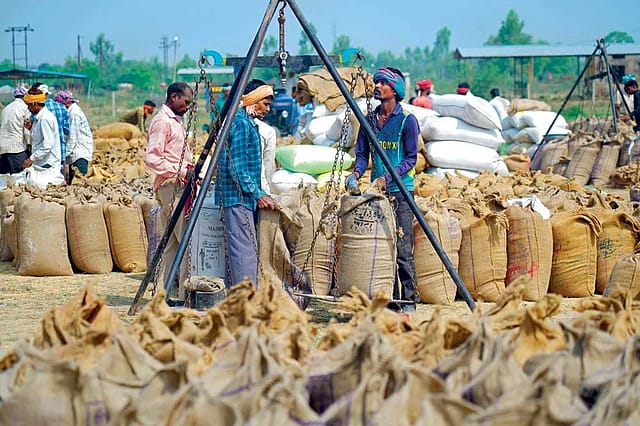
US President Donald Trump’s announcement of a 25% tariff on countries continuing trade with Iran has injected fresh uncertainty into global commerce, with India’s agri-export sector—particularly Basmati rice exporters—bracing for indirect but potentially significant fallout.
Iran remains one of the largest and most critical markets for Indian Basmati rice, accounting for a substantial share of export volumes. While food commodities are not directly targeted, the proposed tariff—aimed at penalising third countries trading with Iran—could complicate payment channels, elevate transaction risks, and weaken buyer confidence at a time when the trade is already under stress.
According to industry data, India’s Basmati rice exports to Iran between April and November 2025-26 stood at $468.10 million, with shipments totalling 5.99 lakh metric tonnes. The Indian Rice Exporters Federation (IREF) warns that escalating geopolitical pressure could further slow order flows and delay shipments, hurting exporters and farmers alike.

Losing Memory
16 Oct 2026 - Vol 05 | Issue 42
The making of a medical and social emergency
Trade with Iran, IREF noted, was already facing visible strain due to internal instability and financial disruptions in the country. Trump’s tariff warning could exacerbate these challenges by discouraging international banks, insurers, and logistics providers from facilitating Iran-linked transactions—even for essential commodities such as food.
“Iran has historically been a pillar market for Indian Basmati,” said Prem Garg, National President, IREF. “But the current internal turmoil has disrupted trade channels, slowed payments, and dented buyer confidence. The immediate impact is already visible in Indian mandis, where Basmati prices have softened sharply within days.”
Exporters fear that heightened sanctions risk could force global financial institutions to pull back further, making even routine trade settlements difficult. This is particularly concerning for shipments tied to deferred or unsecured payment structures, which are common in Iran-linked trade.
While stopping short of sounding an alarm, Garg urged caution. “In times of geopolitical and internal instability, trade becomes the first casualty. A calibrated approach is essential to protect both exporters and farmers. India’s rice sector is resilient—but it must be safeguarded through timely intelligence and responsible trade practices,” he said.
Domestic markets are already reflecting the strain. Basmati prices have dropped sharply amid buyer hesitation and delayed contracts. If uncertainty persists and alternative export destinations are not activated quickly, farm-gate prices could come under sustained pressure, while exporters face rising inventory holding costs.
To mitigate risks, IREF has advised exporters to prioritise secured payment mechanisms and diversify shipments to alternative markets across West Asia, Africa, and Europe. As geopolitics increasingly shapes trade flows, India’s rice export ecosystem now faces a critical test—navigating sanctions-driven volatility while protecting farmer incomes and export stability.
(ANI and yMedia are content partners for this story)