Why Smart Manufacturing Will Define India’s Industrial Future
India is no longer just building more. It is being forced to build smarter.
As energy consumption rises across homes, factories and cities, the question is no longer about supply alone. It is about efficiency, sustainability and scalability and whether Indian manufacturing can deliver all three at once.
At the centre of this shift is smart manufacturing, not as a buzzword but as a structural advantage.
For decades, Indian manufacturing competed on cost and volume. Affordability was the headline. Margins were thin. Scale was king. Today, the rules are changing. Efficiency is not a feature anymore; it is an expectation. Sustainability is not a side initiative; it is a business imperative. And technology is no longer optional; it is the operating system.

Losing Memory
16 Oct 2026 - Vol 05 | Issue 42
The making of a medical and social emergency
The New Consumer Mandate: Efficiency First
Across appliances, lighting, batteries and energy solutions, consumers are recalibrating what “value” means. Lower power consumption. Longer life. Smarter performance.
Technologies such as BLDC motors, advanced power electronics and improved battery chemistries are redefining product standards. But innovation on paper means little without manufacturing precision behind it. High-efficiency engineering demands tight tolerances, rigorous quality control and relentless process optimisation. Without that discipline, performance collapses in the real world.
Efficiency, in other words, must be engineered twice: once in design, and once on the shop floor.
Smart Manufacturing Is Not Automation. It Is Intelligence.
Automation reduces labour. Intelligence reduces waste.
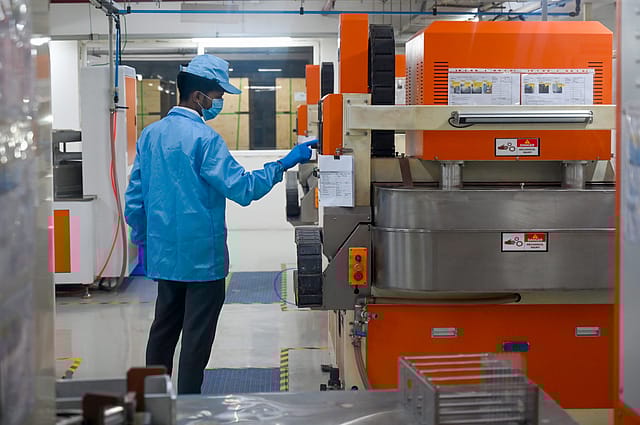
Modern factories increasingly run on sensors, enterprise analytics and real-time monitoring systems. Energy use is tracked continuously. Scrap rates are measured and analysed. Bottlenecks are identified before they become breakdowns.
The impact is compounding. Material loss declines. Rework reduces. Unit economics improve. Quality becomes more consistent at scale. Product iterations become faster and more responsive to market needs.
In a country as diverse as India — where demand patterns vary sharply across regions and income segments — agility is survival. Smart systems allow manufacturers to scale up, slow down or pivot without eroding margins.
Scale without intelligence is fragile. Scale with intelligence becomes durable.
The Real Challenge: Democratising Efficiency
Energy-efficient products often carry a perception of premium pricing. Early innovation cycles can justify that. But in India, impact comes only when efficiency becomes affordable.
The real competitive edge lies not in inventing efficiency, but in industrialising it.
Manufacturing excellence plays a decisive role here. Low-wastage assembly lines, localisation of components and design-for-manufacture principles help compress costs. When efficiency is embedded into both product design and production processes, high-performance solutions can be delivered at mass-market price points.
This is especially critical in Tier 2, Tier 3 and rural markets, where consumption is rising but price sensitivity remains high. Sustainability cannot remain an urban luxury. For efficiency to matter at scale, it must be accessible.
Sustainability Is Now a Core Operating Strategy
There was a time when sustainability was treated as a parallel initiative — important, but peripheral. That approach is rapidly becoming obsolete.
Across manufacturing sectors, sustainability is being embedded into core operations. Factories are transitioning toward renewable energy sources such as solar power. Hazardous materials are being eliminated from product chemistries. Product life cycles are being extended to reduce waste.
Packaging is shifting toward recyclable and paper-based alternatives. Rechargeable, longer-lasting products are replacing single-use consumption patterns.
Equally important is end-of-life management. Structured collection and recycling systems for batteries and electronic products are emerging as critical enablers of circularity, ensuring valuable materials are recovered responsibly while minimising environmental impact.
When sustainability shapes both product design and manufacturing systems, it stops being a compliance exercise and becomes a driver of efficiency, resilience and long-term value. Efficiency and sustainability are no longer separate conversations. They are the same conversation.
Data: The Invisible Factory Floor
Behind every smart factory is a data spine.
Business intelligence systems now inform demand forecasting, inventory optimisation and performance evaluation across plants and product lines. When manufacturing data intersects with consumer insights, decision-making sharpens. Capital allocation improves. Innovation cycles shorten. Supply chains become more resilient.
In an era defined by disruption — geopolitical, logistical and climatic — visibility is competitive advantage.
Building Beyond Machines
Technology alone will not define India’s manufacturing future.
Skill development on the shop floor, cross-functional collaboration and cultures that reward continuous improvement are equally critical. Smart factories require smart organisations.
The next wave of India’s consumer growth will not be driven by scale alone. It will be driven by how intelligently that scale is constructed.
India stands at a structural turning point.
Manufacturers who integrate technology, sustainability and affordability into a single operating philosophy will shape the next decade. Those who treat them as trade-offs will struggle.
Smart manufacturing is not an upgrade. It is the new baseline.
And in a country scaling as rapidly as India, engineering efficiency at scale may be the most decisive advantage of all.
(The author is CEO of Indo National Limited (Nippo). The views expressed are personal)