Why Is Harley-Davidson Betting on Hero and a Smaller Bike?
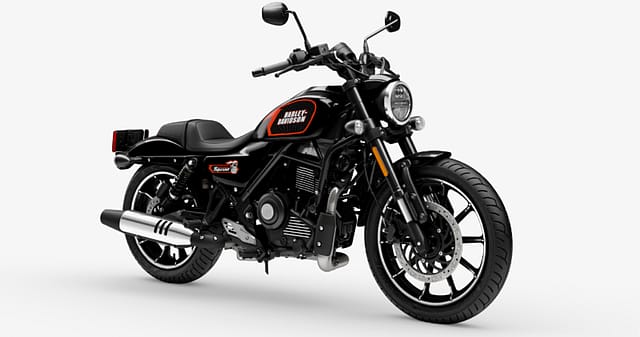
Harley-Davidson wants more riders to feel they can buy and handle a Harley.
Its new Sprint 440, unveiled on November 2, is a compact cruiser developed with India’s Hero MotoCorp. Harley says it is intended for beginners, returning motorcyclists and experienced riders seeking something uncomplicated. Its public debut is scheduled for Milan’s EICMA motorcycle show on November 5–8.
The business question is whether a more approachable motorcycle can draw customers into the brand and give them reasons to stay.
Why does Harley want a smaller motorcycle?
A brand can be desirable and still feel out of reach.
The purchase price is one barrier. A rider’s confidence about controlling the machine is another. Harley is addressing the latter through a low seat and narrow profile. It lists a ready-to-ride weight of 187kg and a laden seat height of 671mm, meaning the measurement includes the rider’s weight.

The Era of Forever Wars
30 Oct 2026 - Vol 05 | Issue 44
Coping with an explosive Middle East
Those features are intended to make the motorcycle easier to manage, particularly when stopping. They do not establish that every beginner will find it easy: fit, balance and training still matter.
The commercial opportunity extends beyond the first sale. Someone who starts riding on a smaller Harley could later buy accessories, use its service network or consider another model. That is a possible customer journey, rather than a guaranteed outcome.
What is different about the Sprint 440?
It puts a familiar engine formula into a more traditional cruiser shape.
The 440cc figure describes engine displacement, the volume swept by its piston. This single-cylinder engine uses air and oil cooling and is paired with a six-speed gearbox. Harley lists output at 27 horsepower and 38Nm of torque, the engine’s turning force.
The same broad 440cc engine family already underpins the Hero–Harley X440. The Sprint changes the presentation with a low stance, shaped fuel tank, scooped seat and swept-back bars.
That makes it an attempt to give shared engineering a distinct riding position and appearance. It should still be judged through independent riding tests, rather than assuming styling establishes comfort or handling.
How did Hero become part of Harley’s story?
The relationship began with agreements announced on October 27, 2020.
Hero took responsibility for selling and servicing Harley motorcycles in India. A licensing arrangement also allowed it to develop and sell premium motorcycles under the Harley name.
The X440 followed in July 2023. Hero’s launch announcement said it was co-developed at its Centre for Innovation and Technology and would be manufactured at Neemrana, Rajasthan.
In December 2024, Hero disclosed an extension covering X440 variants and a new motorcycle, including development and contract manufacturing for domestic and selected international markets. Contract manufacturing means one company makes products for another under an agreed arrangement.
The Sprint, therefore, builds on a partnership with engineering and manufacturing behind it.
Why use an existing platform?
Developing a motorcycle requires more than choosing an engine size. Companies must engineer parts, arrange suppliers, test durability, meet regulations and prepare service support.
Using established engineering across several models can spread some of that work over more motorcycles. A different seating position and design can then address another group of buyers.
That is the economic logic of shared platforms. The companies have not disclosed the Sprint’s development savings, profit per motorcycle or the volume required to recover its costs.
The risk is that buyers see too little difference between related models. A recognisable badge and fresh bodywork must be supported by a product and ownership experience people value.
Is this Harley entirely made in India?
The manufacturing story depends on the market.
Specialist reporting identifies India production through Hero for international models. Harley’s own US announcement explicitly says the American-market Sprint will arrive in spring 2027 with final assembly in York, Pennsylvania.
Indian production and American final assembly can form parts of the same supply chain. What is not established in the launch release is the exact share of Indian components or how complete the motorcycle will be when it reaches the US assembly line.
“Developed with Hero, with US final assembly in Pennsylvania” is therefore more precise than treating every Sprint as an identical finished export from India.
Is Harley doing this because sales are collapsing?
Its latest results do not support that description.
On October 29, Harley reported Q3 global retail sales up 5% and North American sales up 9%. However, revenue at its motorcycle division fell 10% to $964 million, while operating income fell 18% to $44 million.
Retail sales count motorcycles bought by customers. Shipments count motorcycles sent to dealers. Shipments fell 8%, and Harley said it was reducing dealer inventory. Those measures can move in different directions.
The task is to sustain customer demand and improve the economics of the business. The Sprint is one product in that effort; its announcement cannot establish the result.
How does this strengthen India’s role in global motorcycles?
It places an Indian partner within the development of a motorcycle intended for Harley’s international network.
There is a useful precedent. Bajaj manufactures Triumph’s Speed 400 and Scrambler 400 X in India for overseas markets. In July 2024, Bajaj said the two models had sold more than 50,000 units across over 50 countries in their first year. Those are dated company figures, not current Sprint forecasts.
The comparison shows that an international brand and Indian production can work together at meaningful scale. Hero and Harley must demonstrate their own demand, quality and commercial returns.
What happens next, and will India get it?
The immediate milestone is the Milan show, followed by market launches. Harley says timing and availability will vary by country. Its November 2 release does not confirm an Indian launch date or price.
Indian buyers should, therefore, distinguish a global unveiling from a domestic sale announcement.
For the business, the test will be orders, deliveries, dealer support and repeat demand. The Sprint’s purpose is to make starting with Harley more appealing. Whether riders accept that invitation will become clear after it reaches showrooms.