Why India–Arab Foreign Ministers’ Meeting Matters After 10 Years
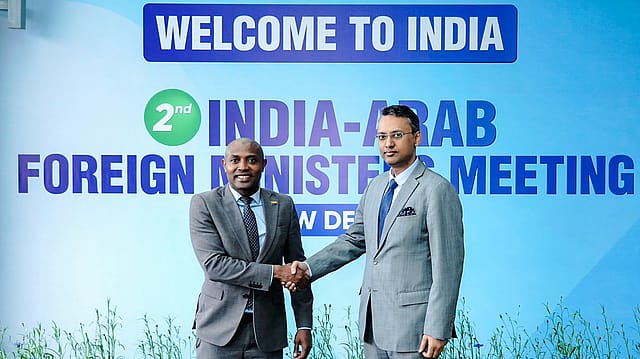
After a decade, India and the Arab world reconvene at foreign-minister level, signalling a strategic reset spanning energy security, trade, geopolitics, education and people-to-people ties.
What’s happening in New Delhi?
India is hosting the second India–Arab Foreign Ministers’ Meeting on January 31, only the second such gathering in a decade.
Who is attending?
Foreign ministers from Arab League member states and the League’s Secretary-General will participate. The meeting follows a Senior Officials’ Meeting at Bharat Mandapam.
Why is this meeting significant?
Because the first edition was held in 2016. A 10-year gap makes this meeting a diplomatic reset, signalling renewed political momentum.
What is the Arab League?
Formed in 1945, the League of Arab States has 22 members across North Africa and the Middle East. It coordinates political, economic and cultural cooperation among Arab nations.
How influential is the Arab League?
It is a key regional bloc with global partnerships, including with the EU, AU, ASEAN, China and Russia, but its decisions bind only consenting members.
How deep are India–Arab ties?
Very deep. Relations date back centuries through trade and scholarship, and were formalised with structured dialogue in 2002.

The Liberation of Bengal
05 Jun 2026 - Vol 04 | Issue 74
A silent revolution ends the reign of fear
What frameworks guide cooperation today?
The Arab-India Cooperation Forum, created in 2008, spans economy, energy, education, media and culture.
What came out of the first ministerial meeting?
The Manama Declaration (2016) and an executive programme covering economic, educational, energy and cultural cooperation.
How big is the economic relationship?
Massive. Trade exceeds $240 billion, including $107 billion in hydrocarbons.
How critical is the Arab world to India’s energy security?
Extremely. India sources nearly half its crude oil, 60% of LNG, and 95% of LPG from Arab League countries.
What about people-to-people ties?
Over 9 million Indians live and work in Arab nations, forming one of India’s largest overseas communities.
Are ties limited to oil and trade?
No. Cooperation spans education, AI, biotech, renewable energy, infrastructure, health, media and culture.
What role does education play?
A growing one. The India–Arab Universities’ Presidents’ Conference focuses on skills, digital platforms, research and student exchanges.
What about security and solidarity?
The Arab League has publicly condemned terror attacks in India, including the April 2025 Pahalgam attack, and expressed solidarity.
What’s the broader takeaway?
India is positioning the Arab world not just as an energy partner, but as a strategic pillar of its diplomacy in West Asia and beyond.
(With inputs from ANI)