Why Does Elon Musk Want Jensen Huang Back at Nvidia?
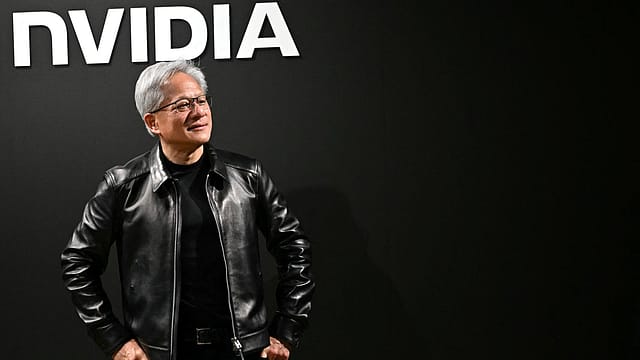
Elon Musk wants Jensen Huang back at Nvidia. He has signed the petition demanding it. He has offered Huang a job. He has now supplied the campaign with its most consequential argument.
Nvidia, Musk says, could lose “critical” deals because many of its supply arrangements were “a handshake with Jensen, not a written contract”.
That claim changes the nature of the campaign. Supporters had initially framed Huang’s reinstatement as a matter of loyalty to the founder who spent 33 years turning a graphics-chip company into the engine room of artificial intelligence. Musk is making a commercial case. His contention is that Nvidia’s board removed a celebrated chief executive and may also have separated the company from personal relationships holding parts of its supply chain together.

The Wealth Issue 2026
06 Nov 2026 - Vol 05 | Issue 45
Portraits of Dreamers and Doers under 35
Musk is unusually qualified to understand those relationships. Nvidia’s processors power the AI ambitions of Tesla, SpaceX and xAI. Huang personally delivered the first DGX-1 AI supercomputer to Musk and OpenAI in 2016. Nvidia later helped satisfy Musk’s vast appetite for GPUs as he raced to build xAI’s computing clusters.
Musk is also an interested witness. If Nvidia loses access, allocation or negotiating power without Huang, Musk’s own companies could bear the consequences. His campaign can, therefor,e be read as admiration, alarm and self-preservation at the same time.
The question is no longer why Musk likes Jensen Huang. It is whether Musk’s AI empire still needs him.
Musk Knows What a Jensen Handshake Can Deliver
Nvidia sits at the centre of AI, but it does not manufacture its most advanced chips by itself. It depends upon foundries including TSMC and Samsung, buys memory from SK Hynix, Micron and Samsung, and relies on specialist packaging, assembly and systems partners. Its annual report names Hon Hai, Wistron and Fabrinet among the companies involved in the chain.
Capacity must be reserved long before a finished AI system reaches a customer. Nvidia disclosed in July that its supply and capacity commitments had increased from $119 billion to $279 billion in a single quarter as it attempted to secure inventory for future demand.

These are enormous contractual obligations. Yet contracts do not fully explain who receives scarce capacity, which partner expands first, or how two companies divide risk when demand is uncertain.
Huang has described Nvidia’s relationship with TSMC in unusually personal terms. The companies have worked together for nearly three decades, but he said they did not have a conventional legal contract governing the relationship. There was “rough fairness”: sometimes Nvidia received the better deal, sometimes TSMC did.
That is the world Musk is describing. The handshake does not necessarily replace every purchase order. It supplies the trust required to make commitments before every commercial consequence can be calculated.
Huang practised corporate diplomacy as aggressively as he designed strategy. During a South Korean visit this year, he dined on grilled pork belly and soju with business leaders, met the heads of major conglomerates and emerged with partnerships spanning memory, cloud infrastructure, robotics and AI factories. Nvidia’s initiative with SK Group was later valued at $500 billion and included long-term access to the high-bandwidth memory required by advanced AI systems.
An executive at a Taiwanese supplier told Reuters after Huang’s departure that a successor might not be as aggressive in securing manufacturing capacity. A South Korean industry official wondered whether Nvidia’s next leader could preserve the favourable relationships Huang had cultivated.
Musk has now turned those private anxieties into a public warning.
Musk Is Defending a Supplier His Companies Cannot Easily Replace
Musk’s support would carry less significance if he were merely another billionaire expressing solidarity. He is one of the AI economy’s most demanding infrastructure customers.
In 2024, internal Nvidia communications reported by CNBC showed that Musk had asked for thousands of processors originally allocated to Tesla to be redirected to X and xAI. The episode demonstrated both the scarcity of Nvidia’s hardware and Musk’s willingness to intervene personally in its distribution.
Tesla is developing its own computing technology. SpaceX and Musk’s other ventures are also pursuing alternatives. None of that creates an immediate substitute for Nvidia’s full platform of chips, networking, software and developer support. SpaceX has warned that its internal chip programme may not produce sufficient AI processors, leaving it dependent on outside sources.
Huang has been more than the chief executive of that supplier. He has acted as allocator, broker and evangelist. Nvidia has helped finance parts of the ecosystem that buy its equipment. It invested $2 billion in CoreWeave this year while deepening a partnership intended to build more than five gigawatts of AI factories by 2030. It has also woven itself into the expansion plans of AI laboratories, cloud providers and national governments.
The result is a market in which Nvidia may be financier, supplier, investor and strategic partner within the same project. Huang personally mediated that network.
Musk’s concern is, therefore, rational. A new Nvidia chief executive may honour existing orders while changing the informal hierarchy behind future allocations. Competitors, governments and customers will all seek a larger share of constrained supply. Musk would rather negotiate that competition with the founder he knows than with a successor trying to prove independence.
Nvidia Says the Company Is Bigger Than Its Founder
Nvidia’s board is making the opposite argument.
Its announcement said customer commitments, operations and the product roadmap would continue without interruption. Colette Kress, Nvidia’s chief financial officer since 2013, has become interim chief executive while the board considers internal and external candidates. Arm chief Rene Haas, a former Nvidia executive, has reportedly been approached as part of the search.
The board has reasons to resist the reinstatement campaign. Huang resigned amid scrutiny of reported extramarital relationships, including one involving a businesswoman suspected by US authorities of working for Chinese intelligence. Authorities had not established that she was a spy, and Nvidia said it had no reason to believe national security or company secrets were compromised. Reports of another relationship with a subordinate intensified the governance crisis.
Returning Huang quickly would raise questions about board authority, workplace standards and whether commercial importance places a founder beyond ordinary accountability.
It would also expose a deeper governance failure. A company controlling more than 80 per cent of 2026 data-centre accelerator revenue should not depend on one individual’s personal assurances. If Musk is right, Nvidia’s board must explain why it allowed relationships worth hundreds of billions of dollars to remain inseparable from Huang.
The immediate operational danger may be limited. Chips scheduled for the next several quarters are designed, production plans exist and major customers have already budgeted for deployment. IDC believes the harder risks sit further out, including allocation, ecosystem financing, long-term technology bets and customer relationships anchored personally by Huang.
That timeline matters. Nvidia may not lose a critical deal next week. The first evidence could appear as slower negotiations, weaker supply priority or a partner committing its next expansion to a rival.
Can Pressure Put Jensen Back? The CEOs Who Returned After Being Ousted
Musk is attempting to turn Huang’s departure into Nvidia’s Sam Altman moment.
OpenAI’s board fired Altman on November 17, 2023, saying it had lost confidence in his candour. The decision began collapsing almost immediately. Greg Brockman resigned. Microsoft offered Altman and departing employees a home. More than 95 per cent of OpenAI’s staff threatened to leave unless Altman returned and the directors responsible stepped down.
Five days after the dismissal, Altman was back as chief executive and most of the board that removed him was on its way out.
The resemblance is tempting. Huang’s supporters have produced a petition. An internal Nvidia post asking the board to consider employee sentiment attracted more than 1,600 comments, many supporting his return. President Donald Trump reportedly urged Huang to fight for his job. Musk has supplied the loudest corporate endorsement.
The decisive Altman ingredient is still missing. Nvidia’s roughly 42,000 employees have not threatened a mass departure. TSMC and SK Hynix have not publicly warned that their commitments depend upon Huang. Nvidia’s largest customers have not presented the board with commercial consequences.
Petitions can embarrass directors. Boards reverse themselves when they fear losing the company.
Steve Jobs offers a different precedent. Apple forced him out in 1985 and brought him back 12 years later through its acquisition of NeXT. Apple needed NeXT’s technology and was running short of convincing answers to its decline. Jobs initially returned as an adviser before becoming interim chief executive.
Jack Dorsey’s return to Twitter followed another route. The board pushed him out as chief executive in 2008. He remained close to the company and returned seven years later after Dick Costolo stepped down.
Altman represents an immediate reversal produced by institutional revolt. Jobs represents a company rediscovering the founder after its alternatives failed. Dorsey represents the founder whose strategic and symbolic influence survived removal.
Huang could still follow any of those paths. Musk is campaigning for the first. Nvidia’s performance will determine whether the second or third becomes possible.
What Would Force Nvidia’s Board to Reconsider?
The reinstatement campaign needs evidence of damage.
A supplier would have to reconsider capacity. A sovereign AI partner could delay a project. A major customer might seek written assurances that Nvidia cannot comfortably provide. Senior engineers could leave, or a credible successor might decline to inherit a company whose founder retains the workforce’s allegiance.
Nvidia’s approaching earnings call will test Kress’s ability to reassure investors. The larger test will take several quarters. One direct customer represented 16 per cent of Nvidia’s revenue in the second quarter, while three customers accounted individually for 16, 15 and 13 per cent of first-half revenue. Concentrated customers and concentrated suppliers leave little room for damaged trust.
Musk’s intervention matters because he has identified the point at which a personal scandal could become an industrial problem. Nvidia can replace the person authorised to sign its documents. It must still determine whether the documents contain everything Jensen Huang promised.
Musk may genuinely believe that Huang deserves another chance. He may resent a board removing one of the few executives capable of matching his appetite for speed and scale. He may also be protecting access to the processors on which his own ambitions depend.
Those motives can coexist.
The deeper problem belongs to Nvidia. If Huang’s handshakes survive his departure, the board will have proved that it governs an institution. If critical deals begin to weaken, Musk will have exposed something extraordinary: the world’s most valuable AI relationships belonged partly to a man the company no longer employs.