Warren Buffett Steps Aside: The End of a Six-Decade Era at Berkshire Hathaway
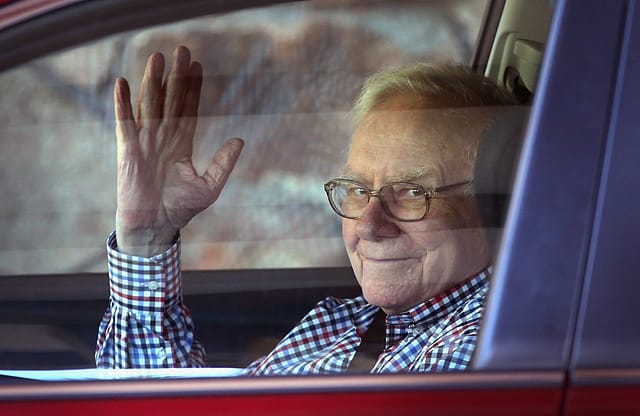
Warren Buffett will step down as Chief Executive Officer of Berkshire Hathaway today, closing one of the longest and most consequential leadership chapters in corporate history. At 95, the legendary investor hands over day-to-day control of a conglomerate he transformed from a struggling New England textile firm into a global powerhouse valued at more than $1 trillion.
Buffett took control of Berkshire Hathaway in 1965, initially aiming to salvage its textile business. Instead, he executed one of the boldest capital reallocations in business history—redirecting cash flows into insurance, utilities, railroads, consumer brands, and long-term equity investments. That decision laid the foundation for a company that compounded wealth at a pace few institutions have ever matched.
Under his stewardship, Berkshire built a portfolio of iconic stakes in Apple, Coca-Cola, American Express, and Bank of America, alongside wholly owned businesses such as BNSF Railway, GEICO, Berkshire Hathaway Energy, and dozens of manufacturing and retail companies. Buffett’s annual shareholder letters became required reading for investors globally, while Berkshire’s Omaha meetings evolved into a pilgrimage for believers in long-term capitalism.
From January 1, 2026, Greg Abel, vice chairman overseeing non-insurance operations, will take over as CEO. Abel has long been viewed as Buffett’s successor and has played a pivotal role in expanding Berkshire’s energy and infrastructure footprint. Buffett will remain chairman, ensuring continuity in a culture defined by decentralisation, trust in managers, and disciplined capital allocation.
Survival Instinct
22 May 2026 - Vol 04 | Issue 72
India navigates global economic turmoil with austerity and smart diplomacy
Warren Buffett’s most consequential investment was not made early in his career, but well into it. When Berkshire Hathaway began accumulating shares of Apple in 2016, the bet surprised many who still saw Apple as a hardware company vulnerable to rapid disruption. Buffett saw something else: a consumer ecosystem with extraordinary pricing power, loyalty, and cash generation. That conviction turned a roughly $40-billion investment into Berkshire’s most valuable holding, reshaping the conglomerate’s balance sheet and proving that Buffett’s principles could adapt to modern businesses without abandoning discipline.
The same philosophy underpins his long-standing investments in Coca-Cola and American Express. Buffett bought Coca-Cola in 1988, not because it was cheap, but because it was durable—a brand that could survive decades of economic cycles while throwing off steady cash. American Express entered his portfolio after a crisis dented confidence in the company, offering Buffett the rare combination he prizes most: a strong franchise temporarily mispriced. Together, these bets reveal Buffett’s core teachings—buy businesses, not stocks; favour companies with enduring competitive advantages; and let time, not trading, do the heavy lifting. In Buffett’s world, wealth is built not by chasing brilliance, but by patiently compounding trust in a few exceptional ideas.
Observers believe Berkshire’s core philosophy will remain intact under Abel. Yet challenges loom. The company is sitting on a cash and Treasury pile exceeding $380 billion, raising questions about capital deployment in an era of high valuations and scarce mega-deals.
Buffett’s exit as CEO marks the end of an era not just for Berkshire, but for American investing itself. His emphasis on patience over prediction, integrity over leverage, and compounding over spectacle reshaped how markets are understood. While leadership passes on, Buffett’s true legacy—thinking long when the world thinks short—remains firmly embedded in Berkshire’s DNA.
(yMedia and ANI are the content partners for this story)