#UNTOLD | DHFL’s Shadow, Rishi Anand & the Reinvention of Aadhar Housing Finance
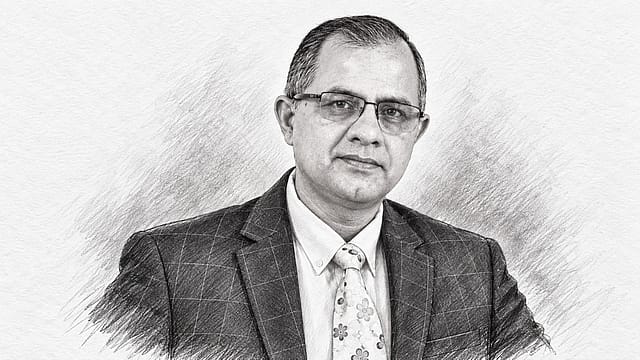
The remote was gone.
Rishi Anand lifted the papers on his desk, searched beneath them, put them down and looked again. A pen rolled off the edge and struck the floor. He left it there.
On CNBC, the number beside DHFL’s name changed.
He pulled open the drawer. Business cards, a charging cable. He pushed them aside, searching underneath.
Where was the bloody remote?
There had to be another explanation. A wrong number on the screen. A report someone had misunderstood. Any second, a correction might appear along the bottom of the television.
He looked up. The broadcast continued.
Anand turned towards the sofa in the corner of his cabin. Through the glass, he could see people getting up from their desks. Voices were rising. He searched the seat, then the gap between the cushions.

Losing Memory
16 Oct 2026 - Vol 05 | Issue 42
The making of a medical and social emergency
There. He pulled out the remote and pressed the channel button. A different studio. Different anchors. Same company. Same fall.
He pressed again. Another channel had the story too.
His thumb stayed on the button. He wanted someone to question the numbers, interrupt the coverage, announce that there had been a mistake. He watched an anchor’s face, waiting for the sentence that would let him breathe.
Then he changed channels again.
Oh shit. What happened?
He lowered himself into his chair, still holding the remote.
Until April, those people had been his people. He knew them. Had worked with them. As the anchors continued, his thoughts kept returning to the same questions. What had happened there? How bad was it?
Then another question began to crowd out the others.
What will happen to Aadhar?
In April 2018, he had arrived there to become chief business officer.
For a man who had started in front-end sales, it was another step up. Before joining Dewan Housing Finance Corporation Ltd—DHFL—Anand had worked across lenders including ICICI Bank, GE Money, BHW Home Finance and Reliance Capital. At AIG Home Finance India, he had been business leader for mortgages and a whole-time director. He joined DHFL in 2012 as zonal business head in Delhi; in 2015, he became business head for mortgage loans.
By 2018, the room for his next move at DHFL had narrowed. Aadhar offered a bigger role within the same group. On April 1, he crossed over as chief business officer.
Then came the office.
“Yeh toh affordable housing finance company ka head office lag raha hai.”
He remembers the loose comments about the place. The headquarters he had left was one people talked about. At Aadhar, certain senior recruitment interviews were conducted elsewhere.
The numbers made the distance harder to ignore.
March 2018, his final month at DHFL: ₹2,500 crore in housing-loan disbursements from the business he handled, he recalls.
June 2018, his third month at Aadhar: about ₹170 crore. For the whole company.
He had come from the sea to an island. From here, he could still see the world he had left. DHFL was growing. The business was doing well. Nothing about its progress offered him comfort about his decision.
Around him, fewer people. Fewer branches. Borrowers whose circumstances were unfamiliar. Properties that looked different from those he had been accustomed to financing.
He had wanted more room to grow. Why did his world feel smaller?
“I thought I have missed the ship,” he recalls. “I should have been there.”
The comparison kept returning. He had spent years working his way through larger responsibilities. Now he had the designation he had moved for, but found himself questioning the move itself.
“Why did I do this?”
For months, he could not settle the question.
Back in his cabin, CNBC was still on. Anand looked at the screen, the remote in his hand.
The company he had wished he hadn’t left was falling. He pressed the button and watched its name appear on another channel.
For months, he had measured the distance between DHFL and Aadhar in people, branches and disbursements. He had resented how far apart they seemed.
Now he needed that distance.
It was September 21, 2018. Before the session ended, DHFL’s shares would fall almost 60% from the previous close, recover some ground and finish 42.43% lower on the BSE. More than ₹8,100 crore of its market value would disappear that day.
The panic had spread from the debt market. According to reports at the time, DSP Mutual Fund had sold roughly ₹300 crore of DHFL debt at a yield of around 11%. In a market already shaken by defaults at Infrastructure Leasing & Financial Services, the elevated yield stirred fears about DHFL’s ability to raise money and meet its obligations.
In his cabin, Anand was still trying to understand what the falling numbers meant for the company around him.
What will happen to Aadhar?
He watched the next update. A different office, a different role—but the same group. His thumb moved over the button again.
What will happen to me?
Lights. Camera. Blank
Nearly six years later, Anand arrived at a CNBC studio carrying answers he had rehearsed. Aadhar Housing Finance was preparing for its IPO. He was there to explain the company to the people watching.
The appointment was at eight in the morning. He had wondered why they needed a studio at all. Couldn’t they do the interview on an iPhone?
Now he was being directed upstairs, towards a room number, with his marketing colleague and the public-relations representative coordinating the interview.
Something felt wrong. He kept going. He didn’t want them to see how nervous he was.
Then the door opened. Cameras. Much larger than he had imagined. Lights trained on a table. Television screens across the walls.
He stopped.
“I just lost it there,” he recalls. “Completely froze.”
He had known there would be a camera. Standing before the equipment, he couldn’t remember what he had prepared to say to it.
Nothing came.
His marketing colleague stood with the PR representative. Anand was still near the darker part of the room, away from the lights focused on the table.
He was trembling. Nobody had asked him a difficult question. The interview hadn’t even started.
In the corner, he noticed a small chair. He went over and sat down. From there, he could see the place where the interview would happen. The lights were already trained on it. He would have to leave this corner, take his place and speak.
His colleague remained with the PR representative. Anand stayed in the chair.
For now, nobody was asking him anything.
When the Lender Needed Money
Nearly six years earlier, he had struggled to answer a more immediate question: how would Aadhar keep lending if the banks stopped lending to Aadhar?
The money had arrived.
A leading public-sector bank had sanctioned funding, and the funds had reached Aadhar’s account. Amid the uncertainty following DHFL’s share-price collapse in September 2018, here was a bank still willing to lend.
There were salaries to pay. Office rents. A business to keep running. Money in the account meant they could get on with some of it.
It did not stay there.
“The money came to our account and it was withdrawn the same day,” Anand recalls.
The salaries still had to go out. The rents still had to be paid.
Ab kya? Now what?
Around them, other sources of funding were closing. Banks stopped lending or raised the rates at which they would lend. Anand had watched DHFL’s trouble on television. Now he was dealing with what it meant for Aadhar’s next disbursement.
“Mere liye toh raw material paisa hai,” he recalls. For him, money was the raw material.
Its supply had stopped.
There were loans Aadhar had already made. Borrowers were paying them back in instalments. Those loans were assets the company could sell.
So the team began selling pools of existing loans to raise money.
Some fresh lending could continue. The offices could keep functioning. But once that money had been put to work, the need for more remained. For roughly two months, Anand recounts, they sold existing loan pools and did a little fresh business, trying to keep the company moving.
Stopping would compound the trouble and erode the company’s value.
He had joined to grow this company. Now he was trying to make sure it could carry on.
Then, about two to two-and-a-half months into the turmoil, another piece of news reached the management team.
The group had decided to sell Aadhar. For weeks, they had been finding buyers for its loans. Now they would have to find a buyer for the company.
Aadhar for Sale. Trust in Short Supply
On Anand’s side were Deo Shankar Tripathi, Aadhar’s then CEO, and the company’s chief financial officer. Between them, they knew the business they had come to sell: the loans, the borrowers, the branches, the work that went into deciding whom to lend to.
They began explaining it.
But DHFL kept entering the conversation. If something had happened there, what about here? Weren’t they part of the same group?
So they explained. Answered the questions. Tried to establish why Aadhar was a business worth buying.
He recalls the encounter in blunt terms: the buyer sat opposite, the management defended the company, and he felt the buyer was thinking, Tum chor ho (you are thieves).
Nobody had to say those words aloud. That was how he experienced the questions.
“Jo chori nahi ki hai,” he recalls, “aap usko bhi prove kar rahe ho ki maine chori nahi ki hai (Even the theft you had not committed—you were having to prove you had not committed it).
There was still a company to sell. These were prospective buyers. He and his colleagues had to keep answering.
At the next meeting, they began again.
Another set of people across the table. Another explanation of Aadhar. Another effort to separate what they knew about their company from what the buyers feared about its lineage.
Anand remembers roughly 18–20 interested parties in the first round. There were established businesses considering an acquisition and private-equity firms examining an investment. The field would narrow to eight or ten, then to a final three.
A meeting could end; the need to find a buyer did not.
The questions accumulated.
So did the the frustration he remembers carrying through the process.
Hum kar kya rahe hain yaar (What are we doing?)
There were other jobs in the market. The thought returned in words he still remembers.
Chhod de yaar company (leave the company).
Two More Months
There would be another job. Another company where he could put his experience to work. He had moved before. He could move again.
“Opportunity toh market mein mil jaati hai,” Anand recalls thinking.
The possibility gave him something to consider beyond the next buyer, the next presentation, the next question about the group.
Then he thought about the people on his side of the table: Tripathi. The CFO. Himself.
The three of them were taking Aadhar through these meetings. He knew what it took to sit there and answer. If he left, the meetings would continue. The questions would go to the colleagues he had left behind.
He had spent years with the group. He had built a career there, accepted greater responsibilities, moved to Aadhar for an opportunity to grow.
Now the company was in trouble.
Is this the right time?
He could find reasons to stay. He could also see what staying might lead to.
Some of the prospective buyers were established businesses. They had their own employees, their own senior people. If one of them acquired Aadhar, it might have little need for the management team making the presentation.
He could spend the next few months helping a buyer understand the business, answering its questions, carrying the sale towards completion.
And then have to leave anyway.
“Jo lega, agar strategic lega, toh uske paas already employees honge,” he recalls thinking. (Whoever buys it, if it turns out to be a strategic buyer, they would already have employees.)
The thought brought him back to the choice he had been trying to settle.
Leave now? Stay until someone else decided whether he could?
He began giving the decision a smaller horizon.
Two more months.
He could keep looking for a good opportunity. If something came along, he could consider it. Meanwhile, he would remain with Aadhar and help take the sale through.
“Why not spend two more months?” he remembers asking himself.
It was enough to keep him there.
The field of buyers narrowed. Those still interested brought in advisers and began examining the company more closely. Forensic audits. Other checks. More of the business opened up for scrutiny.
Anand and his colleagues continued the process. He had settled what he would do for the next couple of months. The buyer would have a say in what happened after that.
Blackstone, the Buyer He Had Doubted
The buyer mattered. Anand had an idea of the kind he wanted.
An established lender would know the business. It would understand mortgages, borrowers, the work of running a housing-finance company. He could picture Aadhar becoming part of an organisation like that.
Private equity troubled him.
“Yeh private equity kyun aa raha hai?” he remembers thinking during the sale process. (Why was private equity coming in?) A strategic buyer, he felt, would be better.
Yet an established lender would have its own people. He had already worked through that possibility: help sell the company, then make way for somebody from the buyer’s team. He could recognise that risk and still find the familiar buyer easier to imagine.
The private-equity firms kept examining Aadhar. The business he and his colleagues had defended was being opened up and checked.
In June 2019, Blackstone acquired the company.
Anand was still there.
So were the people, the business model and the governance structure he had been explaining across those tables. In his account, Blackstone retained them. The processes built under Tripathi, who came from a public-sector banking background, remained in place.
The urgent problem was the money.
“Raw material hi nahin aa raha tha,” Anand recalls. (The raw material wasn’t coming in.)
A new owner’s name could not pay a salary or fund a home loan by itself. Aadhar needed banks to lend again.
The management went to meet them. Blackstone went too.
Anand had spent months sitting beside colleagues, answering questions about why anyone should trust their company. Now representatives of the institution that had examined and bought it accompanied them to the lenders.
“They went with us, they met banks, they gave banks the confidence,” he recalls. “And our lines started.”
For months, the team had sold pools of existing loans to raise money and keep some fresh lending going. Now funding was coming back through the channels that had closed.
Anand had wondered what a private-equity owner could bring to a housing-finance business. He was beginning to see it in the bank relationships on which that business depended.
Looking back, he explains why Blackstone had kept so much of Aadhar intact: it had examined the business before buying it. It had liked what it found.
An IPO, a Presentation & a Bruised Ego
By 2023, Aadhar was preparing to ask public-market investors to buy into the company. Anand had become managing director and CEO on January 3 that year.
Anand had a section of the presentation to deliver. He had explained the business to lenders and defended it before prospective buyers. He had his own way of presenting.
He began in that familiar style.
“What rubbish presentation?”
He remembers the words. He had come prepared to explain Aadhar. Now the way he was explaining it had become the problem.
There were people guiding the presentation for the IPO, and expectations about how it needed to be delivered. His usual approach had failed to meet them.
He had to go back over it.
Anand recalls adjusting his presentation, learning to deliver it in the form the process demanded. Years later, he would admit that he had returned to his old style. But at that moment, with the company preparing for the market, he had to make the changes.
The presentation was one part of a process that kept finding unfamiliar ground beneath him.
He had worked at listed companies. He had never taken a company through a listing while being one of the people responsible for getting it there.
Meetings with investors. Analysts. Regulators.
Between them, the question kept returning.
Ho payega ya nahi ho payega? (Will I be able to pull it off?)
Sometimes his thoughts ran ahead.
Ho gaya toh kya hoga? (What happens if it works out?)
There was still another meeting to get through. Another audience to understand. At the early international investor meetings, he knew Aadhar’s business intimately. He knew the work behind the numbers he was presenting.
Then came questions he hadn’t expected.
He found himself taking offence.
“Why are they asking such questions?”
He was looking at the company he helped run.
The people across the table were looking at India, at the industry, at where this business fitted into a much larger set of choices. They needed answers to questions his familiarity with Aadhar had not prepared him to expect.
“Hum toh company ke andar hain, na?” he says. (We are within the company.) Their perspective was different.
He had once needed to learn how to look at Aadhar too.
The Man in Leather Chappals
During an early branch visit in Tamil Nadu, Anand was being introduced to the team when a man entered through a door behind them.
White clothes. Leather chappals.
Anand interrupted the introductions.
“Pata karo kaun hai (Find out who he is).
He remembers saying it rudely.
“Sir, yeh hamare customer.”
The man was a borrower.
Anand’s tone changed. The visitor belonged here. He was one of the people this company lent money to.
Hum aise logon ko loan de rahe hain? (We are lending to people like this?)
He had spent years in housing finance. He knew how the business worked, had handled large volumes, had built a career making loans happen.
Yet the man in the leather slippers unsettled him.
Would he repay?
Anand could correct the way he spoke to the customer. The doubt was harder to dismiss.
Later, when he went to see the properties Aadhar financed, he found himself questioning those too.
He was accustomed to apartments in developments by builders such as Hiranandani and DLF. Here was a small row house. A one-room home. Paint that had not been renewed year after year.
How could they finance a property like this?
He looked at the home and struggled to reconcile it with the lending he knew.
The borrower could not afford to repaint every year, he would come to understand. He had brought years of experience to Aadhar. In that branch, he had needed someone else to tell him who the customer was.
Knowing who the customer was only began the enquiry.
How much did he earn?
Anand offers the example of a kirana shopkeeper. There may be no income statement that gives the lender a ready answer. The shop is doing business. Money is coming in. Before Aadhar can lend, someone has to work out how much remains with the man behind the counter.
A credit manager sits with him for an hour, sometimes an hour and a half.
Look at the stock.
The shopkeeper may carry enough for a day, perhaps a week, replenishing what he sells.
Then look at what he sells.
Dhara refined oil. A local brand alongside it.
The local brand offers a higher margin. How much of each does he sell? How many days does the shop open? What is the footfall? What do the neighbours say about how it is doing?
And the customers who take goods on credit?
There is a book for that. How many names? How long before they pay? An income begins to emerge through stock, margins, customers and collections.
But the enquiry does not end at the counter.
In Anand’s example, the officer’s calculations suggest a monthly income of ₹1 lakh. Now that estimate has to be tested against the household.
The team makes an unannounced home visit.
Is there a scooter? Where do the children go to school? Do the family’s living conditions broadly fit the income the officer has estimated?
“Paper abhi bhi nahi hai, sir,” Anand says. (The formal income document is still missing.) The team has assembled other evidence against which to judge repayment capacity.
His thoughts about their homes began to change too.
He had looked at a small property and wondered how Aadhar could finance it. Over time, he began to consider what losing that property would mean to the family living there.
He uses himself as the comparison: a borrower with more than one home, perhaps one rented out, can have a different attachment to each property.
For the customer he is describing, this may be the only home built in an entire lifetime.
“Ye apne ghar ko toh kuch nahi hone dega,” Anand says, explaining the conviction he developed. (The borrower would do everything possible to protect it.)
The loan still required scrutiny. The hour in the shop, the credit book, the household checks—all that work remained.
But when Anand looked at the modest house now, he could see more than the paint its owner could not afford to renew.
The Interview Had Already Begun
He had learned how to explain these customers to lenders and investors.
Meanwhile, back in the CNBC studio waiting for his interview, he could remember none of what he had rehearsed.
Anand was still in the small chair in the darker corner when the presenter entered.
His marketing colleague stood with the PR representative. The presenter approached him and extended her hand.
“Hello, Mr Anand.”
The colleague corrected her. He was the marketing head. Mr Anand had been here somewhere.
Anand was a little distance away, sitting in the shadows.
He got up and came forward.
The presenter shook his hand.
“Why are you so nervous?”
He had been trying to keep that from showing. She had noticed almost immediately.
Then she suggested they sit down and talk. As Anand remembers it, she reassured him that they would not record yet. They could simply have a conversation. What should she ask him? What should they discuss?
He sat with her.
There was a question he could answer. Then something else to explain. The business was familiar, even if the room was not.
While they spoke, someone came over to do his makeup. Someone fitted a microphone.
The preparations continued around the conversation.
Anand kept answering. He was listening to the person across from him, following her questions, finding things to say.
Some of the nervousness began to loosen. He did not notice when the recording started. Three or four questions had gone by before he realised.
The cameras were running. This was the interview.
Two Months, Six Years & an IPO Bell
The listing was harder to believe in.
Even about a fortnight before it, Anand recalls, he was still wondering whether they would get through. The presentations had been made. The meetings had taken place. Yet he could not quite put the question away.
Ho payega ya nahi ho payega?
On May 15, 2024, he stood at the National Stock Exchange for Aadhar Housing Finance’s listing.
The bell was there.
For months, he had been preparing for this moment through other people’s questions. Revising a presentation. Meeting investors. Trying to remember what he had rehearsed for television.
Now the bell rang.
What stayed with him was the employees’ response. Colleagues at the exchange, others watching: he remembers their reactions as the company became listed.
“That ignited all of us,” he says.
He had once given himself another couple of months at Aadhar. Enough time to help finish the sale. Perhaps enough time to find another job.
Those months had become years. The man who had wondered whether to leave was standing beside the IPO bell.