TATA.ev at 250,000: How India’s EV Market Quietly Crossed the Tipping Point
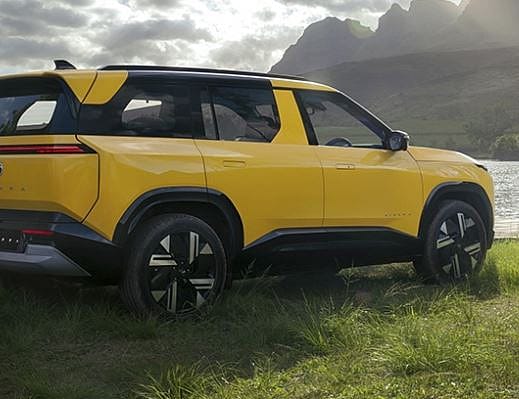
When Tata Motors began pushing electric cars in India, the market was sceptical, infrastructure was thin, and adoption was largely experimental. Today, that hesitation has vanished.
TATA.ev has crossed 250,000 cumulative electric vehicle sales, commanding 66% of India’s electric passenger vehicle market, a scale that signals something far bigger than a company milestone. Electric mobility in India is no longer niche. It is mainstream.
The transformation has been driven by products that Indians actually use—every day, across geographies. Tata’s EV portfolio, spanning the Tiago.ev, Punch.ev, Nexon.ev, Curvv.ev and Harrier.ev, is now present in over 1,000 towns and cities. Crucially, 84% of owners use their EVs as their primary vehicle, logging close to 20,000 km annually.
At the centre of this shift is the Nexon.ev, the first electric car in India to cross 100,000 individual sales, breaking the long-held belief that EVs could not scale beyond early adopters. Tata’s strategy—familiar nameplates, competitive pricing, and visible infrastructure—has normalised EV ownership.
Infrastructure, often the Achilles’ heel of EV adoption, has been tackled head-on. TATA.ev has helped enable over 2 lakh charging points, including 100 MegaCharging Hubs for fast charging. On the service side, the company has built 1,500 EV-dedicated service bays supported by 5,000 trained technicians. More than 50% localisation across its EVs has further reduced cost pressures and supply risks.

Travel Issue 2026
15 May 2026 - Vol 04 | Issue 71
The Cultural Traveller
Looking ahead, the roadmap is aggressive. New launches such as the Sierra.ev and the Avinya range are lined up by 2026. Tata plans to introduce five new EV nameplates by 2030, while scaling charging infrastructure to one million points. This is where policy context matters—and why Tata’s numbers are significant beyond the company.
A recent study by the Council on Energy, Environment and Water (CEEW) shows that India’s EV market is now growing despite lower subsidies, not because of them. Under the PM E-DRIVE scheme, incentives were cut to ₹5,000 per kWh, half of what was offered under FAME II. Yet annualised EV volumes jumped to 1.13 million vehicles, compared with 0.33 million under FAME II.
In other words, demand has started standing on its own.
The study also highlights a shift in vehicle mix. While e-rickshaws dominated early adoption, electric two-wheelers now lead volumes, with buses and commercial EVs gaining steady traction. Adoption, however, remains uneven—diverse in richer states like Delhi and Karnataka, and concentrated around three-wheelers in lower-income states.
That divergence underscores the next challenge. As CEEW notes, India’s EV transition now needs policy coherence, infrastructure readiness, and targeted interventions, not blanket subsidies. Clear 2030 targets, aligned state policies, better data transparency, and incentive recalibration will determine whether electrification spreads beyond a few segments and states.
TATA.ev’s journey shows what happens when product, infrastructure, and consumer trust move together. The policy data confirms something equally important: the market is no longer waiting for incentives to believe. India’s EV transition has crossed its most difficult phase. The next one is about depth, balance, and scale.