Tata Group’s Reputation Tested By Relentless Troubles
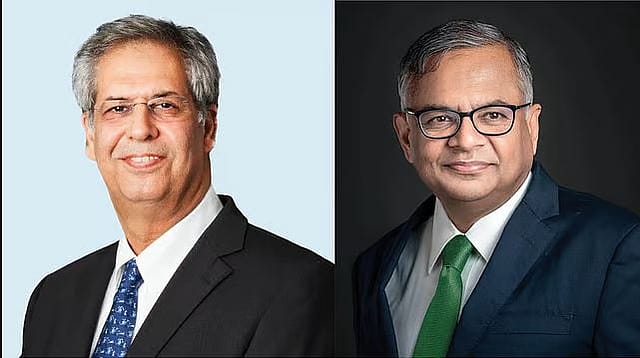
Trouble, they say, never comes alone. Who knows that better than N Chandrasekaran, chairman of the $180-billion Tata Group? This 158-year-old conglomerate, employing over one million people, appears to have hit a rough patch—judging by the headlines it has been making almost every other day over the past year.
Most of the stories reported by the media relate to four entities: TCS, Air India, Tata Trusts, and Tata Sons. These developments must be unnerving stakeholders, as the Tata name—long synonymous with “trust”—has rarely faced such sustained adverse publicity in its history.
Let me briefly outline why these four entities are in the spotlight.

Losing Memory
16 Oct 2026 - Vol 05 | Issue 42
The making of a medical and social emergency
TATA CONSULTANCY SERVICES: The group’s flagship company and India’s largest IT firm has been in the news for troubling reasons. Its Nashik BPO unit in Maharashtra has been rocked by allegations involving religious conversion, sexual harassment, and blackmail. Eight female employees have reportedly made serious complaints against senior colleagues. The “grooming gang” narrative—similar to cases seen in the UK—is gaining traction. The “Process Associate” Nida Khan at the Nashik unit, dubbed the “Lady Captain,” is absconding, raising suspicions of a larger, organised racket.
RSS ideologue S Gurumurthy added fuel to the fire, stating on social media: “It is not simple workplace harassment. It is an ideological adventure sanctioned by Islamic theology. The thrust is religious and cultural imperialism.”
The Tata management has promised “zero tolerance and swift action,” but it raises a troubling question: how did such alleged systemic wrongdoing escape the attention of senior management?
Speaking to The Economic Times T V Mohandas Pai, chairman of Aarin Capital Partners and former HR head and CFO at Infosys, said: “What happened in TCS Nashik is not a governance failure; it is a management failure… a failure of process and systems.”
With the National Investigation Agency (NIA) and Anti-Terrorism Squad (ATS) stepping in, TCS is likely to remain in the headlines.
TATA SONS: THE LISTING DILEMMA: Tata Sons, the group’s holding company controlling 29 listed firms, is under pressure from the Reserve Bank of India to go public. The reason: it has been classified as an upper-layer NBFC, with assets of around Rs 1.75 lakh crore as of March 2025. Its largest minority shareholder, the Shapoorji Pallonji Group, is also keen to monetise its 18.37% stake.
However, Noel Tata, chairman of Tata Trusts, is reportedly averse to listing. Some trustees, including Venu Srinivasan and Vijay Singh, support the move, arguing it would unlock value. Noel Tata has instead asked Chandrasekaran (“Chandra”) to explore alternative routes to buy out the SP Group’s stake without listing.
This divergence among trustees has kept Tata Sons in the news.
TATA TRUSTS: CONTROL TUSSLE: In October 2025, Noel Tata showed who the boss was by blocking Mehli Mistry’s reappointment as a “trustee for life.” Mistry, a close confidant of the late Ratan Tata, stepped aside quietly—only to re-emerge with a legal challenge.
He has written to Maharashtra’s Charity Commissioner alleging serious irregularities in the administration of the Sir Dorabji Tata Trust and Sir Ratan Tata Trust, plus questioning the legality of the board of trustees and seeking the appointment of an administrator.
This unexpected move ensures that Tata Trusts will remain in the news and Noel Tata will have to be ready with the answers, if and when the Charity Commissioner calls him.
AIR INDIA’S BUMPY RIDE: When the Tata Group re-acquired Air India in 2022—69 years after its nationalisation in 1953—expectations were high. Initially, the airline showed signs of revival, but it has hit a series of air pockets.
In 2022, an incident involving an inebriated passenger urinating on a 72-year-old woman aboard a New York–Delhi flight shocked the nation. Three years later, a similar incident involving a Japanese executive on a Delhi–Bangkok flight again damaged the airline’s reputation.
Then came the tragic news: the crash of its Dreamliner in Ahmedabad in June 2025, shortly after take-off, killing 260 passengers. Pilot associations ALPA-I and ICPA have strongly contested the preliminary investigation report, which suggested that fuel switches “transitioned” to cut-off—implying possible pilot error. The issue remains unresolved.
Meanwhile, mounting losses of Rs 20,500 crore in FY26 and the resignation of CEO Campbell Wilson have added to operational concerns. Noel Tata has reportedly sought answers from Chandra on the turnaround timeline. The group is now working with Singapore Airlines, which holds a 25% stake, to chart a path to profitability.
Given its customer-facing nature, Air India is likely to remain under constant public and media scrutiny.
Is this the first time the Tata Group is under fire? Not really.
In 1991, when J R D Tata appointed Ratan Tata as chairman, several powerful satraps—including Russi Mody (Tata Steel), Ajit Kerkar (Indian Hotels), and Darbari Seth (Tata Chemicals)—openly challenged the decision. Ratan Tata managed the day and old guards slinked away.
A similar episode unfolded in 2016, when Ratan Tata and Cyrus Mistry fell out. Despite backing Mistry’s appointment in 2011, Tata removed him in a dramatic boardroom battle. In 2017, N Chandrasekaran was appointed as chairman and since then it has been a smooth run—until now.
Surely, the four companies mentioned above may be giving Chandra sleepless nights!
What has shocked the public is the recent developments at TCS. Allegations of sexual harassment and forced religious conversion that too within a Tata company strike at the very core of its reputation. With the Nashik police, NIA, and ATS investigating, any attempt to downplay the issue could prove counterproductive.
TCS CEO & MD K Krithivasan, as reported in Business Standard (April 18, 2026), has said an initial review found no complaints through official ethics or POSH channels. Yet, given the seriousness of the allegations and the Maharashtra government’s involvement, the matter is unlikely to fade quickly.
The TCS leadership will have to take the bull by its horn and address the issue decisively—anything less could damage the group’s credibility.
Air India remains another major concern. While accidents can occur, the ongoing dispute over the crash investigation requires careful handling to protect both brand and public trust.
By contrast, the challenges at Tata Sons and Tata Trusts appear more manageable and less likely to dent the group’s public image significantly.
The real test for Chandra lies in managing multiple stakeholders—media, shareholders, vendors, customers, employees, and the government—while ensuring that Brand Tata emerges stronger.
Industrialist Harsh Goenka, chairman of RPG Enterprises, has suggested a possible solution via X:
· List Tata Sons to strengthen governance and provide an exit to Shapoorji Pallonji
· Extend Chandrasekaran’s tenure by at least three years
· Have Noel Tata chair two major Tata companies to reinforce family stewardship
· Elevate Neville Tata into a larger operational role
· Rebalance Tata Trusts in line with Noel Tata’s vision
These suggestions seem doable.
The question remains: can Chandra pull a rabbit out of his corporate hat? Only time will tell.