Sensex, Nifty post strong gains amid hopes of easing West Asia tensions
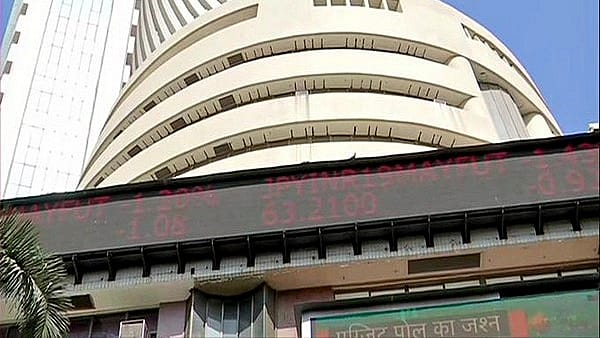
Indian equity markets began the new financial year on a bullish note, with a broad-based rally lifting benchmark indices across sectors. The Nifty 50 climbed 348 points, or 1.56 per cent, to close at 22,679.40, while the Sensex surged 1,186 points, or 1.84 per cent, ending at 73,134.63.
The upbeat momentum was supported by improving global cues and a decline in crude oil prices, which helped boost investor sentiment. Gains were widespread, reflecting underlying strength in domestic equities despite lingering geopolitical concerns.
Ajay Bagga, Banking and Market Expert told ANI "Today's session offered returning though cautious optimism. Asian markets rose on easing geopolitical sentiment, and Europe followed suit with healthy gains. Back home, the breadth was impressive -- 14 of 15 sectors closed in the green, signalling genuine underlying confidence in Indian equities. However, profit booking at the higher levels was expected and, frankly, rational -- smart money doesn't overstay a rally ahead of uncertainty. And that uncertainty has a name: President Trump's address to the nation tomorrow morning".
Why are global cues and geopolitics still crucial for markets?
While the rally was strong, caution continues to underpin market behaviour due to ongoing geopolitical tensions, particularly in West Asia.
Bagga added, "Markets globally will be parsing every word for signals on withdrawing the US from the Iran war. Expectations are high of a US withdrawal but will Iran, Israel play ball. The world is waiting for Trump...".
Investors are closely watching global developments, especially potential policy signals from the United States, which could influence risk appetite and market direction in the coming sessions.
Which sectors led the market rally?

Open Minds 2026
26 Jun 2026 - Vol 05 | Issue 26
The power of ideas and arguments in 50 portraits
Sectorally, the rally was led by strong performances across most indices. PSU banks emerged as top gainers with a rise of 3.90 per cent, followed by media stocks at 3.69 per cent. Auto, IT, and consumer durables also posted notable gains, reflecting rotation into cyclical sectors.
Pharma was the only laggard, slipping 0.99 per cent.
Vinod Nair, Head of Research at Geojit Investments, said "Broad-based buying lifted benchmark indices, with mid- and small-cap stocks outperforming large caps, aided further by a stabilising rupee and softening crude oil prices. Sectoral rotation from defensives toward cyclicals was evident, with banking, chemicals, metals, and realty emerging as the key outperformers of the session,".
How are commodities and global markets shaping sentiment?
Crude oil prices showed signs of easing, with Brent trading around USD 103 per barrel, although still elevated relative to long-term averages. Softer crude typically supports equity markets like India by easing inflationary pressures.
Meanwhile, precious metals continued their upward trajectory. Gold prices rose to Rs 1,52,136 per 10 grams, while silver climbed to Rs 2,39,566 per kg, indicating sustained demand for safe-haven assets.
Global markets mirrored the positive sentiment. Asian indices posted strong gains, with Japan’s Nikkei rising over 4 per cent, Taiwan’s weighted index up more than 4.3 per cent, South Korea’s KOSPI surging 7.78 per cent, Hong Kong’s Hang Seng gaining 2 per cent, and Singapore’s Straits Times advancing 1.85 per cent.
(With inputs from ANI)