No Penalty for Delays: India Offers Relief to Contractors Amid West Asia Disruptions
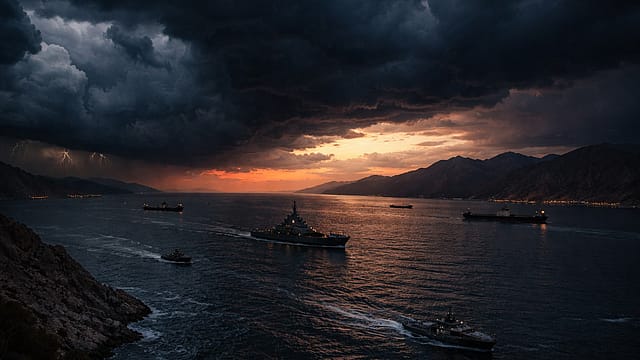
The Ministry of Finance has offered relief to contractors and suppliers working on government projects whose operations have been disrupted by the ongoing situation in West Asia. According to an official memorandum issued by the Department of Expenditure, affected firms will be given additional time to complete their work and will not face penalties for delays linked to these disruptions.
How will delays be treated under the rules?
The government has clarified that such delays will fall under the “Force Majeure” clause, a provision used in contracts to address extraordinary situations. Explaining the concept, the ministry said, “A Force Majeure (FM) means extraordinary events or circumstances beyond human control... such as a war...,” adding that such a clause “frees both parties from contractual liability” when obligations cannot be fulfilled due to such events.
Who can invoke the Force Majeure clause?
The memorandum allows government procuring entities to apply this provision in contracts affected by the current geopolitical situation. “In cases where contracts have been impacted due to the prevailing West Asia situation, ‘the procuring entities may invoke Force Majeure,’” the ministry stated.
This applies broadly across public procurement, covering suppliers, consultants, and contractors engaged in goods, services, and works contracts with government agencies.
Will companies still face penalties for delays?
No penalties will be imposed if delays are directly linked to the disruptions. The government has made this explicit: “The supplier would not be liable for imposition of any such sanction so long as the delay... is the result of an event covered in the FM clause,” the memorandum said.
Survival Instinct
22 May 2026 - Vol 04 | Issue 72
India navigates global economic turmoil with austerity and smart diplomacy
What extensions have been allowed?
The government has set clear timelines for relief. Contracts that were due for completion on or after February 28, 2026, can be extended by a minimum of two months and up to four months without any additional cost or penalty.
However, these extensions are not automatic. Authorities will assess requests individually, verifying whether claims genuinely fall under Force Majeure provisions.
Are there conditions attached to this relief?
Yes, the relief is not unconditional. The ministry stressed that only those parties who were not already in default before the disruptions can claim this benefit. “Invocation of Force Majeure shall be considered valid only where the parties to the contract were not in default... as on 27th February 2026,” it said.
Does Force Majeure cancel all obligations?
The government has clarified that the clause does not entirely waive contractual responsibilities. “Invocation of Force Majeure does not absolve all non-performances... but only such non-performances as are directly attributable to disruptions,” the memorandum noted.
It also emphasised that “all contractual obligations shall revive upon completion of the period,” meaning companies will still be expected to fulfill their commitments once conditions normalise.
Why has this move been taken?
The decision is aimed at easing pressure on businesses affected by geopolitical tensions in West Asia, while ensuring that government projects are not derailed permanently. By allowing flexibility without scrapping obligations, the government is trying to balance relief with accountability.
(With inputs from ANI)