RBI Flags Global Financial Risks but Says India’s Economy Remains Resilient
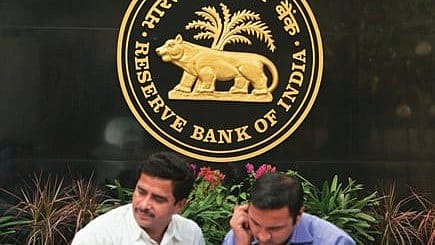
India’s financial system is well-positioned to withstand external shocks and maintain stability despite an uncertain global environment, according to the Reserve Bank of India’s (RBI) June 2026 Financial Stability Report (FSR). The report highlights the strength of domestic financial institutions, robust capital buffers and improving asset quality, while cautioning that global financial risks remain elevated.
Global financial system shows resilience, but risks remain
The Financial Stability Report, which reflects the collective assessment of the Sub-Committee of the Financial Stability and Development Council on risks to financial stability, noted that global markets have largely absorbed recent disruptions, including the impact of the West Asia conflict.
"Despite repeated shocks, the global financial system has thus far demonstrated notable resilience, with markets remaining orderly after an initial bout of volatility following the outbreak of the West Asia conflict," the report said.

Rise of the Pivotal Power
18 Sep 2026 - Vol 05 | Issue 38
The BRICS declaration is a strategic victory for Modi
However, the RBI cautioned that vulnerabilities continue to persist across the global financial landscape.
"Nevertheless, global financial stability risks remain elevated," the RBI said.
According to the report, ongoing supply chain uncertainties could tighten financial conditions and trigger renewed inflationary pressures. Elevated public debt levels, fragilities in bond markets, stretched asset valuations and leverage among non-bank financial institutions remain key areas of concern.
India better placed than peers to absorb external shocks
Against this backdrop, the RBI said India’s economic fundamentals provide a significant cushion against global volatility.
"India's sound macroeconomic fundamentals place it in a stronger position than many of its peers and provide greater resilience to external shocks than in past crisis episodes," the FSR said.
The central bank added that the balance of risks has become more favourable in recent months, supported by the interim peace agreement in West Asia and policy measures aimed at encouraging capital inflows.
The report noted that the domestic financial system continues to remain resilient, supported by healthy balance sheets across banks and non-banking institutions.
"Domestic financial system remains resilient underpinned by strong bank and non-bank balance sheets," the report said.
Banks, NBFCs and insurers remain financially strong
The RBI said scheduled commercial banks remain in a strong position, backed by robust capital and liquidity buffers, improved asset quality and stable profitability.
Stress tests conducted by the central bank indicate that lenders are capable of withstanding severe economic shocks.
"Macro stress test results indicate that the banking system remains well-positioned to absorb potential shocks, with aggregate capital ratios projected to remain comfortably above regulatory thresholds even under hypothetical adverse scenarios," according to the RBI.
The report also highlighted the improving health of the non-banking financial sector.
"Non-banking financial companies (NBFCs) remain financially sound, supported by strong capitalisation, healthy profitability, and improving asset quality," the report said.
Meanwhile, the insurance sector continues to demonstrate stability and adequate financial strength.
"The insurance sector continues to display balance sheet resilience with the solvency ratio of life insurers remaining above the minimum threshold," it added.
The RBI said strong capital buffers, improving asset quality and coordinated policy support are helping India's financial system navigate global economic headwinds while maintaining stability across the banking, non-banking and insurance sectors.
(With inputs from ANI)