Prada to create footwear inspired by Kolhapuri slippers with Indian artisans
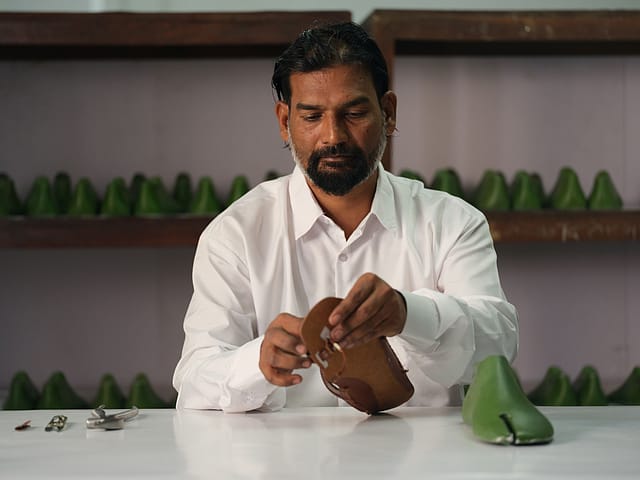
Kolhapuri chappal makers are about to find a new spring in their step, with a little help from Prada. The Italian luxury brand has signed a Memorandum of Understanding with the government organisations LIDCOM (Sant Rohidas Leather Industries and Charmakar Development Corporation Ltd) and LIDKAR (Dr Babu Jagjivan Ram Leather Industries Development Corporation Ltd). Signed at the Consulate General of Italy in Mumbai, during the Italy–India Business Forum on December 10, the agreement aims to lay the groundwork for a “PRADA Made in India x Inspired by Kolhapuri Chappals” project, culminating in a collection of sandals. The limited-edition collection will be manufactured in India, in collaboration with craftspeople across Maharashtra and Karnataka regions. “Combining traditional techniques with Prada’s contemporary design and premium materials, the collection creates a unique dialogue between Indian heritage and modern luxury expression,” reads a statement from Prada which will launch the collection globally in February 2026 across select stores and on its official e-commerce website. According to reports, 2,000 pairs of slippers will be made, each bearing an unprecedented price tag of around $930; there are presently no details of what the artisans will receive of this value.
The collection follows a major controversy earlier this year, in June, when Prada’s presented a line of footwear at its Spring/Summer 2026 menswear show in Milan resembling Kolhapuri chappals. The brand initially labelled the designs as leather slippers, with no mention of design inspiration, sparking major criticism online. Social media users joined fashion designers and industry insiders to highlight the striking similarities between the brand’s luxury designs and Kolhapuris—a handmade footwear traditional to India and one that has survived changing times and trends to remain popular.
Kolhapuri chappals received a Geographical Indication (GI) tag in 2019, applied across eight districts in Maharashtra (Kolhapur, Sangli, Satara, Solapur) and in Karnataka (Belagavi, Bagalkot, Dharwad, Bijapur). Historically handmade by leather-working communities, these open-toed sandals have a distinctive T-strap design usually with braided details and vegetable-tanned colours. Even as these traditional designs have persisted, the Kolhapuri has been reinvented in many avatars by fashion designers and footwear brands. Turn to any footwear store in India, be it in a street market or a glass-fronted malls, chances are that a Kolhapuri sandal or more will be on display.

Youth Issue 2026
24 Apr 2026 - Vol 04 | Issue 68
50 Portraits of Icons and Achievers

Snowballing from social media to courtrooms and artisanal spaces, the controversy sparked conversations on cultural appropriation and a recurring tendency among global fashion brands to draw inspiration and ideas from Indian culture and crafts heritage without meaningful collaborations or engagement with the traditional artisanal communities. Measures such as GI Tags proved ineffective in such cases—the Prada designs were Kolhapuri lookalikes but the brand had, after all, never claimed that these were Kolhapuris and thus did not violate the certification—and the need to safeguard artisanal interest emerged as a major concern. Even as the controversy rightfully spotlighted Prada, it is worth noting that many of the contemporary fashion Kolhapuri designs abounding in the Indian market are not made in the GI-tagged regions either. Many designers drawing inspiration from Kolhapuris work with their own artisanal teams while many of the cheaper and affordable designs are mass-manufactured in countries like China.
Prada eventually conceded that the designs were inspired and still under development, adding that the company was “committed to responsible design practices, fostering cultural engagement, and opening a dialogue for a meaningful exchange with local Indian artisan communities.” Subsequently, a team from the luxury house visited India, including Paolo Tiveron, the director of the men's technical and production department (footwear division) and Daniele Contu, pattern-making manager of the footwear division, to meet artisans and local stakeholders in Kolhapur. This new announcement makes Kolhapuris part of Prada’s “Made In…” project, which aims to partner with master craftspeople around the world on new innovative designs; according to a statement from Lorenzo Bertelli, Prada Group Head of Corporate Social Responsibility, commented, the collaboration will including developing “training programs supporting Indian artisans.”
Indian luxury brands have often turned to Indian craftspeople for years, especially for their incredible embroidery skills and embellishment technicalities—some of the world’s most fabulous red carpet designs and sumptuous couture wouldn’t dazzle so without the artisanal heft of Indian karigars. Barring a few notable instances however, a lot of this labour is hidden behind confidential clauses and lack of credit.
This new collaboration with Prada, if implemented well and with fair wages (considering that eye-watering price), can give the artisans a remarkable opportunity. In a shared story among crafts communities, Kolhapuri artisans have over the years found themselves struggling to keep up with a changing market and reinventing their designs for contemporary consumers. For Prada, the collaboration may be a path to redemption as well as an ethical response in the face of criticism. But for the craftspeople, who are set to craft footwear for one of the world’s top luxury brands, this platform may well become a means to reinventing their crafts for the future.