PepsiCo Is Cutting 1,000 Jobs. America Hasn’t Quit Soda, So What Went Flat?
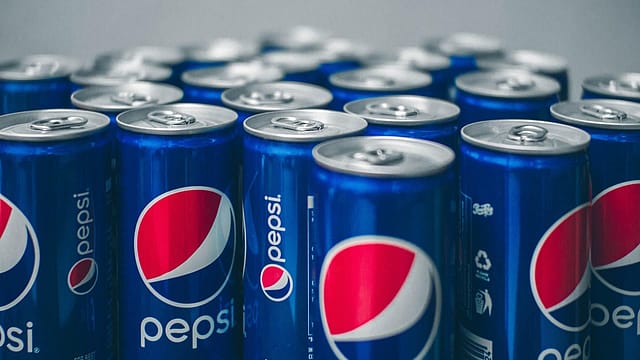
America has not suddenly lost its thirst for soda.
It may, however, have lost some of its appetite for Pepsi.
That distinction matters as PepsiCo prepares to eliminate about 1,000 jobs across its North American foods and beverages operations. In a message to employees reported by Reuters and The Wall Street Journal, PepsiCo North America chief executive Ram Krishnan said the company needed to simplify a business that had become complex and fragmented, clarify accountability and move faster.
The language sounds like a corporate reorganisation. The numbers explain the urgency.
In PepsiCo’s third quarter of 2026, beverage volume in North America declined 2 per cent and food volume was flat. Core operating profit at PepsiCo Foods North America fell 12 per cent on a constant-currency basis. The company cut its full-year core earnings-growth forecast even though reported revenue continued to rise.

The Era of Forever Wars
30 Oct 2026 - Vol 05 | Issue 44
Coping with an explosive Middle East
This is not a company running out of customers everywhere. PepsiCo’s international beverage volume rose 5 per cent during the quarter. Its Europe, Middle East and Africa business delivered 9 per cent organic revenue growth, while food volume in Asia-Pacific rose 11 per cent.
The weakness is concentrated in the market that should know PepsiCo best.
WHY IS PEPSICO CUTTING 1,000 JOBS?
The immediate answer is speed and cost.
PepsiCo employs roughly 306,000 people worldwide, including about 125,000 in the United States. The proposed reduction is, therefore, small relative to its total workforce, but it is part of a much wider effort to remove layers, reduce duplication and generate what management has called record productivity savings.
The restructuring also follows a year of pressure from Elliott Investment Management. The activist investor disclosed a $4 billion position in PepsiCo in September 2025 and argued that the company had become too complicated, too slow and too tolerant of weak execution in North America. Elliott asked PepsiCo to review its brand portfolio, reduce operational complexity and consider refranchising its capital-intensive US bottling network.
PepsiCo subsequently committed to cutting about 20 per cent of the stock-keeping units in its North American foods business, reducing costs and evaluating parts of the beverage system. The latest job losses fit that programme.
They are not evidence that PepsiCo is in financial distress. The company generated $93.9 billion in revenue and $8.2 billion in free cash flow in 2025. They are evidence that its management no longer believes incremental adjustments are enough.
North America produced 60 per cent of PepsiCo’s 2025 revenue and 58 per cent of core segment operating profit. When that engine misfires, faster growth elsewhere cannot completely protect group earnings.
ARE AMERICANS STAYING AWAY FROM COLA?
Not in the simple way the layoff headline suggests.
US carbonated-soft-drink volume declined 0.7 per cent in 2025, according to Beverage Digest, while retail dollars rose 3.1 per cent. That describes a mature category under pressure, not a category falling off a cliff. Consumers bought slightly less liquid but paid more for it.
The important movement is occurring within the category.
Coca-Cola Classic held 18.5 per cent of US carbonated-soft-drink volume in 2025. Dr Pepper retained second place with 8.8 per cent. Pepsi-Cola recovered third place after slipping behind Sprite a year earlier, but its share was reported at about 8.1 per cent. Coca-Cola’s portfolio led in 36 of the 41 largest US metropolitan markets tracked by Beverage Digest, while Dr Pepper gained share in 39.

Pepsi’s decline is longer than the latest quarter. Its flagship cola held about 15 per cent of the US carbonated-soft-drink market in 1995. By 2023, that had fallen to 8.3 per cent.
The competitive evidence also resists the argument that everybody is suffering equally. Coca-Cola’s North American unit case volume was flat in its latest reported quarter, but Trademark Coca-Cola grew and the company gained value share across non-alcoholic ready-to-drink beverages. Keurig Dr Pepper’s US refreshment-beverage revenue rose 10.9 per cent, with volume and mix contributing 7.2 per cent.
Different portfolios and accounting make those figures imperfectly comparable. The direction is still revealing. The market remains capable of producing growth. PepsiCo is not capturing enough of it.
WHAT WENT FLAT AT PEPSI?
Price did much of the work for large food and beverage companies during the inflation shock. PepsiCo was especially aggressive.
That strategy protected revenue and margins when packaging, freight, labour and ingredients became more expensive. It also trained investors to accept rising sales even as physical volumes weakened. Eventually, consumers noticed how expensive the snack aisle had become.
PepsiCo cut prices by as much as 15 per cent on selected Lay’s and Doritos products in early 2026 after shoppers pushed back. Yet inflation in potatoes, cooking oil, corn and transport did not disappear. The company was soon balancing the need to restore affordability against the need to protect profit.
The result is visible in the latest quarter: North American food volume was flat, while core operating profit fell sharply. Frito-Lay remains a formidable business with enormous shelf space, distribution and brand recognition. Its challenge is that customers are becoming more selective about portion, price and ingredients at the same time that cheaper private labels and smaller snack brands are improving.
The beverage business has a different problem. PepsiCo owns strong non-cola franchises such as Gatorade, Mountain Dew, Propel and bubly, and it bought prebiotic-soda brand Poppi for $1.95 billion in 2025. Yet the Pepsi name has lost ground in the cola war, and the company’s broad portfolio has not consistently translated into better in-store execution.
Elliott’s criticism goes to the operating model.
PepsiCo owns much of its North American bottling and distribution network, which gives it control but adds factories, trucks, labour and complexity. Coca-Cola largely relies on refranchised bottlers, allowing the parent company to concentrate on brands, concentrate and marketing. PepsiCo’s system can create powerful food-and-beverage distribution synergies, but it can also make accountability harder to locate when volumes decline.
That is why Krishnan’s use of “complex and fragmented” matters. The layoffs are intended to change how decisions travel through PepsiCo, not merely to trim payroll.
IS HEALTH CONSCIOUSNESS KILLING THE BUSINESS?
Health is changing the business. It is not eliminating indulgence.
Consumers are migrating towards zero-sugar drinks, energy, hydration, protein, fibre and products marketed as functional. They still buy soda and chips, but more of them want permission to do so: less sugar, shorter ingredient lists, smaller packs or a claimed benefit.
PepsiCo’s acquisitions show that it understands the change. Poppi gives it a low-calorie prebiotic soda with cultural momentum. The $1.2 billion purchase of Siete Foods added grain-free tortillas, chips, sauces and other products associated with simpler ingredients. These deals are attempts to buy relevance where legacy brands cannot manufacture it quickly enough.
GLP-1 weight-loss drugs add another pressure. Reuters reported that GLP-1 adoption had reached 21 per cent of US households by May 2026, based on a PwC analysis of Numerator data, up from 9 per cent in January 2025. Users tend to buy fewer sweet treats and salty snacks. EY-Parthenon has estimated that altered eating patterns linked to the medicines could remove as much as $12 billion from snack sales over a decade.
Those figures deserve caution. They describe a structural risk to the entire food industry, not proof that GLP-1 medicines caused PepsiCo’s latest volume declines. Coca-Cola and Keurig Dr Pepper are exposed to the same health trends and are currently performing better in key areas. Affordability, brand strength, innovation and store execution remain more immediate explanations.
The more accurate conclusion is that GLP-1 drugs accelerate a shift already under way. They make smaller portions, protein, fibre and functional products more important, while punishing companies that depend too heavily on selling more calories at higher prices.
HOW IS PEPSICO PERFORMING GLOBALLY?
Better than the American headlines imply.
PepsiCo’s third-quarter net revenue rose 5.6 per cent and organic revenue grew 3.1 per cent. International beverages delivered 7 per cent organic revenue growth and 5 per cent volume growth. Europe, the Middle East and Africa produced 9 per cent organic growth. Latin American foods grew volume 3 per cent, while Asia-Pacific foods grew volume 11 per cent.
This geographical spread is one of PepsiCo’s greatest strengths. Products, pricing and consumer cycles differ across more than 200 countries and territories. Weakness in US cola can be cushioned by snacks in emerging markets or beverages sold through international franchise partners.
It also creates an uncomfortable contrast. PepsiCo can still grow strongly where per-capita consumption, retail distribution and middle-class spending have room to expand. In mature North America, it must win share from powerful rivals while persuading financially stretched consumers to pay for familiar products.
India illustrates the opportunity. PepsiCo India reported total revenue of ₹9,789 crore and profit after tax of ₹905 crore for the year ended December 2025, according to company executives cited in published reports. The company has committed up to ₹5,700 crore of investment through 2030, largely to expand food manufacturing in Madhya Pradesh, Assam and Tamil Nadu. India is among PepsiCo’s top 13 markets, and its foods business grew about 11 per cent in 2025 even as weather and intense competition softened beverages.
The lesson is not that PepsiCo should retreat from America. It is that the company’s next phase of volume growth may increasingly come from markets such as India while the United States becomes a battle for share, efficiency and relevance.
WHY DID PEPSICO CUT ITS OUTLOOK IF REVENUE GREW?
Because revenue quality matters.
PepsiCo lifted its expectation for reported 2026 revenue growth to roughly 6 per cent, helped partly by acquisitions and currency movements. At the same time, it reduced expected core earnings-per-share growth to between 2.5 and 3.5 per cent from the previous range of 5 to 7 per cent.
That gap says costs are rising faster than the company can comfortably absorb and that North American improvement is arriving later than planned. Buying growth through acquisitions or obtaining it through price increases does not carry the same economics as selling more cases and bags through an efficient system.
The stock market has noticed. PepsiCo’s share price has lagged the broader US market over several years, helping create the opening for Elliott. Investors are asking whether the combined snacks-and-beverages model still produces enough advantage to justify its complexity.
CAN THE TURNAROUND WORK?
Yes, but cutting jobs will not restore fizz by itself.
PepsiCo needs to make its everyday brands feel affordable without surrendering margin, reduce a sprawling range of slow-selling products, accelerate innovation and recover shelf-level execution. It must use Poppi and Siete as growth platforms rather than expensive trophies. It also has to decide whether owning so much of its US bottling system remains a strategic advantage.
Most importantly, it must rebuild the Pepsi trademark. A drinks company can diversify into sports hydration, energy, water and functional soda, but it should worry when its name-bearing product falls behind a rival that is gaining share in nearly every major metropolitan market.
The company still possesses exceptional advantages: a $93.9 billion revenue base, billion-dollar brands, unmatched snack distribution, enormous cash generation and international scale. The danger is not collapse. It is prolonged underperformance hidden by pricing, acquisitions and growth elsewhere.
That is what makes the 1,000 job cuts significant. Numerically, they remove less than one per cent of PepsiCo’s US workforce. Strategically, they admit that the North American machine was built for a different consumer and a slower competitive age.
Americans have not stopped drinking soda. They are drinking a different mix, demanding better value and giving more of their loyalty to Coke, Dr Pepper, energy drinks and newer functional brands.
PepsiCo’s problem is, therefore, harder than a declining category. The category still has customers. PepsiCo has to win them back.