ONDC at Four: How India’s Open Commerce Network Is Quietly Rewiring Digital Trade
India’s Open Network for Digital Commerce (ONDC) has completed four years, marking a pivotal phase in the country’s attempt to reshape e-commerce as a public digital good rather than a platform-controlled marketplace.
Launched in 2021, ONDC was designed as an open, interoperable network that breaks platform silos and allows buyers and sellers to transact seamlessly across multiple applications. Four years on, the network has expanded well beyond its original mandate, touching mobility, logistics, financial services and public infrastructure use cases.
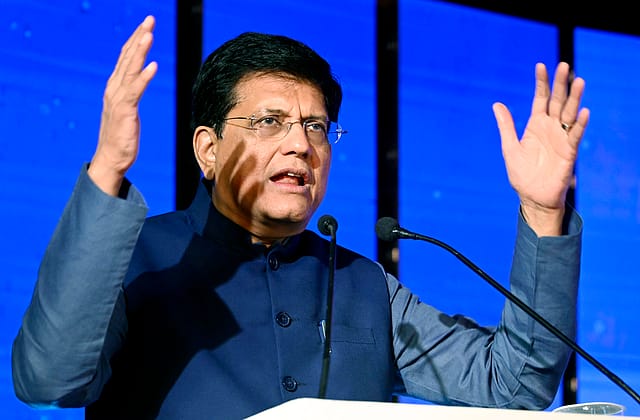
Union Commerce and Industry Minister Piyush Goyal said ONDC has transformed India’s e-commerce landscape by enabling open participation, fostering innovation, and strengthening trust between buyers and sellers. “By bringing small shopkeepers into the digital marketplace and widening access for all, it has strengthened trust, benefiting both consumers and sellers,” he said in a post on X.

Look Who's Talking Regime Change
23 Oct 2026 - Vol 05 | Issue 43
According to data shared by the minister, ONDC has facilitated over 350 million transactions so far, signalling growing adoption across sectors and regions. A core objective of the network has been to bring small retailers and local businesses into the digital economy, reducing their dependence on large, closed platforms.
The network’s expansion has been broad-based. In mobility, ONDC has unlocked nearly 80% of India’s metro ticketing inventory, along with intracity bus ticketing across 21 cities, enabling multi-app access to public transport. In hyperlocal commerce, the onboarding of over 12 regional fleet operators has contributed to 64% growth in supply.
ONDC’s partnership with the National Restaurant Association of India (NRAI) has also reshaped food delivery economics, enabling 15–20% lower consumer pricing by reducing platform commissions and increasing competition. In agri-commerce, India Post-backed packaging, warehousing and last-mile delivery services have improved market access for Farmer Producer Organisations in Gujarat.
Financial inclusion has emerged as another key frontier. ONDC has enabled Micro-SIPs, onboarded more than 10 first-time mutual fund distributors, and attracted investors largely from Tier-2 cities, highlighting its potential beyond metro markets.
As India doubles down on digital public infrastructure—alongside UPI, Aadhaar, Jan Dhan and CoWIN—ONDC stands out as a bold attempt to make commerce open, decentralised and platform-agnostic, with ambitions that extend well beyond national borders.
Why ONDC Matters Beyond India
ONDC matters globally not because it is an Indian e-commerce experiment, but because it challenges a deeply entrenched global assumption: that digital commerce must be owned, controlled, and monetised by a handful of dominant platforms.
At its core, ONDC is an open-protocol commerce network, inspired by the same principles that shaped the internet itself—interoperability, decentralisation, and public digital infrastructure. Similar thinking underpins global frameworks such as Digital Public Infrastructure (DPI) promoted by institutions like the G20, the World Economic Forum, and multilateral development bodies. ONDC extends this philosophy to commerce, an area that has so far remained heavily platform-centric worldwide.
Globally, policymakers are grappling with the risks of platform concentration—ranging from data monopolies and high seller commissions to reduced competition and consumer lock-in. ONDC offers a counter-model: one where buyers and sellers interact across apps, logistics providers compete openly, and innovation shifts from owning the marketplace to improving services on top of it.
For emerging economies in Africa, Southeast Asia, and Latin America—where small businesses struggle to access digital markets without surrendering margins to large platforms—ONDC is being watched as a replicable blueprint. Even developed markets, where antitrust scrutiny of Big Tech is intensifying, see ONDC as a live experiment in how open networks could rebalance digital commerce without dismantling markets altogether.
In that sense, ONDC is not exporting an Indian solution. It is testing a global idea: whether commerce, like payments or identity, can function as a shared digital rail rather than a private toll road.
(ANI and yMedia are content partners for this story)