NSE Gets SEBI Approval for IPO. Why India’s Stock Exchange Listing Matters
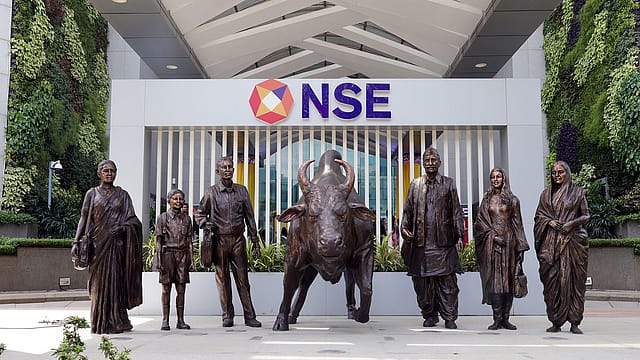
The company that runs one of India's biggest stock markets is now preparing to enter the stock market itself.
The National Stock Exchange of India (NSE) has received approval from the Securities and Exchange Board of India (SEBI) for its proposed initial public offering (IPO), clearing a major hurdle in a listing that investors have been waiting for.
SEBI included the approval in its processing-status report for the week ending Friday.
The clearance does not mean NSE's shares will start trading immediately. The exchange still has to complete the remaining steps, update its offer document and announce the final details and timeline of the issue. But after years of anticipation, the IPO has now moved considerably closer to the market.

Losing Memory
16 Oct 2026 - Vol 05 | Issue 42
The making of a medical and social emergency
And it is likely to be one of the most closely watched listings in India's financial sector.
Why NSE Going Public Is Different
An IPO by a large company is hardly unusual. An IPO by the institution that operates one of India's principal stock exchanges is another matter.
NSE is at the centre of India's equity market, with its platform used for trading shares and a wide range of financial products. Once listed, the exchange itself will become a publicly traded company.
That creates an interesting circle. Investors who use NSE's trading platform to buy and sell shares will eventually be able to buy and sell NSE's own shares on the public market.
More importantly, the listing will give the market a real-time valuation of the exchange. Until now, NSE has remained privately held. A public listing will allow investors to put a price on the business every trading day.
That is one reason the IPO is expected to attract considerable attention.
NSE Is Not Raising Fresh Money
There is, however, an important detail that could easily get lost in the excitement around the listing.
NSE is not using the IPO to raise fresh capital.
The proposed issue is entirely an Offer for Sale (OFS), meaning existing shareholders will sell their shares to public investors.
According to the draft offer documents, up to 148.91 million equity shares, each with a face value of Re 1, will be offered.
The money paid by investors will go to the shareholders selling those shares. NSE itself will not receive the proceeds.
This is different from a fresh share issue, where a company creates new shares and sells them to raise money for the business.
For NSE, therefore, the IPO is primarily about changing the ownership of the company and bringing its shares into the public market, rather than raising a new pool of capital for expansion.
Why Are 20 Merchant Bankers Working on the IPO?
The scale of the proposed listing is also evident in the number of financial institutions involved.
NSE has appointed 20 Book Running Lead Managers (BRLMs), or merchant bankers, for the IPO. Kotak Mahindra Capital Company is the coordinating lead manager.
Merchant bankers essentially help a company take an IPO from paperwork to the public market. They work on the offer documents, regulatory process, issue structure, investor marketing and eventual share sale.
Having 20 institutions involved underlines how significant the proposed issue is expected to be.
It also reflects the broad investor interest that is likely to surround a company as closely linked to India's financial markets as NSE.
What Does SEBI’s Approval Actually Mean?
SEBI's approval is an important milestone, but it is not the final green light for investors to start buying NSE shares.
The regulator examines the company's draft offer document before the IPO can proceed. Its observations then have to be addressed as the company moves towards the final offer document.
NSE will now have to complete the remaining formalities before the issue can open for subscription.
The exchange has not yet announced the final IPO date through the information provided in its draft filing.
That means investors still have to wait for crucial details such as the issue price, subscription dates and the final structure of the offering.
Those details will determine how the market values NSE when it finally makes its debut.
What Investors Will Be Watching
The biggest question surrounding the IPO will ultimately be simple: how much will NSE be worth?
The public issue will provide the first opportunity for a broad pool of investors to buy into the exchange and, after listing, for the market to continuously value the company.
Investors will therefore look beyond NSE's position as India's largest stock exchange. They will also examine its earnings, growth prospects, competitive position, regulatory environment and ability to benefit from India's expanding financial markets.
The listing could also make NSE more visible to ordinary investors.
Until now, most people may have thought of NSE simply as the platform through which they buy or sell shares. A public listing turns the exchange itself into an investment story.
A Long-Awaited Listing Moves Closer
NSE's road to the public market has been unusually long.
The June 17 filing of its draft red herring prospectus formally restarted the process towards the proposed IPO, and SEBI's latest approval marks another major step forward.
The next phase will be about the details.
NSE will need to finalise its offer document, complete the remaining listing formalities and eventually announce when investors can subscribe to the issue.
The IPO is expected to be among India's biggest public offerings, although its eventual size and valuation will depend on the final terms.
For NSE, the irony is hard to miss. The exchange that has helped build India's public equity market is now preparing to become part of it.
And once its shares begin trading, the market will finally get to decide what India's biggest stock exchange is worth.
(With inputs from ANI)