Meet the Invisible Unicorn: Born in UK, Built in Bharat
In Murshidabad, a tea seller starts keeping a notebook for his daily sales. It is not for memory. It is for billing.
A few months ago, cash was enough. Now, a regular customer asks for a GST invoice. Someone else wants a digital payment record. The tea still costs the same. The transaction does not.
In Firozabad, a tailor signs up for a business registration for the first time. Not because he planned to expand, but because a supplier insists on paperwork. In Shahjahanpur, a small trader opens a separate account for his shop, keeping business money apart from household expenses. It is a small shift. It changes how the business is seen.

Greening the Future
23 Jul 2026 - Vol 05 | Issue 30
Securing a sustainable India
These are not isolated moments but signs of a broader transition. Millions of small businesses across India are moving, slowly and unevenly, from an informal way of operating to a more formal one. The push is coming from many directions. Digital payments have reduced the role of cash, GST has made billing visible, and Udyam registration is opening doors to formal credit.
In the middle of this shift sits a platform that is not widely known outside startup circles, but is quietly building its largest base here. Tide, a UK-based fintech unicorn, now has over a million users in India, and more than 90% of them come from smaller towns and cities.
For most of these businesses, the problem is not access to a single product. It is the absence of a system.
A small shop owner may not have an accountant. Billing is handwritten. Payments are split between cash and UPI. Personal and business money flow through the same account. When a need arises, whether it is a GST registration or a loan, the process starts from scratch each time.
How Tide is building a financial platform for India’s small businesses
This is the gap Tide is trying to fill.
The company positions itself not as a bank, but as a business financial platform for small enterprises. Its typical user is not a fast-growing startup or a well-structured SME. It is a one-person operation, sometimes supported by a few family members or employees, trying to manage multiple moving parts without formal support.
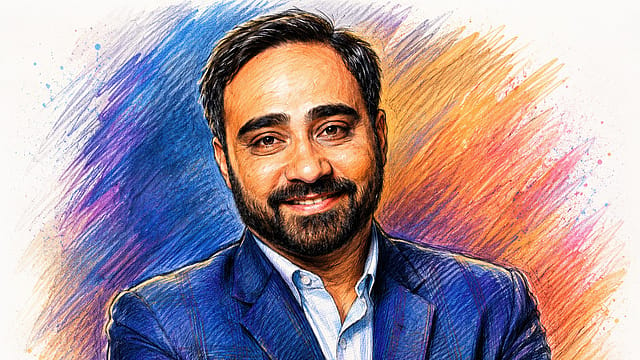
“We are building for someone who does not have a finance function,” says Gurjodhpal Singh, CEO of Tide India. “As the business grows, their needs change, but they still lack the tools to manage it.”
The approach is simple in design, but layered in execution. Instead of offering a single service, Tide brings together a set of basic utilities: Business registration, GST compliance, invoicing, expense tracking, payments, access to credit. Each solves a small, specific problem. Together, they begin to resemble a system.
This bundled approach matters because the economics of serving this segment are difficult. A standalone product, whether it is accounting or registration, does not generate enough value on its own. But when multiple services are used on the same platform, the model begins to sustain itself.
For the user, the shift is gradual. A business might start with opening a separate account. Then move to generating invoices. Then register for GST. At some point, it may seek formal credit for the first time. Each step builds on the previous one. The role Tide plays is to make these steps easier to access and connect. Not as isolated transactions, but as part of a continuous journey from informal to formal.
From the beginning, Tide’s growth in India has not been driven by the usual markets. Large cities were never the centre of gravity. The traction came from elsewhere.
More than 90% of its users are from tier III towns and beyond. Places like Bareilly, Murshidabad, North 24 Parganas, and Kota are markets where small businesses are large in number, but thinly served when it comes to formal financial tools.
This was not entirely by design. It was also a function of where the need was most visible.
In larger cities, access to banking, credit and digital tools, while not perfect, is relatively easier. In smaller towns, the gaps are sharper. A business may run entirely on cash. Credit often comes from informal lenders. Registration and compliance are seen as complex or unnecessary until they become unavoidable.
Over the past few years, that equation has started to change.
Digital payments have expanded rapidly, reducing the reliance on cash. GST has made billing more structured and visible. Udyam registration has created a pathway for small businesses to enter formal systems and access benefits tied to it. Together, these shifts have nudged businesses towards formalisation, sometimes by choice, often by necessity.
Women entrepreneurs, MSMEs and the shift to formal finance in India
For a segment that has historically operated outside formal systems, even small changes have a compounding effect.
This is especially visible among women entrepreneurs. In many cases, access to finance and networks has traditionally been mediated through family or local intermediaries. According to Tide’s own research, more than half of women business owners still rely on male family members to access credit, and a large majority remain disconnected from formal business networks.
But as transactions move online and processes become more standardised, some of those barriers begin to weaken.
A business that can generate its own invoice, accept digital payments, and build a transaction trail starts to stand on its own. The dependence on intermediaries reduces. Visibility improves. Access, slowly, expands.
Tide has leaned into this shift. It has set a target to bring hundreds of thousands of women entrepreneurs onto its platform over the next few years, alongside initiatives such as mentoring roadshows and community-led programmes in smaller towns.
These efforts are still early, and the gaps remain significant. But they reflect a larger change underway. As the system becomes more accessible, new participants begin to enter, not all at once, but in steady numbers.
For platforms like Tide, this creates both an opportunity and a constraint.
The opportunity lies in the scale. India’s small business base is vast and still expanding. Each year, more businesses begin the process of formalisation, even if in small steps. The constraint is that this transition is uneven. Awareness varies, digital familiarity varies, and trust in new systems is still being built.
As a result, adoption does not follow a straight line. It moves in phases.
A business might begin by accepting digital payments because customers demand it. It might register for GST when a supplier insists. It might explore formal credit only after exhausting informal options. Each trigger is different, but the direction is similar.
Tide’s growth has followed this pattern. Instead of trying to change behaviour upfront, it positions itself at the points where change is already happening, and attempts to make that transition smoother.
If the need is clear, the next question is harder: How do you reach this user at scale?
In its early days in the UK, Tide relied heavily on digital channels. Customers would discover the product online, search for it, and sign up. That playbook did not translate easily to India’s smaller towns.
Customer acquisition through digital channels was expensive. More importantly, it assumed a level of familiarity and trust that did not always exist. “The expectation was that a large part of the business would come through digital,” Singh says. “What we saw was very different.”
The shift forced a rethink.
Inside Tide’s hybrid model: combining on-ground reach with digital tools
Instead of relying only on online channels, Tide began building a distribution network on the ground. It partnered with local agents and small businesses that already had reach within their communities. These were not large, branded organisations, but smaller, often local entities with established relationships.
They would introduce the product, explain how it worked, and help with onboarding. The process itself remained digital, but the entry point was physical.
This hybrid model became central to how the platform scaled. It also brought its own set of challenges.
Training a distributed network takes time. Messaging can vary. Trust has to be built repeatedly, not assumed. In many cases, the first barrier is not the product, but the hesitation to move away from familiar, cash-based systems.
In towns where awareness of financial products is uneven, the presence of a local intermediary changes the interaction. A business owner is more likely to engage when the product is explained in familiar terms, often in the local language, by someone they already trust.
Even then, adoption is not immediate. A business might sign up but delay usage. It might explore one feature but ignore others. The journey from onboarding to active use is often slower than expected.
Over time, Tide expanded this approach. It invested in training these partners, built small on-ground teams in select regions, and created feedback loops to understand what was working and what was not.
The learning went both ways.
Insights from these markets began shaping the product itself. Features were prioritised based on actual usage patterns rather than assumptions carried over from other geographies. In some cases, initial hypotheses did not hold. The idea that digital acquisition alone could drive scale had to be reworked early.
Alongside this, the company began organising small, local sessions in towns and clusters. These were not sales events in the traditional sense, but forums where small business owners could discuss practical issues, from managing cash flow to understanding registration requirements.
In places like Jammu or parts of Rajasthan, such sessions often brought together first-time entrepreneurs, many of them running home-based or family businesses. For some, it was their first interaction with a structured business network.
Scale without visibility: the next challenge for Tide in India
These efforts do not scale as quickly as digital campaigns. They require time, local knowledge, and sustained engagement. But for a segment that sits at the edge of the formal economy, this slower approach often works better.
It also reflects a broader reality. In much of India, the transition to digital systems is not purely an online journey. It is guided, explained, and sometimes negotiated on the ground.
For Tide, this has meant building not just a product, but a distribution model that mirrors the complexity of the market it is trying to serve.
As more small businesses enter formal systems, the role of platforms like Tide is likely to expand.
Access to credit is still uneven. Insurance penetration remains low. Many businesses continue to operate with thin margins and limited buffers. For a segment this large, even incremental improvements in access and efficiency can have outsized effects.
Tide’s next phase will depend on how it builds on this base. Expanding its product stack, deepening partnerships, and improving access to formal financial services will be part of that journey.
But there is another challenge that is less operational and more structural.
Despite its scale, Tide remains largely invisible. It does not operate in the consumer spotlight. Its users are not the ones who drive mainstream narratives. The businesses it serves are small, local, and often outside the view of the wider market. Growth, in this case, does not automatically translate into recognition.
In some ways, that invisibility is by design. The platform sits behind the business, enabling rather than advertising. Its role is to simplify processes, not to become the centre of attention.
But as it expands, visibility will begin to matter. Not in the sense of brand recall alone, but in building trust at scale. In a market where familiarity still shapes adoption, being known can be as important as being useful.
For now, Tide continues to grow where the shift is already underway. In smaller towns, among first-time entrepreneurs, at the edge of the formal economy. Quietly, and largely out of view, it is becoming part of the infrastructure that supports that transition.