Maruti’s Record Year Sets the Pace as India’s Auto Industry Gears Up for 2026
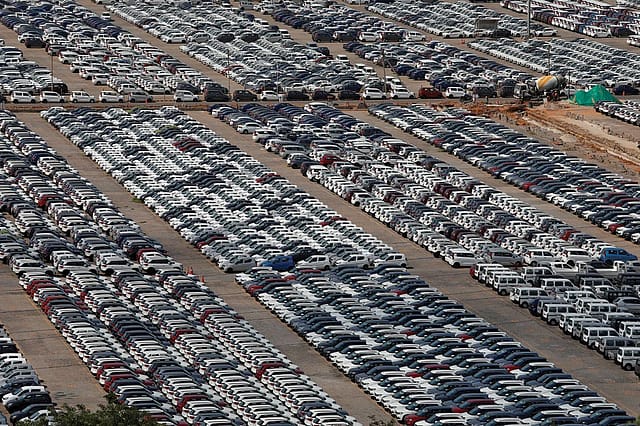
Maruti Suzuki India closed calendar year 2025 with its highest-ever annual production of over 22.55 lakh vehicles, underlining the scale and resilience of India’s largest carmaker. This marked the second consecutive year the company crossed the 20-lakh-unit milestone, a rare feat in the domestic auto industry.
Maruti Suzuki India closed calendar year 2025 with its highest-ever annual production of over 22.55 lakh vehicles, underlining the scale and resilience of India’s largest carmaker. This marked the second consecutive year the company crossed the 20-lakh-unit milestone, a rare feat in the domestic auto industry
Maruti’s leadership attributes the milestone to deep localisation and supply-chain integration. Managing Director and CEO Hisashi Takeuchi said the achievement reflected employee dedication and close collaboration with supplier partners, while reinforcing India’s growing competitiveness as a global auto manufacturing hub
Sales Momentum Matches Manufacturing Scale
Production gains were mirrored in sales performance. Maruti Suzuki reported total sales of 217,854 units in December 2025, sharply higher than the same month last year. Domestic sales alone hit an all-time high of 182,165 units, signalling robust demand across urban and rural markets.
For the full year, Maruti recorded its highest-ever total sales of 2.35 million units, including record exports of nearly 396,000 vehicles, a reminder that the company’s growth story now stretches well beyond India’s borders
Maruti’s record year caps a strong 2025 for the broader auto sector, buoyed by improving rural sentiment, infrastructure spending, and favourable macroeconomic conditions. As the market leader, Maruti’s performance often acts as a bellwether, and its numbers suggest underlying demand remains resilient.
Survival Instinct
22 May 2026 - Vol 04 | Issue 72
India navigates global economic turmoil with austerity and smart diplomacy
What Comes Next: A Crowded and Competitive 2026
With Maruti setting the benchmark, 2026 is shaping up to be one of the most competitive years yet for Indian automakers. Major manufacturers such as Maruti Suzuki, Tata Motors, Kia, Hyundai, Renault and Mahindra are lining up a wave of new launches and upgrades across both EV and ICE segments.
Maruti is expected to debut its first electric SUV, the e-Vitara, featuring advanced driver assistance systems, multiple battery options and a projected range of up to 500 km. Tata Motors is gearing up to launch the Sierra EV, while Kia, Hyundai, Renault and Mahindra are refreshing key models to defend and grow market share.
Together, these launches signal a market entering 2026 with confidence.
Why Maruti matters in an EV world
Maruti still matters in an EV world because it owns what most EV hopefuls don’t: India at scale. While rivals race to launch electric flagships, Maruti controls the country’s deepest distribution network, unmatched service reach, and the most cost-sensitive customer base. In a market where EV adoption will be gradual, Maruti’s strength in hybrids, efficient ICE vehicles, localisation, and supplier integration gives it the cash flows and patience to time its EV transition.
Crucially, India’s EV story will be written in mass segments, and not premium niches. Charging infrastructure gaps, range anxiety, and price sensitivity mean millions of buyers will move in phases from petrol to hybrid, and then to electric. Maruti understands this glide path better than anyone. Its upcoming EVs are designed to absorb demand at scale once economics and infrastructure align. In an EV world obsessed with disruption, Maruti represents continuity with leverage.
(ANI and yMedia are the content partners for this story)