Inside the Rise of Mustafa Suleyman, the Man Steering Microsoft’s AI Conscience
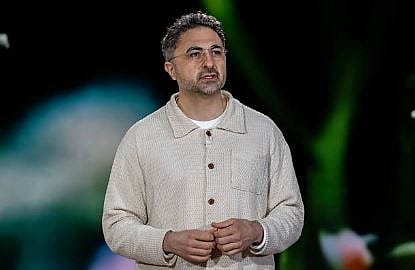
As artificial intelligence hurtles toward superintelligence, a small group of leaders now sit at the fulcrum of its future. Among them, Mustafa Suleyman, Microsoft’s AI chief, occupies a uniquely fraught position: building systems powerful enough to compete at the frontier—while promising to stop if they endanger humanity.
In an industry defined by speed, Suleyman is arguing for restraint.
Why Suleyman’s vision matters now
In March 2024, Microsoft hired Suleyman to lead its newly formed consumer AI division, following a $650-million deal that effectively absorbed his startup, Inflection AI. The appointment was more than an executive shuffle—it signalled Microsoft’s intent to pair scale with stewardship.
By November 2025, Suleyman unveiled the MAI Superintelligence Team, a research unit tasked with building what he calls humanist superintelligence: AI that is powerful, but deliberately constrained—aligned to human values and halted if it poses existential risk.

The Health and Wellness Issue
25 Sep 2026 - Vol 05 | Issue 39
Speaking on The Mishal Husain Show in December 2025, Suleyman made an unusually explicit pledge: if AI systems begin to threaten humanity, development will stop. As Bloomberg noted, such a commitment is rare in an industry racing toward artificial general intelligence.
The stakes are enormous. Microsoft is investing tens of billions in AI infrastructure. Safety, once an academic concern, is now a boardroom imperative.
From philosophy dropout to AI power broker
Suleyman’s rise has been anything but conventional.
Born in London in 1984 to a Syrian taxi-driver father and an English nurse mother, he studied philosophy and theology at Oxford before dropping out at 19. His early work focused on social impact: founding a counselling helpline for young Muslims, serving as a policy officer for London mayor Ken Livingstone, and launching Reos Partners, a conflict-resolution consultancy.
In 2010, he co-founded DeepMind alongside childhood friends Demis Hassabis and Shane Legg. Google acquired DeepMind in 2014 for $400 million, placing Suleyman at the heart of applied AI.
At DeepMind, he helped translate theory into practice—overseeing projects that cut energy use in Google data centres by up to 40% and launching DeepMind Health, which applied AI to eye disease detection and kidney-failure prediction.
Controversy, reckoning, and reinvention
Suleyman’s DeepMind years were also marked by controversy. In 2019, allegations of an aggressive management style led to his being placed on administrative leave. An external investigation followed. Suleyman later apologised, took a policy-focused role within Google, and left the company in 2022.
That reckoning reshaped his public posture.
Soon after, he co-founded Inflection AI with LinkedIn billionaire Reid Hoffman, building Pi, an emotionally intelligent chatbot designed to support users through conversation rather than productivity. TIME named Suleyman among the 100 most influential people in AI in both 2023 and 2024.
What is “humanist superintelligence”?
At Microsoft, Suleyman has sharpened his thesis.
Humanist superintelligence, as he defines it, rejects the idea of a reckless sprint toward general intelligence. Instead, it prioritises focused systems that solve real problems while remaining controllable, interpretable, and aligned. In his view, narrowly deployed AI carries fewer alignment risks than unconstrained general systems.
According to GeekWire, Microsoft’s superintelligence group is hiring more than 100 researchers across the US and London, drawing talent from multiple AI labs.
On the Moonshots with Peter Diamandis podcast, Suleyman was blunt about the economics: competing at the AI frontier will cost “hundreds of billions of dollars” over the next decade.
Can ethics survive commercial pressure? Sceptics remain unconvinced. Microsoft must justify massive capital expenditure to shareholders. Rivals like Meta are pursuing aggressive timelines with fewer public ethical commitments. Critics question whether safety pledges can withstand competitive pressure.
Suleyman argues Microsoft’s history matters. “We’ve got that reputation because the company’s been careful,” he told Bloomberg in December 2025. “Setting out a vision of humanist superintelligence is part of that discipline.” If enforced, his insistence on containment and alignment before deployment could influence industry standards. Whether competitors follow suit is far from certain.
What comes next
Suleyman’s approach represents a counter-narrative to Silicon Valley’s winner-takes-all mindset. Despite intense competition, he remains in contact with peers across the industry, including Sam Altman, Dario Amodei, and Hassabis—relationships that underscore how intertwined the AI world remains.
As AI systems grow more capable, the decisions made by leaders like Suleyman will shape how humans coexist with machines that increasingly rival their own intelligence.
The question is no longer whether superintelligence will arrive—but whether it will be built with limits. For Mustafa Suleyman, the future of AI depends on proving that power and restraint can coexist.
(yMedia is the content partner for this story)