India’s Textile Industry To Get Zero-Tariff Access Like Bangladesh Under US Trade Deal: Piyush Goyal
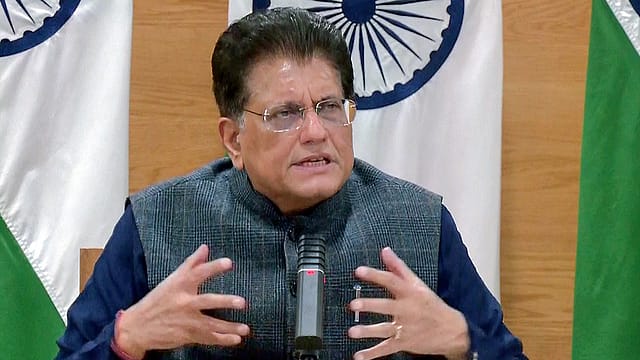
Union Commerce Minister Piyush Goyal on Thursday addressed concerns that the Indian textiles industry would be hit by duty differentials vis-a-vis Bangladesh after the neighbouring country signed a deal with the United States.
The US and Bangladesh signed an agreement on February 9, reducing reciprocal tariffs to 19 per cent from 20 per cent previously announced.
Alongside, zero-tariff access for special textile and apparel products made with US cotton and man-made fibre was provided under the arrangement.

Losing Memory
16 Oct 2026 - Vol 05 | Issue 42
The making of a medical and social emergency
A report from SBI Research noted that the US imports around $7.5 billion worth of textiles from India and around the same quantity from Bangladesh.
It said that while tariffs on Bangladesh goods have been reduced to 19 per cent, a clause allowing a certain quantity of textile and apparel goods from Bangladesh to be imported at zero reciprocal tariff depending on the quantity of cotton and man-made fibre textile inputs imported from the US has raised concerns that Bangladesh’s exports could become more competitive and harm Indian exporters.
Will India Get Zero-Tariff Benefits Under the India-US Trade Deal Like Bangladesh?
Responding to these apprehensions, Goyal said India would receive similar benefits.
“India also has the same facility and India will also get it. Right now, our framework agreement is being made. When the interim agreement is finalised, then you will get to see this in the fine print,” he told reporters.
India and the US have finalised an interim trade deal framework last week, with the fine print expected in March.
Both countries have decided to address non-tariff barriers affecting bilateral trade. The conclusion of negotiations followed a phone call on February 2 between Prime Minister Narendra Modi and US President Donald Trump.
The Trump administration had imposed tariffs on major exporters to the US, including India. There was a 50 per cent tariff on goods from India entering the United States since August 2025.
The tariffs have now been reduced to 18 per cent following the leaders’ recent phone call. The Bilateral Trade Agreement, formally proposed in February 2025, seeks to more than double bilateral trade from the current $191 billion to $500 billion by 2030.
Why Did Piyush Goyal Accuse Rahul Gandhi Of Misleading Parliament On The Bangladesh Trade Deal?
Goyal also hit out at Leader of Opposition Rahul Gandhi over remarks on the Bangladesh deal.
“He spread another lie in the Parliament that Bangladesh has got more benefits from the trade than India. Just as Bangladesh has a facility that if raw material is purchased from America, then if you process it and make cloth and export it, then it will be available at zero reciprocal tariff,” the minister said.
He added that Rahul Gandhi should apologise to the farmers of India, fishermen, workers in MSMEs and Vishwakarmas.
Goyal said the interests of farmers have been protected under the India-US trade deal, with 90 to 95 per cent of farm products produced in India kept out of the agreement.
Separately, speaking on the sidelines of the INDovation Medtech Innovation and Startup Showcase at Vanijya Bhawan, the minister said that with most of the developed world signing trade agreements with India, affordability and last-mile delivery would become India’s cutting edge.
“Huge markets have been opened up with all the trade deals that we have done. We now cover, as a nation, 70 per cent of the global GDP with market access, in most cases, at zero duty for your products,” he said, adding that the world is now the market and stage for Indian startups.
“It is a wonderful feeling seeing the Indian start-up and innovation system growing,” he said. “Seeing our innovators work with a sense of patriotism gives us complete confidence that India is on the right path towards the goal of Viksit Bharat by 2047.”
Addressing startups at the event, Goyal said India is at the cutting edge of technology, made possible by encouragement from both the government and the private sector.
He said innovation is supporting India’s day-to-day needs and real imperatives on the ground. He also called for showcasing success stories and encouraging entrepreneurs who may not have succeeded in their first attempt, saying failure is not a stigma.
(With inputs from ANI)