Indian Aviation’s Stress Test in 2025: When Growth Outran Readiness
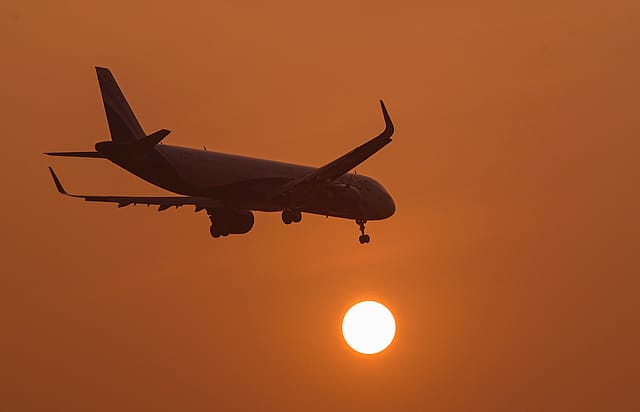
2025 should have been a celebratory year for Indian aviation. Passenger volumes hit record highs. Airport infrastructure expanded at an unprecedented pace. India reinforced its position as the world’s third-largest domestic aviation market.
Instead, it became a stress test.
Behind the big numbers, the system strained under aircraft shortages, pilot fatigue rules, and manpower gaps, proving that infrastructure alone cannot carry an industry growing this fast.
A year of record traffic, and mounting pressure
By late 2025, India operated more than 163 airports, and domestic traffic touched historic highs. March alone recorded over 102,000 flights, underlining how crowded Indian skies have become.
Annual domestic passenger traffic is estimated at 165–170 million, growing nearly 9% year-on-year—faster than China’s growth, even though China operates a much larger fleet. Airlines signalled confidence through scale: India’s order book crossed 1,750 aircraft, one of the largest globally. Yet the irony was stark as many planes never made it into service.
Rising aviation turbine fuel (ATF) prices and a weakening rupee compounded pressure, pushing the industry toward ₹9,500–10,500 crore in net losses for the year.
The grounded fleet crisis
The single biggest operational challenge of 2025 was aircraft availability.

Iran After the Imam
06 Mar 2026 - Vol 04 | Issue 61
Dispatches from a Middle East on fire
Between 15% and 17% of India’s fleet remained grounded due to engine issues, spare-part shortages, and global supply-chain delays. Boeing’s capped production—around 38–42 aircraft a month—hit newer airlines especially hard. Carriers resorted to costly wet leases to keep schedules afloat, driving up operating expenses. With buffers already thin, even minor technical faults or crew unavailability triggered cascading cancellations.
Growth had outpaced resilience.
When safety rules met reality
The most visible breakdown came in December.
India’s largest airline, IndiGo, cancelled more than 4,300 flights, disrupting travel plans for over a million passengers. The immediate trigger was the full implementation of Phase II Flight Duty Time Limitations (FDTL) from November 1, 2025.
The rules—designed to combat pilot fatigue—mandated longer weekly rest and stricter limits on night landings. The intent was sound. The timing was not. Rolled out during the peak wedding and holiday season, the rules exposed a critical shortage of trained pilots and reserve crews. With no operational slack, schedules collapsed.
India’s aviation regulator, the DGCA, was forced to grant a temporary stabilisation window until February 10, 2026—acknowledging that safety reform cannot succeed without workforce readiness.
Infrastructure surged—but software lagged
If operations struggled, infrastructure offered rare relief.
The long-awaited Navi Mumbai International Airport is set to open on December 25, 2025, making Mumbai India’s first dual-airport city. The Noida International Airport is close behind, with an early-2026 launch.
These secondary hubs are crucial to easing pressure on Delhi and Mumbai—two of the world’s most congested airports. But 2025 also underlined a new truth: building runways is easier than synchronising air traffic management, staffing, and ground connectivity.
India has the hardware. The software still needs tuning.
How India stacks up against China
The contrast with China remains sharp. China operates over 4,000 commercial aircraft, nearly five times India’s fleet of just over 800. It is also pushing self-reliance through its domestically built COMAC C919.
India remains import-dependent—but its strategy is different. Rather than matching China fleet-for-fleet, India aims to build mega international hubs, capturing long-haul and transit traffic currently dominated by Middle Eastern carriers. The ambition is to turn Indian airports into global destinations, not just domestic feeders.
Regulation under pressure
The DGCA stepped up oversight in 2025, launching comprehensive audits and tightening safety compliance. Yet systemic gaps remain.
Nearly 22% of air traffic control positions are vacant, placing intense strain on existing staff during peak months. During the December disruption, the regulator also capped economy fares to prevent price spikes—signalling a more passenger-centric stance. The challenge ahead is balance: enforcing safety without destabilising operations.
What changes in 2026?
The industry enters 2026 with cautious optimism. Passenger growth is expected to moderate to 4–6%, giving airlines breathing room. While aircraft deliveries should begin to outpace groundings, easing capacity stress, hiring and training cycles are expected to stabilise pilot availability under FDTL norms. International expansion will take centre stage as Navi Mumbai and Noida open new long-haul opportunities.
The turbulence of 2025 delivered a hard lesson: scale without resilience is fragile. If 2026 gets manpower, safety, and infrastructure to move in lockstep, Indian aviation could finally turn raw growth into sustainable flight.
(yMedia is the content partner for this story)