India-US Trade Pact Protects Key Agricultural Products, Offers Zero-Duty Access to Indian Exports: Centre
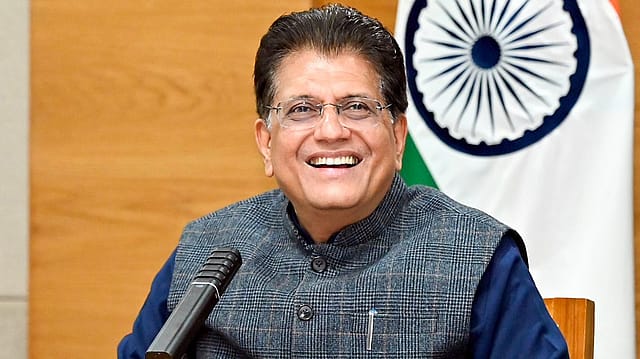
India has structured agricultural market access for the United States in the proposed India-US Bilateral Trade Agreement in line with its approach in previous trade pacts, basing concessions on product sensitivity, the Government of India said in a statement on Monday.
Under the agreement, agricultural offers have been categorised into immediate duty elimination, phased elimination of tariffs over a period of up to ten years, tariff reduction, margin of preference and tariff rate quota mechanisms, the Central government said.
Highly sensitive agricultural sectors have been kept fully protected under what the government described as a “carefully crafted exemption category”.

Losing Memory
16 Oct 2026 - Vol 05 | Issue 42
The making of a medical and social emergency
These include meat, poultry and dairy products; genetically modified food products; soyameal; maize; cereals; millets such as jawar, bajra, ragi, kodo and amaranth; fruits including bananas, strawberries, cherries and citrus fruits; pulses such as green peas, kabuli chana and moong; oilseeds; certain animal feed products; groundnuts; honey; malt and its extracts; non-alcoholic beverages; flour and meals; starch; essential oils; ethanol for fuel; and tobacco.
Phased Tariff Cuts for Food Processing Inputs
For certain intermediate products used by India’s food processing industry and sourced from multiple countries, tariffs will be phased out over a period of up to ten years.
These products include albumins; specific oils such as coconut oil, castor oil and cotton seed oil; hoofmeal; lard; stearin; modified starches; peptones and their derivatives; and plants and parts of plants.
The government said the extended timeline would provide adequate adjustment space for domestic stakeholders.
A tariff reduction category has been applied to select sensitive agricultural products to ensure that a measured level of duty protection continues.
Examples cited include parts of plants, olives, pyrethrum and oil cakes.
Tariff Cuts, Quotas Shape Access for Select Farm and Beverage Products
Alcoholic beverages have also been offered under tariff reduction, along with minimum import price-based formulations, in keeping with India’s approach in other free trade agreements, according to the statement released today.
Certain highly sensitive items have been liberalised through Tariff Rate Quotas, under which limited quantities can be imported at reduced duties.
Products in this category include in-shell almonds, walnuts, pistachios and lentils.
Government data shows that India currently maintains a trade surplus of $1.3 billion in agricultural trade with the United States.
In 2024, India’s agricultural exports to the US stood at $3.4 billion, while imports were valued at $2.1 billion.
Farmers, MSMEs to gain from greater US market access: Goyal
Speaking to ANI yesterday, Union Commerce Minister Piyush Goyal said Indian agricultural products would face lower reciprocal tariffs in the US market compared to competitors, with several items remaining at zero duty.
“All our agri products now will have a lower reciprocal tariff than our competition at 18%. In addition, I'll read out some items where we reduced reciprocal tariffs to zero. As with tea and coffee, and their extracts, there'll be zero tariff. On spices, there'll be zero tariff. On coconut or coconut oil, there'll be zero tariffs. On vegetable wax, zero tariff,” Goyal said.
On Saturday, addressing a press conference, the minister said that agricultural exports from India would enter the US market without duty, while no tariff concessions had been extended to American farm products entering India.
“Agricultural products from Indian farmers will be exported to the United States at zero duty. At the same time, no tariff concessions have been granted for agricultural products from US farmers entering the Indian market,” Goyal said.
“I can state categorically and without any hesitation that India's farmers, MSMEs, artisans, and craftsmen will not suffer any loss. On the contrary, India will benefit from greater access to the US market,” he added.
(With inputs from ANI)