How Indian Companies Are Turning Business Travel Into a Growth Engine
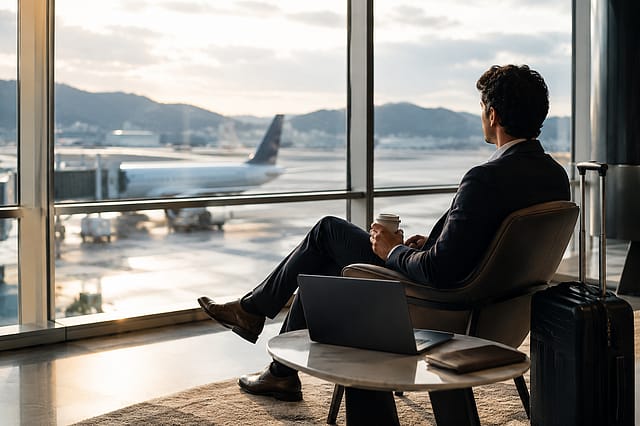
For years, business travel sat in the expense column. It was necessary, but negotiable.
That framing is now breaking.
Across India Inc., travel is being redefined. Not as a cost to contain, but as a lever to pull—one that drives revenue, deepens relationships, and holds teams together in a distributed, fast-moving world.
As companies expand into new markets and hybrid work stretches teams across cities, face-to-face is making a quiet comeback. Not out of nostalgia, but because it works. Deals close faster. Trust builds quicker. Alignment sharpens.
And that shift is changing everything.
Companies are no longer asking how to cut travel. They’re asking how to make it count.

Losing Memory
16 Oct 2026 - Vol 05 | Issue 42
The making of a medical and social emergency
Expectations have moved just as fast.
Employees today don’t see work travel as an inconvenience to tolerate. They expect it to work—seamlessly. Comfortable stays. Reliable bookings. Safety. Support that doesn’t disappear after office hours.
What used to be an operational afterthought—employee care—is now a leadership priority.
That’s why organizations are leaning into real-time tracking, vetted travel partners, and 24/7 assistance. The chaos of ad-hoc bookings is giving way to structured, policy-led systems. It’s not just about control—it’s about accountability, visibility, and experience.
Under the hood, the machinery is being rebuilt.
Companies are moving toward unified travel platforms—bringing flights, trains, hotels, cabs, visas, and events into a single system. One interface. One policy layer. One source of truth.
The impact is immediate: fewer leakages, better compliance, cleaner data.
Policies, too, are getting smarter. Instead of one-size-fits-all rules, companies are tailoring travel based on role, purpose, seniority, and even destination. The idea is simple—balance cost with experience, not one at the expense of the other.
And then there’s data.
Leadership teams are no longer flying blind. Dashboards now track spend, savings, compliance, and vendor performance in real time. Add to that the rise of post-paid billing and cashless travel, and a long-standing friction—expense reimbursements—is quietly disappearing.
But the biggest shift isn’t operational. It’s cultural. Travel is becoming a tool to build companies, not just run them. Off-sites. Leadership huddles. Team retreats. MICE events.
These aren’t perks anymore. They’re deliberate investments in alignment, culture, and cohesion—especially in organizations where people don’t sit in the same room every day.
Travel, in that sense, is doing something spreadsheets can’t. It’s building belonging.
The data backs the momentum.
In 2024, 10.52% of foreign arrivals into India were for business and professional reasons. On the outbound side, 14.92% of Indians traveled for business—clear signals of a system in motion.
According to GBTA, India is now among the fastest-growing business travel markets globally.
Traveler behavior tells a similar story. A global survey of over 7,300 business travelers found that:
86% see work trips as valuable
74% took one to five trips last year
Average spend per trip jumped 35% year-on-year
Even adoption curves are shifting. 78% of Asia-Pacific travelers, including India, are now comfortable using AI-led booking tools—pushing corporate travel firmly into a tech-first era.
All signs point in one direction. Business travel in India is becoming sharper, more structured, and more intentional. Companies that treat it as infrastructure—not expense—will move faster. They’ll build stronger client relationships, tighter teams, and more resilient cultures. Because this is no longer about moving people. It’s about moving the business forward.
(The author is cofounder of Co-Trav)