From Margins to Mainstream: Why Gold Loans Are Reshaping India’s Credit Mix
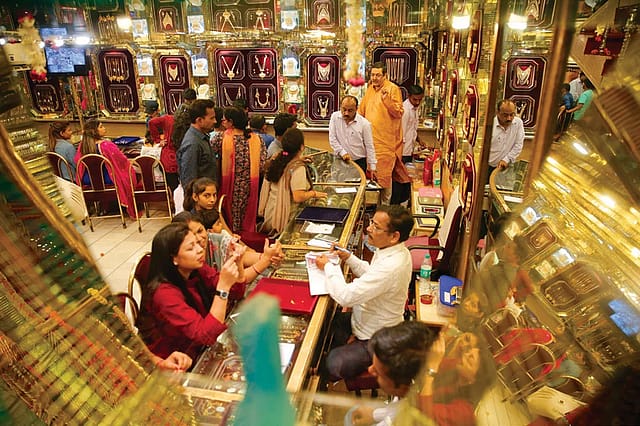
While much of the spotlight has been on unsecured retail credit and digital lending excesses, gold loans have been scripting a quieter, sturdier story in India’s credit market.
According to insights shared at the Antique Stock Broking BFSI Conference 2025, gold loans have scaled nearly four-fold over the past three years, emerging as one of the fastest-growing and most resilient lending segments. The surge has been powered by a sharp rise in gold prices, higher average ticket sizes, and sustained demand from semi-urban and rural borrowers—segments where gold remains both culturally trusted and financially liquid.
More than 60% of new retail loan originations are now coming from semi-urban and rural regions, experts noted. In these markets, gold loans are increasingly preferred over unsecured credit because they offer faster disbursement, flexible repayment structures, and lower effective interest rates. While delinquencies tend to be structurally higher in these regions, lenders are compensating through sharper pricing and tighter underwriting discipline.
From a lender’s perspective, gold loans tick several strategic boxes. Lower credit costs, quicker churn, and strong cross-sell opportunities make them an attractive growth lever at a time when underwriting standards across the system have tightened. Several banks and small finance banks (SFBs) indicated plans to expand gold loan distribution deeper into branch networks over the next two years, positioning the product as a core balance-sheet stabiliser.
The shift is not limited to traditional lenders. Microfinance institutions (MFIs), facing structural constraints in pure-play microfinance growth, are increasingly evaluating secured products such as gold loans and loans against property (LAP) as alternatives to sustain momentum.

War on Iran: The War That No One Won
10 Apr 2026 - Vol 04 | Issue 66
And the price of surviving it
This recalibration reflects a broader trend across banks, NBFCs, and fintechs, where growth strategies are being consciously reshaped. The emphasis has moved toward asset quality, secured lending, and profitability, rather than aggressive balance-sheet expansion. As a result, growth is now skewed toward secured retail products—home loans, gold loans, LAP, and MSME financing—while unsecured retail and corporate credit remain subdued.
Regulatory data underscores the shift. The RBI’s State of the Economy report for December 2025 noted that loans against gold jewellery have been recording triple-digit growth since February 2025, far outpacing overall credit expansion. Outstanding balances in gold loans surged 128.5% year-on-year to ₹3.38 lakh crore in October 2025.
While gold loans still account for a relatively modest share of total non-food credit, their proportion has nearly doubled over the past year—signalling a decisive change in borrower preference and lender strategy. In an environment defined by caution and recalibration, gold loans have quietly become the unlikely star of India’s retail credit mix.