From Customs Overhaul to F&O Tax Hike: Key Signals from Sitharaman After Budget
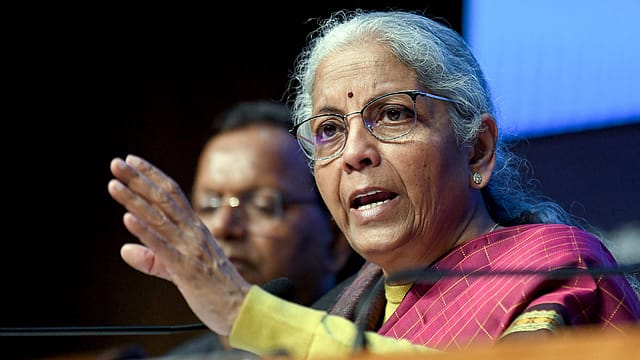
A day after the Union Budget 2026, Finance Minister Nirmala Sitharaman clarified two key policy moves, customs duty rationalisation and a hike in STT on F&O, underscoring the government’s push for stable growth over short-term speculation.
No US Angle in Customs Duty Overhaul
Dismissing speculation of global pressure, Sitharaman said the customs duty overhaul announced in Budget 2026-27 has “no influence” from US tariffs, stressing that the exercise has been underway for nearly two years. The finance minister clarified that the government did not assess or factor in the impact of US tariff actions while framing the customs proposals.
What the Duty Changes Aim to Achieve
In her Budget speech, Sitharaman proposed reductions in Customs and Central Excise duties across select sectors to simplify India’s tariff structure, correct duty inversion, boost exports and strengthen domestic manufacturing. Sectors impacted include marine products, leather and textiles, energy, capital goods for critical minerals, aircraft manufacturing components, and 17 drugs and medicines.
The Modi Years
02 Oct 2026 - Vol 05 | Issue 40
A Nation Rebuilt
STT Hike on F&O: A Check on Speculation
On the hike in Securities Transaction Tax (STT) for futures and options, Sitharaman said the move was aimed squarely at discouraging speculative trading, particularly among retail investors. She cited concerns raised by parents whose children had suffered losses in F&O trading, calling derivatives a “highly speculative market”.
SEBI Data Behind the Decision
Referring to SEBI studies, Sitharaman pointed out that over 90 per cent of retail investors in F&O incur losses, with many continuing to trade despite repeated setbacks. The government noted that the total volume of derivatives trading is more than 500 times India’s GDP, justifying higher STT to curb excessive speculation.
What Exactly Has Changed in STT?
Under Budget 2026 proposals:
STT on futures has been raised to 0.05% from 0.02%
STT on options premium and exercise has been increased to 0.15%
The hike applies only to futures and options, with other asset classes left untouched.
Disinvestment and Banking Reforms Still on Track
Sitharaman reiterated that the government’s stance on disinvestment remains unchanged, confirming that IDBI Bank’s strategic disinvestment has entered its third phase, with technical and financial bids to be invited soon. She also announced that a High-Level Committee on Banking for Viksit Bharat, unveiled in the Budget, will soon draft its terms of reference to examine consolidation and future-readiness of banks.
The Bigger Picture
Together, the tariff rationalisation and STT hike signal a broader policy intent: encourage productive investment and manufacturing, while discouraging excessive risk-taking in financial markets—a balancing act at the heart of Budget 2026.
(With inputs from ANI)