EXPLAINED | UPI Crosses ₹1 Lakh Crore a Day: What Stays Free, and Who Pays?
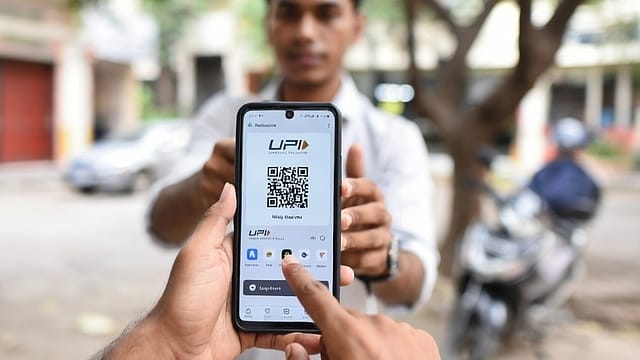
India’s Unified Payments Interface, or UPI, processed a record 25.47 billion transactions worth ₹31.53 lakh crore in October 2026, according to figures from the National Payments Corporation of India (NPCI) reported on November 1. That is 2,547 crore payments and transfers in one month.
UPI processed about 82 crore transactions a day in October, with average daily value crossing ₹1 lakh crore for the first time. This is a monthly average; it does not mean every day crossed that mark.
The record arrives during a dispute over introducing fees for specified merchant payments. Their implementation has been postponed until after Diwali. Customers are not meant to pay those fees.
What exactly is UPI, and where does the money go?
UPI is the instant-payment system developed by NPCI, an entity regulated by the Reserve Bank of India. It lets people transfer money between bank accounts around the clock.

The Era of Forever Wars
30 Oct 2026 - Vol 05 | Issue 44
Coping with an explosive Middle East
For an ordinary bank-account payment, you select a recipient or scan a QR code, check the details and authorise the transfer. The participating banks and UPI network process the payment so the recipient can receive the money.
PhonePe, Google Pay and Paytm provide apps through which people access that network. Using an app does not mean the payment amount becomes the app company’s revenue. The money is being transferred to the recipient.
How much of October’s jump came from having an extra day?
Some of it. October had 31 days; September had 30.
Monthly transaction volume increased by about 5.8% from September’s 24.07 billion. Dividing each month’s total by its number of days produces a smaller increase of roughly 2.4% in average daily transactions. Average daily value rose by about 3.9%. These are calculations using the published totals.
UPI, therefore, grew even after allowing for the longer month. But the daily comparison gives a clearer picture of the increase in activity.
The increase coincided with festive shopping ahead of Diwali, which falls on November 8 this year. The totals cannot isolate how much growth came from festivities, new users or people switching from cash.
Does ₹31.53 lakh crore mean Indians bought that much stuff?
No. UPI includes transfers between people as well as payments to businesses. Sending money to a relative and paying a shopkeeper both contribute to activity on the network.
Its transaction value is therefore different from retail sales, company revenue or the economy’s output. Growth can reflect existing payments moving from another method to UPI, alongside additional spending.
Dividing October’s value by its transaction count gives an average payment of approximately ₹1,238. With transaction numbers growing 23% year-on-year and value growing 16%, the average amount per transaction was roughly 6% lower than a year earlier.
More activity can coexist with a smaller average payment. The figures do not establish whether a particular household is spending more or becoming better off.
Will using UPI now cost customers money?
The announced merchant-fee framework does not introduce a customer charge.
MDR stands for merchant discount rate: the fee a business pays for processing an eligible payment. The Finance Ministry says banks must ensure merchants do not pass it to customers, while UPI apps are prohibited from adding platform fees or hidden charges.
The planned October 15 start was deferred on October 13. NPCI said implementation would follow Diwali on a date to be notified separately.
Which merchants would pay, and how much?
Under the announced framework, specified person-to-merchant payments above ₹2,000 attract 0.4%, capped at ₹300 for transactions of ₹75,000 or more. For an eligible ₹10,000 payment, the calculation is ₹40.
Transfers between individuals remain free, as do merchant payments of ₹2,000 or less. Qualifying small merchants receiving up to ₹1 lakh a month through the designated QR-payment category also retain zero MDR. The ministry estimates approximately 96% of merchant transactions remain unaffected.
Different rates apply in specified categories. Eligible payments above ₹2,000 in sectors including fuel, railways, telecom and insurance attract a flat ₹5. Capital-market payments have a 0.02% rate, capped at ₹300. The standard 0.4% cannot simply be applied to every UPI payment.
Why does India need a funding model for free payments?
Because processing payments still requires technology, banking systems, security and customer support.
The government’s argument is that fees on eligible merchant transactions can support continued investment while protecting customers and small businesses. The receipts are shared within the payments industry; they are not a tax collected by the government.
Payment companies also earn through services surrounding payments. Paytm’s October 27 earnings call described a model of acquiring customers through payments and distributing financial products, including loans supplied by lending partners. It also charges merchants for subscription services.
Retailers have a different concern: another fee can squeeze businesses operating on thin margins. The Confederation of All India Traders welcomed the postponement. That tension explains why record usage has not settled the argument about funding.
Where do PhonePe, Google Pay and Paytm fit into this fight?
They compete for the customers and businesses making those payments.
PhonePe and Google Pay together accounted for about 80% of UPI transaction value in August. That is a value share for that month, rather than an October ranking by transaction count.
Paytm founder and chief executive Vijay Shekhar Sharma set out a one-third consumer-market-share ambition during the October earnings call. It is a management target. Its achievement would depend on winning and retaining customers in a growing market.
The October network total alone cannot show which app gained share or how much profit any company earned.
What happens next?
The immediate policy development to watch is NPCI’s separately notified implementation date and operating instructions for merchant fees. The postponement did not cancel the framework.
November’s figures will show activity during Diwali itself. App-wise data will help establish who captured the growth. Beyond another record, the useful tests are whether payments remain reliable, customers remain protected from charges and merchants continue accepting UPI.