Elon Musk’s $40 billion SpaceX debt deal: Why he predicts a shakeout among 200 AI cloud firms
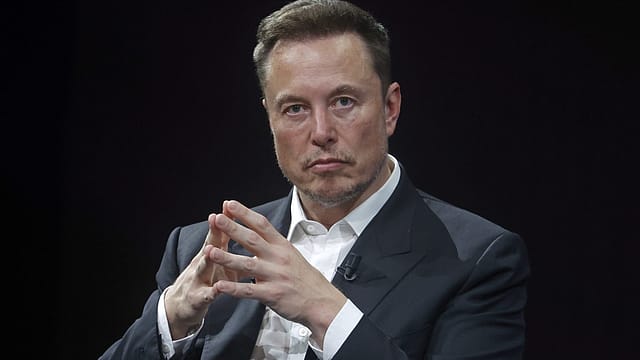
Elon Musk has a stark warning for the companies powering the artificial intelligence boom: having access to advanced chips may not be enough to survive if the money needed to buy them starts drying up.
The SpaceX CEO said more than 200 specialised AI cloud providers could face widespread failures and consolidation as lenders become increasingly reluctant to finance companies that depend heavily on AI data centres for revenue. His prediction comes as SpaceX says it has closed a $40 billion debt deal to fund purchases of graphics processing units (GPUs), the powerful chips used to train and run AI systems.
The contrast is striking. While SpaceX has secured financing for its AI ambitions, Musk believes many smaller players could struggle to keep up.
Why Musk says AI cloud companies could face a funding crisis
In a post on X, Musk said debt markets had largely shut their doors to companies without substantial income from businesses beyond AI data centres. “SpaceX closed $40B of debt for GPUs, but we’re investment grade and have Starlink & launch revenue,” he wrote, pointing to the company's credit standing and its satellite internet and rocket-launch businesses. He then predicted a severe shakeout among the more than 200 companies known as neoclouds. “Some will make it through, but not many,” he said, describing the expected failures and consolidation as “guppy-level death”.

Look Who's Talking Regime Change
23 Oct 2026 - Vol 05 | Issue 43
Neoclouds specialise in providing computing capacity to companies developing and running AI systems. Instead of building every part of their computing infrastructure themselves, AI developers can rent access to powerful processors from these providers.
But supplying that computing power is expensive. Companies must secure advanced chips, build or access data centres and obtain enough financing to expand capacity. If borrowing becomes harder or more expensive, businesses that rely on debt to fund growth could find themselves under pressure.
How SpaceX’s $40 billion financing differs
SpaceX’s position, according to Musk, rests on having revenue streams beyond AI computing. Starlink provides satellite internet services, while the company's launch business generates income from spaceflight operations. That diversification could help reassure lenders in a way that a company largely dependent on renting out AI computing capacity may struggle to match.
Reuters reported on October 25 that Musk said the financing was primarily callable debt for GPU purchases expected to arrive in the first and second quarters of 2027. He added that it would not be a major factor in the current quarter.
There is, however, a distinction between Musk’s announcement and the finer details of the deal. Bloomberg reported on October 26 that people familiar with the discussions said talks over pricing were still ongoing, despite Musk describing the financing as closed.
What the warning means for the AI boom
Musk’s prediction points to a possible divide in the AI infrastructure market: companies with diversified earnings and stronger access to credit may be better placed to sustain enormous spending, while more specialised providers face greater financing risks.
His forecast is not proof that hundreds of companies will fail. Their prospects will depend on borrowing costs, customer demand, operating expenses and whether their investments generate sustainable returns.
Still, the warning highlights a central question for the AI boom. As demand for computing power rises, can the companies building that capacity earn enough to justify the cost? Access to chips may fuel the race, but access to capital could determine who finishes it.
(With inputs from ANI)