Easing Rules for Chinese Firms Unlikely to Rattle India’s Power Equipment Makers: Report
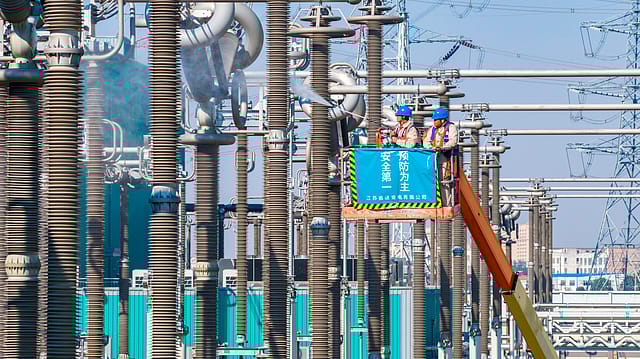
Any reported relaxation in restrictions on Chinese firms bidding for Indian government contracts is unlikely to disrupt domestic power equipment manufacturers, according to a sector update by Systematix Research.
Based on industry interactions, the report suggests that any easing of norms is more tactical than transformative—aimed at resolving supply-chain bottlenecks and improving project execution, rather than opening the floodgates to aggressive competition from Chinese original equipment manufacturers (OEMs).
“The relaxation would most likely be targeted at easing supply-chain constraints and improving project execution, rather than increasing OEM competition,” the report noted.
Several structural factors continue to shield domestic manufacturers. These include the government’s sustained push for localisation, large capital expenditure commitments by Indian power equipment players, and the strategic and national-security importance of the country’s power grid.

Losing Memory
16 Oct 2026 - Vol 05 | Issue 42
The making of a medical and social emergency
Systematix pointed out that government-owned utilities such as NTPC and Damodar Valley Corporation (DVC) continue to show a clear preference for domestically sourced equipment, particularly in thermal power projects. “The higher share of government-owned power utilities suggests continued lower preference for Chinese equipment,” the report said.
Historically, most large contracts awarded to Chinese power equipment suppliers in India were placed by private sector developers. This limits the potential impact of any policy easing on state-led and government-backed projects, which dominate the current power capacity expansion pipeline.
The report also expects minimal disruption across key segments such as transformers, switchgear, substations and grid automation. National security concerns and rising cyber risks linked to critical power infrastructure are likely to keep transmission and grid-related equipment firmly tilted in favour of domestic suppliers.
Among Indian manufacturers, Bharat Heavy Electricals Ltd (BHEL) has the highest overlap with Chinese OEMs. However, its robust order book—providing visibility of more than seven years—shifts the focus toward execution and margin improvement rather than competitive pressure. Other players, including Larsen & Toubro (L&T), are expected to see limited impact due to their diversified business mix and prior experience competing with Chinese firms in overseas markets.
Overall, Systematix Research concludes that any easing of participation norms for Chinese firms is unlikely to materially disrupt India’s power equipment sector in the near term, with domestic players remaining well-positioned amid strong order pipelines, localisation policies, and government support.
(ANI and yMedia are content partners for this story)