Duster Wants You to Forget Diesel. It Once Helped Sell It
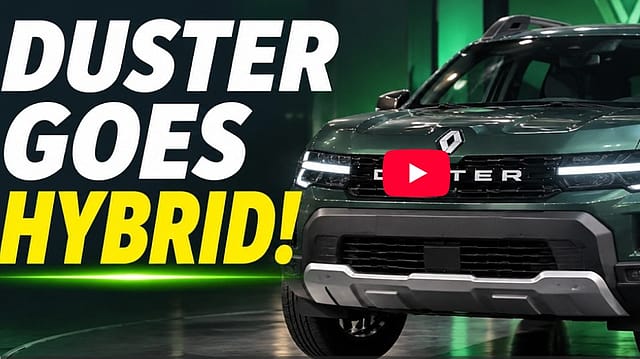
The Duster’s comeback comes with an unusual instruction manual: remember the name, forget the fuel.
Renault’s new strong hybrid is being pitched with a line that leaves little room for interpretation. “Forget diesel, Go Hybrid."
It is an invitation to reconsider a buying habit. It is also an argument with a familiar vehicle’s own sales history.
Renault once promoted Duster diesels on performance, driveability and fuel efficiency. Its March 2016 release celebrated the 1.5-litre dCi engine and offered diesel versions with manual, automated manual and all-wheel-drive configurations. Petrol was available too; diesel was never the whole Duster story. But it was emphatically part of the promise.
Zeroing In on ECI
09 Oct 2026 - Vol 05 | Issue 41
Constitutional legitimacy versus political opportunism
Now the name returns to the same showroom conversation with different advice.
The marketing challenge is to preserve what buyers liked about Duster while persuading them that the machinery delivering those benefits should change. Renault wants the affection to survive an engine transplant.
THE DIESEL HABIT HAS A FAMILIAR FACE
The target is more specific than someone who wants a new SUV.
Renault is courting the buyer who looks to diesel for performance and fuel economy. Its October 9 announcement explicitly describes the strong hybrid as an alternative for customers seeking those attributes.
That is a useful competitive choice. A generic promise of advanced technology makes a vehicle one more entrant in a crowded market. An instruction to forget diesel identifies the decision Renault wants to interrupt.
It also risks unsettling the enthusiast who remembers a diesel Duster fondly. The company has to explain why changing the powertrain carries forward the old appeal, rather than dismissing what buyers valued.
Marketing and branding experts reckon that a comeback name brings an existing promise into the showroom. "The brand has to show which part of that promise survives the change,” says Ashita Aggarwal, professor of marketing at SP Jain Institute of Management & Research. “If customers valued capability and economy, a different technology can renew the relationship by delivering those benefits convincingly,” she adds.
The strongest interpretation of Renault’s pitch is therefore continuity through a different means: keep the SUV’s usefulness, reconsider how it is powered.
THE ARGUMENT UNDER THE BONNET
There is substance behind the provocation.
Renault advertises the strong hybrid from ₹16.99 lakh. Its 1.8-litre petrol engine, two electric motors and battery deliver a combined 160 PS, with ARAI-certified fuel efficiency of 29 km/l. The battery charges during driving, requiring no external charging connection.
The certification figure gives the campaign a concrete talking point. Everyday mileage will depend on use and conditions; a laboratory result cannot settle every owner’s fuel bill.
The absence of external charging has a separate marketing value. A prospective buyer can consider electrification while retaining the familiar routine of visiting a fuel station.
That makes the proposed change less demanding than a wholesale shift to a battery electric vehicle. There is new technology under the bonnet without a new charging routine to organise at home.
But power and a mileage number cannot do the entire selling job. The buyer still has to like the vehicle, accept its price and trust the ownership experience.
THE RIVALS GET TWO WAYS TO ANSWER
Renault’s slogan opens a fight on two fronts.
Diesel remains an available choice in competing SUVs. Hyundai’s current Creta specifications, for example, include a 1.5-litre diesel with manual and automatic transmissions.
A diesel competitor could respond through the complete ownership proposition: purchase price, driving characteristics, maintenance, service access and expected resale. Renault’s claim of better technology or economy does not establish that every diesel buyer would be better off switching.
The second front is more awkward.
Toyota unveiled the strong-hybrid Urban Cruiser Hyryder in India in July 2022. Its current communication continues to sell hybrid technology through Toyota’s global experience.
If Renault persuades a shopper that hybrid is the sensible direction, Toyota can benefit from the same change of mind.
The category argument gets Duster onto a shortlist. Winning the order requires a reason to choose this hybrid over another one. That is the difference between making diesel look less attractive and making Renault look more attractive. The campaign needs to accomplish both.
NOSTALGIA HAS GONE ELECTRIC ELSEWHERE
Renault has rehearsed a related manoeuvre in Europe.
Unveiled in February 2024, the Renault 5 E-Tech electric drew on the familiar identity of an earlier car while using a dedicated electric platform. Its launch material described translating collective memory into a contemporary vehicle.
Ford made another conspicuous move with the Mustang Mach-E, revealed in 2019: the famous sports-car name appeared on an electric SUV, with styling references tying the new vehicle to its established identity.
The shared branding move is to give unfamiliar technology a familiar introduction. A name with a past can make a buyer curious about a vehicle with a different future.
The idea has fresh competitive relevance. On October 13, Reuters reported that European carmakers were reviving classic models as they sought differentiation from Chinese EV competitors. History had become an asset in the contest for buyers.
Duster’s Indian assignment has its own shape. It is a hybrid trying to change the diesel consideration set, rather than a battery electric revival. Its name can earn attention; its economics and experience must earn preference.
THE FUEL BILL IS ONLY ONE BILL
Renault’s own product page points to the wider job. It advertises an ownership programme including three years of scheduled maintenance coverage and 60% assured resale value after three years, subject to terms and conditions.
Those promises address anxieties that a mileage claim leaves untouched.
A customer choosing a vehicle is also choosing a service relationship and an eventual exit price. Confidence in those can matter as much as enthusiasm for what happens on a test drive.
Customers compare the ownership they expect to live with: the upfront outlay, running costs, service confidence and what happens when they sell. “A challenger can make a familiar choice look dated. It still has to make its own choice feel dependable,” says Aggarwal.
That is where Renault’s boldness becomes an obligation. Having named the alternative it wants buyers to abandon, it must answer the practical reasons they might prefer to stay.
THE MEMORY TEST
A familiar badge can bring former owners and curious buyers into the conversation. It cannot prove that the hybrid has displaced diesel in their preferences, and this launch supplies no evidence of such switching yet.
The useful questions will concern consideration, test-drive conversion, the vehicles buyers cross-shop and the reasons they give for choosing Duster. Fuel economy experienced over time and the quality of ownership will influence what comes after the launch excitement.
There is nothing inherently contradictory about improving a familiar vehicle by changing its technology. The contradiction becomes productive when it forces the brand to explain what deserved to be preserved in the first place.
Renault has told buyers to forget diesel. Now it has to give them a Duster worth remembering.