Coca-Cola Austria’s ‘Eco-Friendly’ Packaging: Is Anyone Buying the Story?
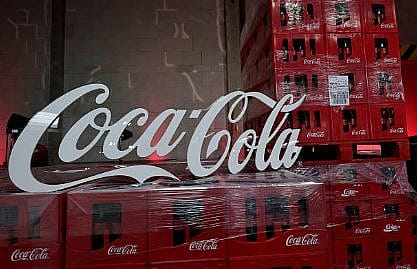
Coca-Cola Austria’s new packaging initiative promises to eliminate plastic shrink wrap from multipacks, but as the world’s biggest plastic polluter announces yet another sustainability effort, the question isn’t whether the change is happening. The question is: whether it matters at all.
The beverage packaging transformation replaces traditional plastic with paper wrap packaging and recyclable handles, claiming to save 200 tonnes of plastic annually.
Yet environmental groups are calling this precisely what they’ve come to expect from corporate giants: textbook greenwashing dressed up as innovation.
Coca-Cola Austria’s new packaging system, launched at the Edelstal facility, replaces traditional plastic shrink wrap with paper wrap packaging featuring recyclable corrugated-paper handles developed in partnership with DS Smith and Krones.
According to Packaging Europe, the design uses a paper band and soft-grip cardboard handle for six-packs of 1.5-liter PET bottles, with the flexibility to adapt for other sizes. The beverage packaging transformation reportedly removes around 200 tonnes of plastic from circulation annually - a figure that sounds impressive until you realize what it’s up against.
Here’s the uncomfortable truth: Coca-Cola has been named the world’s worst plastic polluter for six consecutive years running. According to Oceanea, the company sells more than 100 billion single-use plastic bottles each year, with its products expected to contribute approximately 602 million kilograms of plastic waste to oceans and waterways annually by 2030.

India's Action Hero
27 Mar 2026 - Vol 04 | Issue 64
Riding the Dhurandhar Wave
Against this backdrop, Coca-Cola Austria’s new packaging saving 200 tonnes feels less like a revolution and more like rearranging deck chairs on the Titanic.
WHEN ‘INNOVATION’ LOOKS LIKE GREENWASHING
The cynicism surrounding Coca-Cola Austria’s new packaging isn’t unfounded.
Environmental groups have been vocal in their scepticism, with Greenpeace Africa Project Lead Hellen Kahaso Dena reportedly challenging the company directly: “If Coca-Cola is really serious about solving the plastic and climate crisis, it needs to stop its greenwashing, cap plastic production, and invest in refill and reuse systems.”
The timing of this paper wrap packaging initiative also raises eyebrows. In 2024, Coca-Cola actually lowered its conservation goals, pledging to increase recycled plastic use to just 30-35% globally and ensure collection of only 70-75% of bottles and cans introduced to the market. For a company drowning the planet in plastic, these targets aren’t ambitious. They’re rather insulting.
Let’s talk about what Coca-Cola Austria’s new packaging actually means for the industry. According to reports, the system uses Krones’ LitePac Top technology with tight cardboard clips around bottle necks and kraft paper bands from Mondi. DS Smith President Stefano Rossi mentioned they’re proud to remove single-use plastic, and Felix Sprenger, Supply Chain Director at Coca-Cola HBC Austria, highlighted the Edelstal plant’s role in sustainable beverage packaging.
But here’s what they’re not emphasizing: scaling this globally would require massive investment in specialized equipment like the Krones Variopac Pro machines. The infrastructure costs alone could deter widespread adoption, meaning Coca-Cola Austria’s new packaging might remain a localized PR win rather than a genuine solution.
WHY THIS HALF MEASURE MIGHT BACKFIRE
The UN reports that the world produces 430 million tonnes of plastic annually, with plastic pollution projected to triple by 2060 without decisive action.
Reportedly, the equivalent of over 2,000 garbage trucks full of plastic is dumped into oceans, rivers, and lakes daily. Against this crisis, paper wrap packaging for Austrian multipacks feels like bringing a water pistol to a wildfire.
What’s more troubling is how initiatives like Coca-Cola Austria’s new packaging might actually enable continued inaction. By celebrating minor tweaks to beverage packaging, companies can claim progress while avoiding the systemic changes environmentalists demand: mandatory refill and reuse systems, caps on plastic production, and complete redesigns of distribution models.
Experts note that similar paper wrap packaging systems like KeelClip are expanding across the EU, potentially saving 2,000 tonnes of plastic and 3,000 tonnes of CO₂ annually.
But even these combined efforts barely scratch the surface of the greenwashing accusations levelled against beverage giants. The Austrian pilot proves that alternatives to plastic shrink wrap can work. The real question is whether Coca-Cola will scale Coca-Cola Austria’s new packaging globally or whether this remains another chapter in corporate greenwashing, designed to generate headlines while the plastic keeps flowing.
(yMedia is the agency partner for this story)