Climate change is no longer just an environmental issue. It is an economic one: TERI's Amit Kumar Thakur
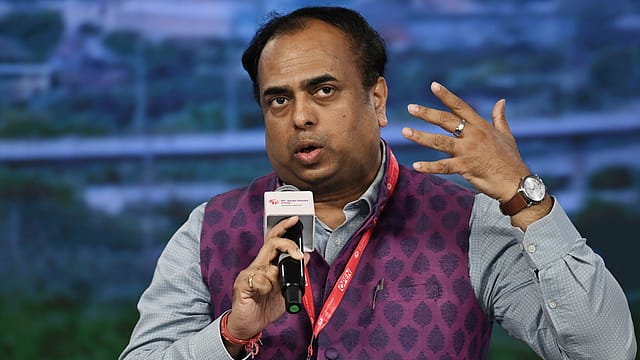
India's transition to a low-carbon economy must be viewed not only through the lens of environmental protection but also as an economic and social imperative, according to Amit Kumar Thakur, associate director and head (CSR) at TERI.
Speaking at OPEN Green Shift, Thakur said climate change is increasingly affecting labour productivity, economic growth and vulnerable communities, making it essential for businesses to integrate sustainability with long-term development planning.
"Changing climate is just not an environmental issue," he said. "It also has a larger impact on economic development and the social sector."

The Identity Project
11 Sep 2026 - Vol 05 | Issue 37
Amit Shah leads the mission for a national demographic correction
He pointed to the growing impact of heat stress on India's workforce, particularly those employed in agriculture and construction, arguing that rising temperatures are already imposing measurable economic costs.
According to Thakur, India lost an estimated 419 labour hours per person in 2024 because of heat stress, with outdoor workers among the worst affected. Unlike employees in the formal economy, many workers in the informal sector lack insurance and adequate social protection, making them especially vulnerable to climate-related disruptions.
Against this backdrop, he said India's sustainability agenda must move beyond compliance and embrace long-term planning that combines environmental goals with inclusive economic growth.
Thakur also highlighted the evolution of corporate social responsibility over the past decade, arguing that CSR has transformed from a statutory obligation into a structured framework for delivering measurable social impact.
When the CSR law was introduced in 2014, many companies viewed it as an additional tax, while non-governmental organisations were still building the capacity to execute projects at scale, he recalled. Today, he said, that scepticism has largely given way to acceptance as companies increasingly see CSR as a strategic tool for sustainable development.
He noted that annual CSR expenditure has grown from around ₹8,000 crore in the first year of implementation to nearly ₹40,000 crore, reflecting stronger corporate participation and a greater emphasis on long-term programmes linked to the Sustainable Development Goals. Rather than one-off initiatives, companies are increasingly adopting multi-year projects with measurable outcomes and greater community impact.
Thakur also pointed to the growing influence of ESG reporting frameworks, saying sustainability disclosures now shape investor confidence as much as financial performance.
Mandatory reporting requirements and increasing scrutiny from domestic and global investors have pushed companies to integrate environmental, social and governance considerations into decision-making across business functions, he said.
Looking ahead, he argued that India's low-carbon transition must remain centred on people rather than technology alone.
While renewable energy capacity and clean technologies will continue to expand, he said policymakers and businesses must ensure that climate action improves livelihoods, strengthens communities and supports India's broader development aspirations.
"A people-centric transition should be taken care of at the household level," Thakur said, adding that sustainable development would ultimately depend on balancing environmental progress with economic opportunity as India works towards its vision of Viksit Bharat by 2047.