America’s Solar Pivot: How India Became the Go-To Supplier
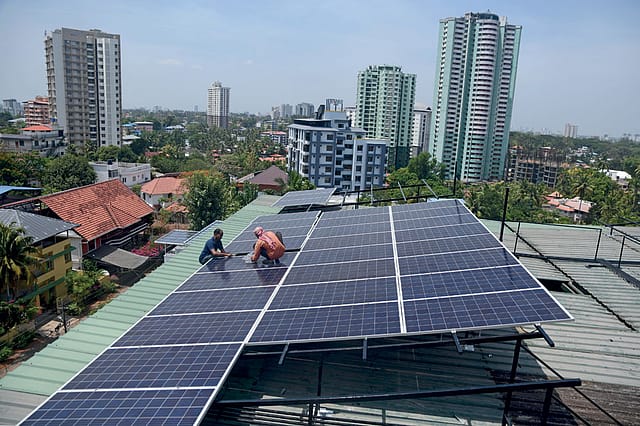
India is rapidly emerging as a key supplier in the global solar supply chain, with the United States turning into its biggest customer. According to a report by PL Capital, nearly 97% of India’s solar module exports between FY23 and FY25 were shipped to the US, driven largely by Washington’s curbs on China-linked supply chains.
The numbers underline the shift. India’s solar module exports jumped almost ninefold in 2023 and then doubled again in 2024, positioning the country as what the report calls a “credible alternative supplier” in the global solar ecosystem.
Cost competitiveness has been central to this rise. Indian-made solar modules are 19–21% cheaper than US-manufactured panels, making them attractive to American buyers racing to add clean energy capacity. The US solar sector had a milestone year in 2024, installing 50 GW of new capacity, supported by federal incentives and state-level push for renewables.
Yet, India is not without competition. Southeast Asian nations continue to dominate US solar imports. While India’s share of US imports rose from 3% in 2022 to 11% in 2024, Vietnam remains the largest supplier with a 36% share, followed by Malaysia and Thailand.
More concerning are the policy risks now surfacing. The US has launched investigations into alleged dumping, citing margins as high as 123% for Indian exports. In addition, a 50% tariff on Indian imports, set to kick in from August 2025, could further strain exporters. Part of this penalty is linked to India’s continued oil imports from Russia, complicating trade ties at a sensitive moment.

The BJP Nation
08 May 2026 - Vol 04 | Issue 70
Now all of India is in his thrall
Back home, India is scaling up to meet both domestic and export demand. The country’s total power generation capacity has grown from 356 GW in 2019 to 475 GW in 2025, largely powered by renewables. Solar manufacturing capacity is expected to touch 180 GW by 2030, supported by policy incentives aimed at turning India into a global clean-energy hub.
The opportunity is real—but so are the risks. India’s solar rise now hinges on how it navigates trade frictions while continuing to build scale, reliability, and trust in global markets.
(yMedia and ANI and content partners for this story)