Taking Flight: Life persists despite loss and grief in Tishani Doshi’s new poems

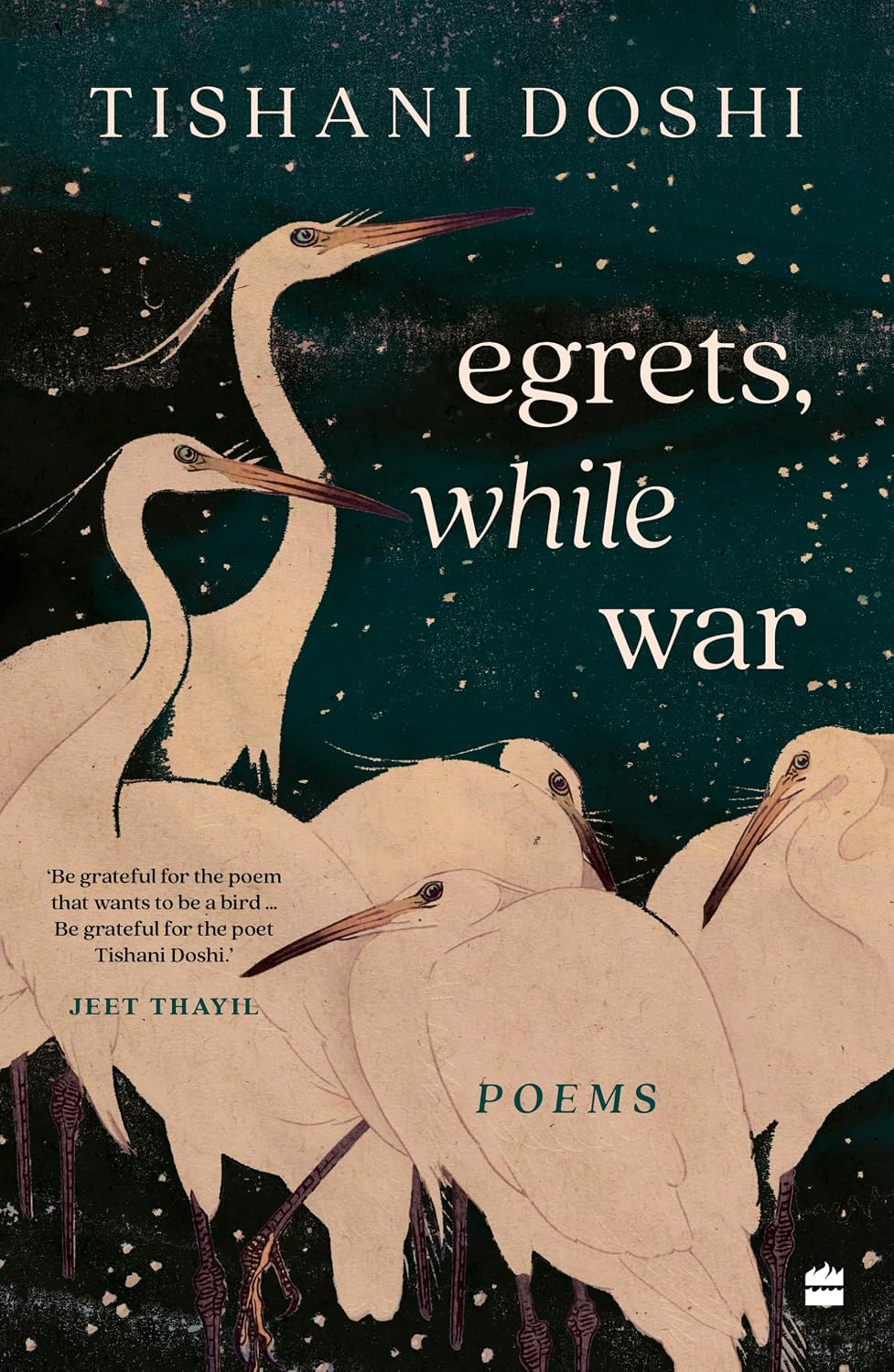
To want to be a bird is to wish to fly. In a world suffused with wonders, birds are among the most otherworldly. For centuries, poets and storytellers have turned to winged creatures as living metaphors of freedom and transcendence as often as misfortunes and calamities. For birds may soar into the clouds and across distant lands, but they also perch and bear witness. They traverse space and time, somewhat like egrets—the long-legged birds that poet Tishani Doshi imagines as “feathered dinosaurs flown in through a hole/ from the past”.
Egrets lend their name to Doshi’s fifth book of poems, egrets, while war, its verses contemplating not merely what is to be free but probing the contours of freedom itself in a world where tragedies keep piling up. Written in response to wars and pandemics, to death and ageing, and the ceaseless passage of time, this is a book filled with elegies as much as hope—that “thing with feathers” as Emily Dickinson wrote.

Losing Memory
16 Oct 2026 - Vol 05 | Issue 42
The making of a medical and social emergency
Birds fly and nest between Doshi’s lines—not just egrets, but also woodpeckers and hoopoes, passenger pigeons and peacocks, eagles and golden orioles, sunbirds and lapwings. Some appear from the pages of history, like the dodo; some fly into being from myths and epics—from the Mundaka Upanisad and the Ramayan. Other creatures flit in and out: wasps and moths, lizards and dogs each biding their time. Amid these, the poet navigates past and present, perimenopause and the metaverse, war and disease, fear and loathing, love and losses. “This poem wants to be a bird,” Doshi writes in ‘Conversations in the After’—a shape poem that brings to mind an urn storing the ashes of time. It holds in its wings the yearning to be free, “to be moved” into recalling what it is meant to love and hope, to carry on and be alive when, “Our throats are filled with the names of ghosts.”
Written in the years of Covid and the wars that came after, the poems—like the birds—are witnesses and messengers. In ‘Poem for a Stranger in a Time of War’, memory becomes a means of resilience while ‘Post-Atrocity Statement’ critiques the institutional platitudes in response to suffering. Some poems are filled with a nostalgia for home even as others are alert to the knowledge that that there are those who have lost their homes. ‘Are You Awake?’ blooms with the devastations of disease—bodies piling up in the night among assurances of “oxygen, vaccines, beds”, the siren cry of hearses and funeral pyres. Yet, morning brings with it birds and squirrels. “You would have expected the clock/ to freeze. You would have expected/ not to feel this deep hunger,” Doshi writes. Life does not stop in the wake of despair. As some birds, lives and world vanish, others persist.
Doshi punctuates the book with musings on her own age. Her poetry has consistently centred on the body, particularly the female one, and its negotiations with the world, beginning with Countries of the Body (2006), her debut book of poetry, and recurring in Girls Are Coming Out of the Woods (2017) and A God at the Door (2021). In egret, while war she is a woman on the cusp of menopause, its own kind of vanishing. As she writes in ‘Perimenopausal Desire as Fruit-Sucking Pink Underwing Moth’: “Here, in the vast/ plains of midlife,/ no one says much/ about being fruitful anymore.” But as a body ages, it also grows deeper—a stupa (after one of her shape poems) of memory and love, resilience and reconciliation. This is not a call for resurrection or rescue but a coming to terms, and lingering with hope. It is also the calling of a poet and the purpose of poetry. Poems, as Doshi writes in ‘I Am the last Poet of the Village’, after the Russian poet Sergei Yesenin, are “keys to a radiant palace.”