DD Kosambi: The Many Worlds of a Polymath
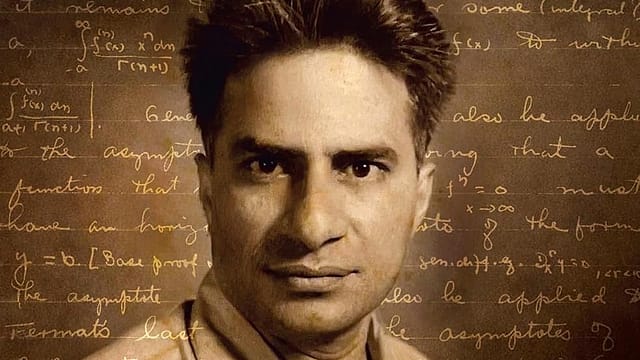
“History is unkind to polymaths.” Some are forgotten. Others are “squashed into a category we can recognise”, remembered for only one, or at best a few, of their many achievements. Historian Peter Burke, thus, opens The Polymath (2020) with this fitting observation.
DD Kosambi, or DDK (1907–1966), suffered much the same fate. He was a mathematician, statistician, historian, numismatist, field researcher, philologist, science writer, peace activist, public intellectual, and much more. Ram Ramaswamy’s new biography, DD Kosambi: One Life, Many Worlds, offers a much-needed corrective. It restores the extraordinary breadth of a life that defied categorisation.
The above assessment is hardly polemical. Consider Economic and Political Weekly’s (EPW) special issue marking Kosambi’s birth centenary in 2008. Most of its contributors were only historians and philologists, from Romila Thapar to Sheldon Pollock. Not a single expert on the sciences. EPW itself acknowledged that mathematics remained uncovered because it ‘did not succeed in obtaining an article’ on that aspect of Kosambi’s work.

Losing Memory
16 Oct 2026 - Vol 05 | Issue 42
The making of a medical and social emergency
A few years later, computer scientist and mathematician CK Raju wrote ‘Kosambi the Mathematician’ for The Many Careers of DD Kosambi: Critical Essays (2011), edited by historian DN Jha. The volume, among other key things, gave Jha space to critique Thapar’s EPW article, particularly her criticism of Kosambi’s views on feudalism. Such contestations, however, are part of the life of history writing and scholarship, at least until the days of the united front arrive.
Back to Ramaswamy, he had begun recovering Kosambi’s intellectual range long before writing this biography. In 2016, he edited a collection of Kosambi’s essays and, in the same year, compiled Selected Works in Mathematics and Statistics. The volumes brought together previously unpublished material and some of Kosambi’s lesser-known writings.
Adventures into the Known
The present intellectual biography begins, intriguingly, with DDK’s death on June 28, 1966. Reconstructing an intellectual life backwards is an inspired methodological choice and a solid narrative hook. It reveals that, just a day before his death, Kosambi visited his young associate RP Nene and “discussed three projects that he was interested in”. Hardly the sign of brain fatigue reported as the cause of death of a man celebrated for his “Renaissance versatility”.
The book then unfolds the many worlds of Kosambi across 15 chapters of roughly equal length. The opening chapters repeatedly return to his illustrious father, Dharmanand (1876–1947). Senior Kosambi’s journey began in Sancoale, Portuguese Goa, and took him to the wider world. He left behind an orthodox Gaud Saraswat Brahmin upbringing and became “entirely Buddhist”. His remarkable journey was, in many ways, the stepping stone to DDK’s own “American Education” and subsequent internationalism.
Often the book is at its most fascinating when Ramaswamy reveals the entanglements of intellectual lives. When Kosambi senior arrived in Boston in October 1918 with his daughter Maik and DDK, their journey was also recorded by a fellow traveller, Parvatibai Athavale, in her autobiography Majhi Kahani. A widow, Parvatibai had joined the Hindu Widows’ Home, founded in 1896 by her brother-in-law Dhondo Keshav Karve. A professor of mathematics at Fergusson College and a champion of widow remarriage, Karve would later establish India’s first university for women, the SNDT Women’s University.
Elsewhere, Ramaswamy shows how intellectual reputations could travel across generations. Kosambi senior’s standing with Madan Mohan Malaviya helped smooth the way for DDK to begin his career at Banaras Hindu University (BHU) after returning from Harvard. This need not be read as favouritism. Institution-builders in the early and mid-20th century often recruited scholars through personal and intellectual networks, before bureaucratic impediments made everything thoroughly ‘sarkari’.
Ramaswamy himself notes how Syed Ross Masood, Vice-Chancellor of Aligarh Muslim University (AMU), offered a position to the French mathematician André Weil, who later became an important figure in DDK’s life. We know that PS Sivaswamy Aiyer, second VC of BHU, was in correspondence with the paleobotanist Birbal Sahni before Sahni eventually joined the university in 1921. A 22-year-old Amartya Sen secured the department headship at the newly established Jadavpur University. The list could easily be expanded to include many such examples.
The chapter on the making of An Introduction to the Study of Indian History (1956) will likely be returned to for years, so rich is it in detail. Throughout the book, Ramaswamy traces Kosambi’s intellectual exchanges and relationships with figures such as Monica Felton, AL Basham, JD Bernal, JBS Haldane, Homi Bhabha, Robert Conklin, and many others.
The book is at its richest in reconstructing DDK’s life of letters: what he read, what he wrote, and when and how he wrote it. For anyone interested in his writings and their making, this is invaluable material. Ramaswamy goes further, devoting an entire chapter to DDK as a diarist and painstakingly reconstructing a reading list from his diaries.
Misadventures into the Known
There is some truth in saying that not every reader will be drawn to the intricate details of a scholar’s formidable bibliography. The parallel histories of institutions, however, may prove more revealing. Running quietly alongside Kosambi’s story, they expose the deep schisms that shaped the worlds in which he worked.
Geniuses, too, have tempers and little patience, especially when they find themselves surrounded by minds that cannot keep pace with their own. Documenting it, biographers often shy away from a harder truth: institutions can fail the very minds they are meant to nurture. We celebrate CV Raman’s departure from Calcutta as ‘the gain of Bangalore’, but rarely ask why, after fulfilling Mahendra Lal Sircar’s dream of cultivating science and giving 26 years to the Association (IACS), Raman chose to leave for the Indian Institute of Science (IISc). And did IISc treat him any better?
A similar fate befell DDK, and Ramaswamy recounts it with telling detail. At Fergusson College in Pune, Kosambi’s colleagues complained that students could not understand him. Worse, the space that had housed the Indian Mathematical Society (IMS) library and served as Kosambi’s academic base was taken away. What became of it? It was turned into a cabin for the newly appointed Vice-Principal, the political scientist, SV Kogekar.
A similar story unfolded at the Tata Institute of Fundamental Research (TIFR). Despite producing three scholarly masterpieces within a single year, Kosambi could not “impress his colleagues at TIFR”. His relationship with Bhabha steadily deteriorated. For Bhabha, Kosambi “was not contributing to the scientific reputation of TIFR”.

Ramaswamy also suggests that Kosambi’s advocacy of solar power over atomic energy may have been sharpened by his ideological differences with Bhabha and the Department of Atomic Energy. A sharper dig would also have revealed that in the early 1950s, Pandit Nehru was also writing letters about the solar cooker that National Physical Laboratory (NPL) had developed and even mentioned about it to the people during the first general elections. However, works like Nucleus and Nation (2010) are available that examine how atomic energy, space exploration, and industrialization intertwined with Indian nationalism and self-reliance in fuller details.
Overall, Ramaswamy offers an inspiring model of intellectual biography—one that young scholars like this reviewer would do well to emulate. Yet the book also raises an important limitation. For a figure like Kosambi, who wrote extensively and about whom much has been written, the task of intellectual biography is perhaps relatively easier. But does the same hold true for intellectuals who have left behind a far thinner archival and historiographical trail? Many of our intellectuals are not found catalogued as ‘private papers’ in NMML and other institutional archives.
The second pitfall of writing about someone so prolific is the risk of repetition. This reviewer was delighted to encounter Kosambi’s teachers—William Graustein, George Birkhoff, Marshall Stone, and others. Yet Kosambi himself had already written about some of them, Birkhoff among them, raising the question of how far an intellectual biography can move beyond its subject’s own recollections.
Similarly, one might ask whether Ramaswamy overstates the impact of Pandit Nehru’s 1947 presidential address to the Indian Science Congress on Kosambi. The proposition that “You cannot divorce science from social and political happenings” was hardly novel to either Kosambi or Nehru, both of whom were familiar with JD Bernal’s work. Indeed, Kosambi had reviewed Bernal’s The Social Functions of Science as early as 1939. “What Science Does! What Science Could Do?” makes for a striking review punchline, but it also risks inviting the very dismissal Kosambi later encountered from Bhabha at TIFR—that analysing Indian birth and death rates was “of no real relevance”.
In the end, Ramaswamy gives us a biography alive to the tensions surrounding a genius and those who inhabited his world. The book carefully documents Kosambi’s Marxist and internationalist commitments without losing sight of his deep attachment to India, which he famously described in his own words: “I love India as I love no country in the world.”
That even an institution as distinguished as Jawaharlal Nehru University (JNU), where Ramaswamy taught and this reviewer studied, scattered Kosambi’s books across its library instead of preserving them as a distinct collection is a sobering reminder of his own observation that “when we do a thing badly, we go the whole hog to do it very badly indeed.” Thankfully, Ramaswamy’s book is an exception, and deserves to be (re)read with interest.