Prem Chopra: The Villain Who Turned His Own Name into a Warning
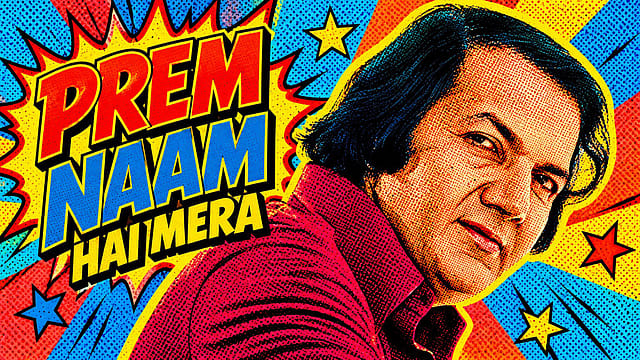
The young lovers have another problem.
In Raj Kapoor’s Bobby, Raj and Bobby are already fighting for a future together when a man introduces himself with a smile that offers no comfort.
“Prem naam hai mera, Prem Chopra.”
Six words. His name does most of the threatening.
By 1973, Chopra had accumulated enough screen mischief for an introduction to carry the weight of a criminal résumé. Kapoor could draw upon that history. The audience supplied the suspicion.
Yet the actor had been unhappy with the brevity of the assignment. In a September 2021 interview, he recalled seeking reassurance from Prem Nath, who encouraged him to trust Kapoor. The appearance became his signature. Audiences kept asking for the line long after the film had left cinemas.
The irony begins with his name. Prem means love. Here was Prem, making life miserable for lovers.

Losing Memory
16 Oct 2026 - Vol 05 | Issue 42
The making of a medical and social emergency
But the line also presents a problem for anyone trying to understand the actor. Repeat it, smile at the memory, and an extraordinary career can shrink to an impersonation.
Everyone remembers the warning. How well do we remember the man?
Before the bad name
Born in Lahore on September 23, 1935, and raised in Shimla, Chopra came to films with ambitions familiar to generations of young men: he wanted to be a hero.
There were bills to pay before there were producers to impress. He found a job in a newspaper’s circulation department while pursuing acting. In a 2014 interview, he described a working life involving travel across eastern India and attempts to squeeze studio visits into the time available. The salary gave his ambition somewhere to stand.
His early roles hardly foretold a lifetime of threatening other people’s happiness. In the Punjabi film Chaudhary Karnail Singh, he played Shera, a young Muslim man in love. In Shaheed (1965), he was Sukhdev, the revolutionary alongside Manoj Kumar’s Bhagat Singh.
The man who would become a screen shorthand for treachery had played courage and sacrifice too.
The industry, however, was finding another use for him. Woh Kaun Thi? (1964) helped establish his suitability for negative roles. Recalling the film in a February 2013 interview, Chopra said Mehboob Khan had warned him that its success would get him typecast. Work followed, and so did the label.
That history matters because it restores choice, anxiety and economics to an image that can now seem inevitable. The villain was an actor trying to build a livelihood.
Two careers meet at Upkar
Upkar (1967) offers a revealing moment in the history of Hindi cinema’s bad men.
Pran, already strongly identified with villainy, played the sympathetic Malang Chacha. Chopra played Puran, the acquisitive younger brother of Manoj Kumar’s Bharat. The same film helped audiences see a different side of Pran while strengthening their association of Chopra with wrongdoing.
Puran’s offence is painfully domestic. Bharat has sacrificed for his education; the younger man returns with demands that place property and personal advancement above obligation. His subsequent involvement in black marketing during wartime gives that selfishness a national dimension. He eventually repents, which makes him more complicated than a villain awaiting punishment.
The role asked Chopra to embody a recognisable grievance: the beneficiary who regards another person’s sacrifice as insufficient.
That is a different dramatic task from playing an all-powerful criminal. Puran’s resentment requires a relationship. Without Bharat’s love, the betrayal loses its force.
In Do Raaste (1969), Birju Gupta brought another version of selfishness into the household. Family drama gave Chopra room to be unpleasant without turning every character into a criminal mastermind.
These men helped establish his particular territory. Trouble could be related to you. It could have grown up beside you.
The lover, the friend, the threat
Kati Patang takes that intimacy somewhere crueller.
Madhu, played by Asha Parekh, abandons an arranged wedding for Kailash, only to discover his involvement with Shabnam. Later, after Madhu assumes another woman’s identity, Kailash turns knowledge of her past into an instrument of blackmail.
The movement from lover to blackmailer is central to his nastiness. Intimacy has supplied him with information. He knows where she is vulnerable.
Chopra’s screen manner suited such a man: the suggestion of charm, the self-satisfaction, the conversational ease with which an ugly intention could emerge. Kailash makes romance feel retrospectively fraudulent. The danger began when Madhu trusted him.
In Do Anjaane (1976), trust becomes more physically perilous. Ranjit, a friend of Amit, played by Amitabh Bachchan, attempts to kill him by throwing him from a train. Amit’s eventual return brings Ranjit’s apparent security under threat.
The role gives Chopra more to work with than a threatening entrance. Betrayal must coexist with the fear of exposure. The man who helped erase someone’s life must confront the possibility that the past has survived.
His performance won the Filmfare award for Best Supporting Actor in 1977. That distinction deserves to travel alongside the Bobby dialogue. One commemorates instant recognition; the other directs attention to a sustained performance.
A different breed of bad
Long before Chopra, KN Singh had demonstrated how little noise a villain needed to make. Immaculately dressed, with an arched eyebrow and a cold, measured delivery, Singh made respectability look sinister. Chopra extended that tradition of menace beneath good manners, giving it a particularly intimate sting. In characters such as Kailash in Kati Patang and Ranjit in Do Anjaane, charm helped establish the trust that betrayal would exploit. The danger could court you, befriend you and learn your secrets. Chopra’s contribution to that lineage was to make familiarity itself a source of suspense.
That ability to make familiarity unsettling also distinguished Chopra among the great screen villains whose careers overlapped with his: Pran, Ajit, Amjad Khan and Amrish Puri. Each gave audiences a different reason to be afraid.
Their careers overlapped, although their defining successes came at different moments. Each gave Hindi cinema a distinctive vocabulary of menace.
Pran could radically change the audience’s relationship with him, moving between predatory characters and figures of loyalty or affection. Ajit cultivated an air of polished criminal authority. Amjad Khan’s Gabbar Singh made a conversation feel dangerously unpredictable. Amrish Puri’s Mogambo turned command into grand theatre.
Chopra’s strongest claim lies in the corruption of familiarity.
He could look as though he was enjoying a private advantage over the person facing him. A smile might suggest that he already knew how the encounter would end. His politeness could make a threat feel more offensive: here was someone sufficiently comfortable with cruelty to practise good manners around it.
This was a matter of technique. In an interview with Gulf News’ Friday, Chopra recalled Dilip Kumar advising him to underplay a scene in Dastaan. He remembered how much better it worked.
Of course, none of these actors can be reduced to one mannerism. Puri’s range extended well beyond Mogambo; Khan’s beyond Gabbar. Chopra, too, could be broad and extravagantly theatrical.
But his best work makes a persuasive case for menace at conversational volume. He could give the hero a reason to worry before giving him a reason to fight.
The man who went home
Chopra’s recollections of life away from the camera suggest someone acutely conscious of the distinction between his profession and his personality.
In a December 2021 interview, he recalled walking with his father when men made remarks about protecting their wives from him. His father was upset. Chopra said he approached the men and spoke to them; they were surprised by how ordinary he seemed.
The anecdote is often treated as a compliment to convincing villainy. It also describes the indignity of having strangers mistake a performance for a character reference.
His wife Uma, the younger sister of Krishna Raj Kapoor, understood the demands of the profession, he said in the same interview. Elsewhere, his accounts of reading, writing verse and discussing Urdu poetry offer a quieter picture of the man behind the sneer.
There is no need to manufacture a saint to compensate for his screen reputation. What emerges is a working actor who valued preparation, understood insecurity and adjusted when the industry changed.
That adjustment is visible in Rocket Singh: Salesman of the Year (2009). As the grandfather of Ranbir Kapoor’s Harpreet, he could bring affection and moral concern to the same screen that had so often required him to supply deceit. The face was familiar. The audience had another relationship available to it.
Why we fell for the enemy of prem
The pleasure of watching Chopra depended partly on recognition.
His arrival invited audiences to begin anticipating the scheme. They could enjoy knowing more than the unsuspecting lover or trusting friend. Suspicion became participation.
He also gave the hero something indispensable: resistance. Love needed defending because someone might exploit it. Loyalty acquired weight because a friend might sell it. A household’s affection became dramatically valuable when selfishness threatened to break it apart.
Chopra himself understood this function. In an interview in December 2023, he described villains as essential to making a narrative interesting. He also observed how immediately audiences once identified actors such as himself with impending trouble.
Enjoyment of that craft does not erase the uglier conventions around it. Sexual intimidation in many films of the period turned women’s vulnerability into material for male confrontation. Those scenes deserve scrutiny even when the performance is memorable.
The affection audiences developed for Chopra is better understood through the pleasure of watching an actor fulfil a dramatic promise. He could make a character hateful and his next appearance welcome.
The hero’s victory and the villain’s popularity could comfortably share the same ticket.
Did Bollywood give him his due?
The evidence resists a simple story of neglect.
Chopra worked with successive generations of leading men, won a major acting award and achieved recognition that survived changes in fashion. In an October 2023 interview, he recalled distributors valuing his pairing with Rajesh Khanna. He described his years as a villain with evident pride.
This was a successful career by any reasonable measure.
Yet success can narrow an actor’s opportunities. Once a face promises a particular response, casting it becomes a convenient way to reproduce that response.
Chopra’s own recollections give this argument substance. In his 2013 interview, he said he had expected Aap Aye Bahaar Ayee and Aas Paas to take him into a bigger league. Encouraged by the importance of his roles, he turned down other work while awaiting their release. Their failure, he said, taught him the limits of an actor’s confidence in his own performance.
He wanted greater scope. The market kept rewarding the familiar product.
Pran’s celebrated transformation through roles such as Malang Chacha offers a useful comparison. Chopra also played sympathetic characters, but his public identity remained more tightly fastened to villainy. The very efficiency that made him valuable could conceal how much else he might do.
His rightful place is therefore among Hindi cinema’s defining screen antagonists, with a claim extending beyond the most quoted line. Within Indian cinema’s many traditions, that is a substantial distinction without requiring an unverifiable crown.
The unfinished business is in how we remember him.
Remember Puran’s selfishness and eventual remorse. Remember Kailash converting intimacy into blackmail. Remember Ranjit discovering that betrayal has consequences. Make room, too, for the grandfather in Rocket Singh.
Then return to Bobby.
“Prem naam hai mera, Prem Chopra.”
The name became a warning because an actor had spent years teaching audiences how to hear it. They came to love the man they had learnt to distrust on screen.