With Balen in-charge, Nepal Can Play a New “India” Card
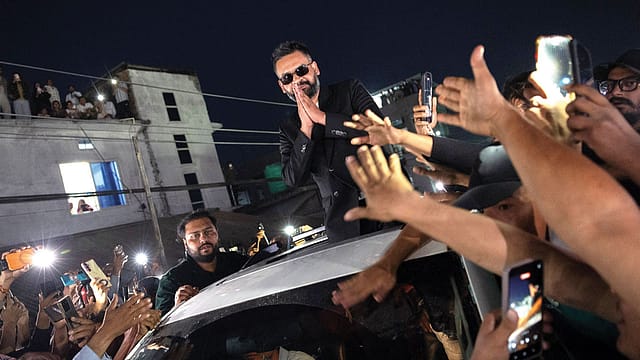
After becoming Prime Minister in May, 2014, Narendra Modi’s first travel out of India was to Nepal where he addressed the Constituent Assembly and Parliament, official discussions focussed on sub-regional cooperation in trade, transit, connectivity and hydro-power and also paid obeisance at the ancient Pashupatinath temple where he offered 2,500 kg of sandalwood. The first bilateral visit by an Indian PM in 17 years, Modi’s agenda reflected a desire to strengthen cultural relations, often described as “roti-boti ka Rishta (shared ties of bread and marriage)” that symbolise the intermixing of Indian and Nepalese societies.
The Prime Minister’s choice of Nepal as his first port of call was not just a sentimental call. It was part of a series of initiatives to secure Indian interests in the neighbourhood and build a solid base for bilateral cooperation through projects to develop and share waters and electricity from the rivers that flow from Nepal to India. Trading links would further bind the two nations in ways that would limit disruptions caused by temporary shifts in the political climate. Modi and then Nepal PM Sushil Koirala in a joint statement agreed to resolve pending border issues “once and for all.”
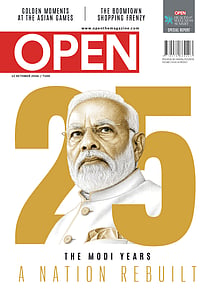
The Modi Years
02 Oct 2026 - Vol 05 | Issue 40
A Nation Rebuilt
Survival Games in Nepal
As things turned out, Nepal did not enjoy a stable government and policies even after adopting a new Constitution which dismantled the role of the monarchy. Leader of Opposition Pushpa Kamal Dahal “Prachanda” and Communist Party of Nepal (UML) chairman K P Sharma Oli who Modi met in 2014 were to form a government, squabble and fallout. Meanwhile in 2015-16 a blockade by Madhesi groups unhappy over the new Constitution soured ties. Then Oli’s desperate moves to remain PM and sideline Prachanda saw him recklessly inflame dormant boundary issues and it was only fitting that this myopic and power hungry politician was humiliated by rapper-turned-politician Balendra Shah in the Nepal elections held this month.
Shah’s fate was shared by Nepal’s “mainline” parties including Nepali Congress, the country’s oldest political party that had led the protests that ended Rana rule in early 1950s. Nepali Congress joined hands with Oli for a transparently opportunistic power sharing deal in 2024 that proved a kiss of death. Communist leaders like Oli and Prachanda who fought bitterly among themselves and failed to deliver any meaningful governance prepared the ground for Shah and the newly formed Rashtriya Swatantra Party (RSP) to win 162 of 275 seats in the House of Representatives after “Gen Z” protests swept Oli out of office in September, 2025.
A New Force Emerges
Modi congratulated 35-year-old Shah and RSP chairman Rabi Lamichhane after their success. Shah is expected to be sworn in Prime Minister this week and he responded to Modi in a message promising to “strengthen, deepen, and make more outcome-oriented the historic, close, and multi-dimensional relations existing between Nepal and India in the coming days.” As Mayor of Kathmandu Shah had lashed out at India, China and other nations for Nepal’s problems and is has played the “India” card on occasion. Yet, his remarks about an outcome-oriented is promising if it can translate into concrete progress in things that really matter to the citizens of Nepal and India.
The rise of RSP is a story about just how low the stock of the Nepali Congress and communist factions has sunk. The view of these parties as cynical power brokering corrupt outfits has led to their humiliation. The weight of expectation on the shoulders of RSP leaders is not inconsiderable. The one thing they could avoid is the temptation to indulge in the dangerous – and ultimately unproductive political gamesmanship with India. Oli’s fate is evidence that this does not end well. Nepal is well within it rights to consider the advantages of India and China as partners and investors, even drive the best bargains from both, but there is a need to recognise what is in Nepal’s best interests.
Forging a Connection
India is looking for a new chapter in ties with Nepal and there is hope in official circles that New Delhi can work with Shah who did his MTech in Bengaluru. There is relief that RSP has won a strong majority and will be less vulnerable to political jockeying by rivals or even within. In the past, the infighting between communist factions had seen the Chinese ambassador dabble in their internal matters in a bid to forge unity. Her energetic efforts did not succeed but did muddy the waters in Kathmandu and create hurdles for India-Nepal relations. India can now look to re-build ties and bring about greater convergence on people-to-people contacts, travel, tourism, trade and development of the large cross-border hydro resources.
The election of a Bangladesh Nationalist Party government in Dhaka instead of an incompetent and self-serving interim regime led by Nobel prize winner Mohammad Yunus has immediately led to a quiet upswing in relations. Pro-Pakistani and Islamist generals in the Bangladesh Army have been purged and Gen Kaiser Chowdhury, head of the Directorate General of Forces Intelligence, had a quiet meeting with Indian National Security Advisor Ajit Doval on the sidelines of this year’s Raisina Dialogue. It can be hoped that relations with Nepal too will even out and the new government that is break from the discredited old guard will see the virtues of a genuine hand of friendship.
Both China and India share long borders with Nepal but the one with India allows economic and cultural osmosis. Nepal’s border with Tibet is daunting, marking by geographical barriers and is vulnerable to natural disasters and seasonal limitations. The forces of nature have a way of conveying a message that is neither incidental or random.