Why Van Gogh’s Chestnut Trees in Blossom sold for $190 million
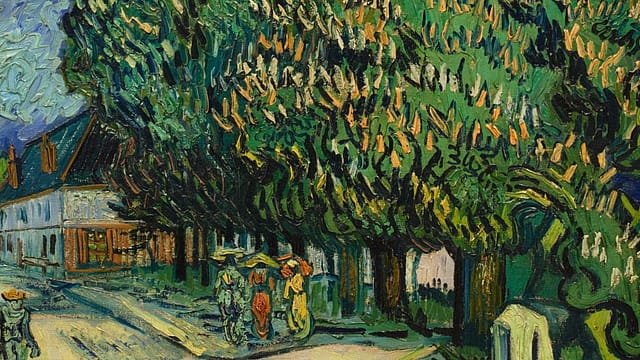
A Vincent van Gogh painting, Chestnut Trees in Blossom, sold for US$190 million. That would translate in Indian rupees to about 1,780 crore. Why do only some artists touch the stratosphere? The story plays a part. Van Gogh died in poverty, his paintings largely unsold in his time, the end of his life marked by a year in a psychiatric asylum, an ear cut off by his own hand, all this eventually adding something unique and unquantifiable to every painting. Chestnut Trees in Blossom was done a couple of months before his death and had no buyers like most of his works then.
While alive, he might have been unknown to the public but he had links to the artist community of France through his brother, an art dealer. After Van Gogh's death, his sister-in-law made his work popular by organising exhibitions. France was one of the centres of art and culture in the colonial world, which meant that any artist finding popularity there, even posthumously, turned global. Van Gogh had a distinct style but it was not an invention. He was part of a movement of which he, like many others, moved the needle.

The Wealth Issue 2026
06 Nov 2026 - Vol 05 | Issue 45
Portraits of Dreamers and Doers under 35
Once such an artist attains recognition, wealthy collectors take over. People pay Rs 1780 crore because if you are a billionaire surrounded by billionaires, no one is impressed by you. But if you are a billionaire who also owns a Van Gogh, that makes you special among peers. It is also not money that is spent, only invested. If you buy the work of an artist who's just getting established, the future value can go both ways. A Van Gogh that is acquired for vast amounts almost certainly becomes worth incredible amounts after a decade or two.
Every single one is coveted by extremely wealthy people and not many come on the open market. In the 1950s and 60s in India, one would have been able to buy paintings of struggling artists like MF Husain and SH Raza for a pittance. Today, they can cost tens of crores, one Husain even selling for Rs 118 crore in 2025. Just what is inside a frame is only a small part of how an artwork gets its value. What is invisible are the supply-and-demand gulf, myths, vanities and calculations.