Why is the US Refunding $100 Billion in Trump Tariffs? Here's What Happened
Imagine paying billions in import duties only for the country's highest court to later rule that the government had no legal authority to collect them.
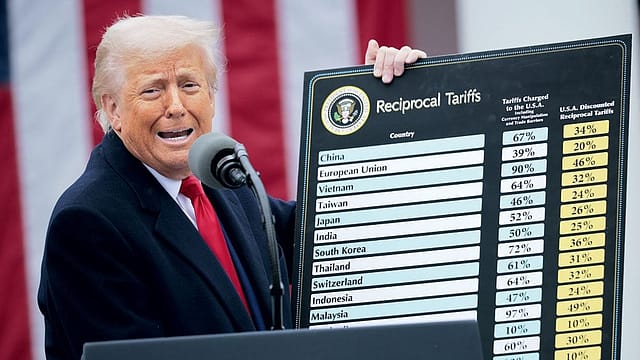
That's exactly what's happening in the United States. US Customs and Border Protection (CBP) has confirmed that it has already processed nearly $100 billion in tariff refunds after the US Supreme Court invalidated a series of tariffs imposed under former President Donald Trump's "Liberation Day" trade policy.
Here's why the refunds are happening and why the case matters far beyond the money.
Why is the US refunding $100 billion?
The refunds stem from a landmark US Supreme Court ruling earlier this year that struck down additional import tariffs imposed under the International Emergency Economic Powers Act (IEEPA). The Court ruled that the 1977 law does not give a US President the authority to impose broad tariffs on imports from nearly all trading partners. As a result, duties collected under that policy must now be returned to eligible importers.

Zeroing In on ECI
09 Oct 2026 - Vol 05 | Issue 41
Constitutional legitimacy versus political opportunism
How much money has already been refunded?
According to a filing by US Customs and Border Protection (CBP), around $100 billion, including duties and interest, has already been processed and sent to the US Treasury for payment. In total, approximately $128.68 billion in potential and certified refunds have entered the processing system. The affected tariffs had generated roughly $166 billion before being struck down.
Which tariffs are involved?
The refunds relate to Trump's so-called "Liberation Day" tariffs, imposed under the IEEPA as part of a broader trade strategy. The tariffs became a central pillar of Trump's economic and foreign policy agenda before eventually being challenged in court.
What did the Supreme Court say?
In a 6-3 ruling, the Supreme Court held that the President exceeded the powers granted under the IEEPA. Chief Justice John Roberts authored the majority opinion, concluding that Congress had not authorised the President to impose sweeping tariffs under that law. Justice Brett Kavanaugh, in dissent, warned that the decision could force the government to return billions of dollars already collected from importers. That prediction has now become reality.
How are the refunds being processed?
CBP has built a dedicated refund mechanism within its Automated Commercial Environment (ACE) platform. The new system, known as Consolidated Administration and Processing of Entries (CAPE), automatically calculates eligible refunds. As of July 31, more than 252,000 refund declarations had been submitted, with over 178,000 successfully validated for processing.
Why does this matter?
Beyond the massive financial impact, the ruling redraws the limits of presidential authority over trade policy. It also serves as a reminder that importers who paid tariffs later ruled unlawful may be entitled to recover billions of dollars—making this one of the largest tariff refund exercises in US history.
(With inputs from ANI)