EXPLAINED | Over 6,000 Italian Schools Received a Bomb Threat. Here’s What Happened
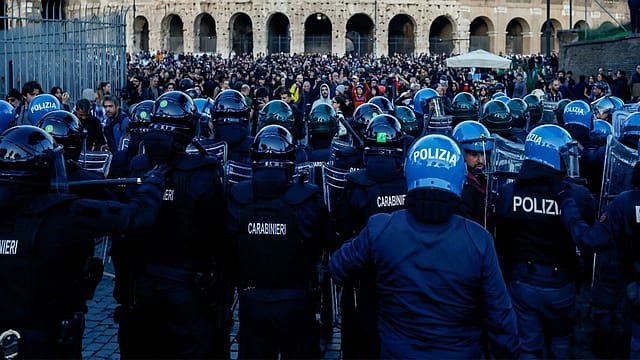
At Rome’s Mamiani high school, students heard a bell on Wednesday morning and thought it was time for a break. They learnt why they had been sent out only after they were on the street. By then, a bomb threat had interrupted lessons well beyond Rome. Italy’s education ministry said more than 6,300 schools received the message. Reuters reported at least 300 evacuations.
How far did the disruption spread across Italy?
The first reports came from Rome. Schools also evacuated pupils in and around Milan, Venice, Bologna and other cities, according to Italian public broadcaster Rai. The education ministry’s figure counts the schools that received the message. The evacuation count measures a different part of the disruption. Hundreds of buildings had to be cleared while police checked them.

The Wealth Issue 2026
06 Nov 2026 - Vol 05 | Issue 45
Portraits of Dreamers and Doers under 35
In Rome, parents left work and other commitments to collect their children. Nensi Bego told Reuters her daughter was still shaken when she picked her up from the Mazzini middle school. In Modena, the provincial authorities also closed high-school gyms for the afternoon as a precaution.
Did police find a bomb?
Prime Minister Giorgia Meloni said the checks had produced no indication of a concrete danger. In Emilia-Romagna, where schools were evacuated in several cities, ANSA reported no evidence of explosive devices at the sites it covered. Meloni brought ministers, intelligence officials and the national cybersecurity agency together in Rome to review the alerts and coordinate the response.
Who sent the threat?
Italian authorities have yet to name a sender. Education Minister Giuseppe Valditara described the threat as a probable cyberattack. ANSA reported that preliminary checks pointed to a compromised account associated with a university in Taiwan. A compromised account is one someone else has gained access to. The identity and location of the person who used it remain unknown. Prosecutors in Genoa opened an inquiry into threats affecting schools in the city and the surrounding area.
Why can a hoax disrupt an entire school day?
Schools have to make decisions while the threat is still being assessed. In Rome, one school messaged parents that teachers were supervising children in a safe area. In Milan, Rai reported that the evacuations and checks slowed traffic. By the time officials can reassure families, lessons may already have stopped and parents may be on their way to collect their children.
What happened in Scotland, Northern Ireland and Ireland?
Schools in all three received similar threats on November 11. In Northern Ireland, police said more than 300 schools had reported receiving the same message. Officers assessed it as a hoax and said it had originated outside the UK. Police Scotland also treated the messages as hoaxes and advised that the emails alone did not warrant evacuation. Police in the Republic of Ireland reached the same assessment on the messages sent to schools there.
For Scottish schools, it was the second such scare in less than a month. Police had already investigated threatening messages sent to schools on October 19 and treated those as a hoax.
What happened to Europe’s flights and broadcasters?
The alerts came days after threats against flights and broadcasters. Some flights were diverted in the week before the school scare. In Dublin, Ireland’s national broadcaster RTÉ evacuated its headquarters on November 6 and replaced live broadcasts with recorded programmes until staff could return. Reuters reported that the purported author of the Italian school threat also claimed responsibility for threats against newsrooms in Ireland and Bulgaria. That claim still needs corroboration.
Has India seen anything like this?
Yes. Around 100 schools in Delhi and the National Capital Region received emailed bomb threats on May 1, 2024, according to The Indian Express. Police found nothing suspicious. The education department issued an advisory, and some children were allowed to leave when their parents arrived.
The scares continued. In September 2026, several Delhi schools, including Sardar Patel Vidyalaya and The British School, received fresh threats. Police searched the affected premises and declared the threats hoaxes.
What did Delhi change after the 2024 scare?
The Delhi High Court directed authorities to draw up a common plan setting out the responsibilities of police, school management and municipal authorities. Delhi’s education department notified the protocol in May 2025. The court recorded that heads of schools had to implement it and send a completed checklist to their district authority every month. The change gave schools a common set of responsibilities for responding to threats and resuming classes.