Why China’s New Ethnic Unity Law Is Raising Fresh Concerns Over Uyghur Rights
For a community whose identity has been at the centre of one of the world's most contentious human rights disputes, the latest development might appear, at first glance, to be about something fairly ordinary: a law on ethnic unity.
China's new Ethnic Unity and Progress Promotion Law came into effect in July. Beijing says it is designed to strengthen unity among the country's ethnic groups, prevent discrimination and promote common development.
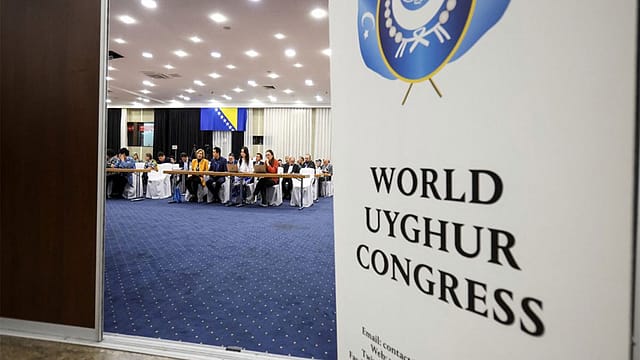
The World Uyghur Congress sees something else.
The Uyghur advocacy organisation says the legislation could further weaken the cultural, linguistic and religious identity of Uyghurs and deepen what it describes as China's assimilation campaign.
That raises a deceptively simple question: what does China mean by ethnic unity, and why are Uyghur groups so concerned about it?

Losing Memory
16 Oct 2026 - Vol 05 | Issue 42
The making of a medical and social emergency
To understand that, it is necessary to go back to Xinjiang.
What happened in Xinjiang?
For years, China's Xinjiang region has been the focus of international allegations involving the detention of Uyghurs and other predominantly Muslim communities, restrictions on religious and cultural expression, surveillance and forced labour.
Beijing rejects allegations of systematic abuse. It has said its policies in Xinjiang are aimed at fighting terrorism and extremism, maintaining stability and improving economic development.
The issue nevertheless became impossible for international institutions to ignore.
In 2022, the UN human rights office released an assessment that documented serious human rights violations against Uyghurs and other ethnic communities in Xinjiang.
Its conclusion was unusually stark. The UN said the extent of arbitrary and discriminatory detention “may constitute international crimes, in particular crimes against humanity.”
That report became a defining moment in the international debate.
But four years later, the question is no longer simply what happened in Xinjiang.
It is what happens next.
Why does a new law matter?
This is where China's new ethnic unity legislation becomes important.
The law is part of Beijing's broader push for a more unified national identity across China's ethnic groups. It emphasises ethnic solidarity and integration, while also setting out protections against discrimination and provisions concerning minority languages and cultural practices.
For Beijing, greater integration is a means of strengthening the country.
For critics, the concern is that integration can gradually become assimilation.
The distinction is particularly important for Uyghurs because language, religion and cultural practices are central to the community's identity.
The WUC argues that the new law could institutionalise policies that it believes are already putting pressure on those distinctions.
But there is another reason the legislation matters.
Its effects may not stop at China's borders.
How did a Xinjiang issue become a global business problem?
Consider cotton.
Xinjiang is a major cotton-producing region. Allegations of forced labour involving Uyghurs have therefore created a problem far beyond human rights organisations: how can companies prove where the materials in their products came from?
The United States has responded with the Uyghur Forced Labor Prevention Act, which restricts imports connected to alleged forced labour in Xinjiang.
That has turned the Uyghur issue into a supply-chain question.
US lawmakers have now sought greater information from the Department of Homeland Security about enforcement of the law. They have also raised concerns over cotton reportedly linked to Uyghur forced labour in the production of Labubu dolls.
The significance is bigger than one product.
A dispute over China's treatment of an ethnic minority can now affect what a company imports, how it audits suppliers and whether a product can enter a major consumer market.
For multinational companies, Xinjiang has consequently become more than a geopolitical headline. It can be a compliance and reputational risk.
So what is the WUC trying to do?
The World Uyghur Congress is trying to make sure the issue stays international.
Its latest weekly briefing highlighted its participation in the 2026 “Reimagining Self-Determination” conference organised by the Unrepresented Nations and Peoples Organisation.
At the subsequent UNPO General Assembly, WUC Vice President Zumretay Arkin was elected to the organisation's new Presidency, retaining Uyghur representation within the body.
The WUC is also calling on governments to consider diplomatic, legal and economic measures over alleged abuses. It wants businesses to examine forced-labour risks in their supply chains and civil society groups to push for stronger action at the UN Human Rights Council.
The strategy is straightforward: if the debate over Uyghur identity is being shaped by Chinese law, the response should not be confined to China.
What happens to the Uyghur question now?
That is the unresolved part.
China's position is that ethnic unity strengthens the country and promotes equality and development among its communities.
The WUC and other critics fear that the same process could erode the distinct identity of Uyghurs and other ethnic minorities.
The disagreement is therefore about much more than one law.
It is about whether a state can build a common national identity while preserving the differences of the communities within it.
And that is why the Uyghur question is becoming harder to contain within Xinjiang.
It has moved into UN institutions, national legislatures, international trade rules and corporate supply chains.
The question that began with what happens to Uyghurs inside China is increasingly becoming one that the rest of the world has to answer too: where does integration end, and where does assimilation begin?
(With Inputs from ANI)