France Extends Curfews, Promises ‘Massive’ Police Deployment Ahead of Fresh Protests
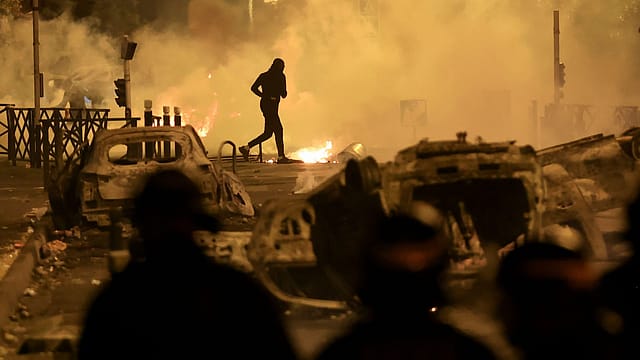
France is extending overnight curfews and tightening security after days of violent unrest, with Prime Minister Sébastien Lecornu promising a “massive” police deployment ahead of fresh demonstrations on October 24.
The measures follow nationwide protests over rising living costs, deteriorating school conditions and strained public services.
Interior Minister Laurent Nuñez acknowledged that authorities had underestimated the unrest and lost control in some cities during Saturday’s demonstrations, according to CBS News.
Justice Minister Gérald Darmanin said more than 2,500 people had been taken into police custody by Monday evening. The violence included the burning of a historic town hall in Limoges and widespread looting and damage to businesses.
CURFEWS EXTENDED AFTER QUIETER NIGHT
Overnight restrictions have been imposed around Place de la République and the Les Halles shopping district in Paris, with similar measures introduced in Lyon and other cities.

Losing Memory
16 Oct 2026 - Vol 05 | Issue 42
The making of a medical and social emergency
Authorities decided to extend the curfews after Paris and Lyon reported no major incidents on Monday night.
In an address on Sunday, President Emmanuel Macron distinguished peaceful demonstrators from those involved in rioting and looting. He said the government would listen to protesters’ grievances while pursuing legal action against those responsible for violence.
SCHOOL PROTESTS BECOME WIDER MOVEMENT
The demonstrations began in mid-September, when high school students and teachers in the Paris suburbs demanded action on overcrowded classrooms, deteriorating buildings and teacher shortages.
Trade unions and Yellow Vest activists subsequently joined, broadening the movement into a nationwide campaign over household expenses and declining public services.
The government has announced plans to deploy more than 3,000 substitute teachers to schools facing the greatest need and authorised several hundred additional hires.
DEBT AND POLITICAL DIVISIONS CONSTRAIN RESPONSE
Financial pressures and a divided parliament have complicated the government’s response.
France’s public debt stood at nearly €3.6 trillion at the end of June, equivalent to 119 per cent of annual economic output, CBS News reported.
The government expects the fiscal deficit to reach 5.4 per cent of economic output this year and aims to reduce it to 5 per cent in 2027.
Macron’s allies lack a parliamentary majority, making it harder to secure support for broader policy measures as the government faces pressure to address protesters’ demands.
With inputs from ANI