West Asia tensions rise as China responds to Donald Trump’s Iran threat
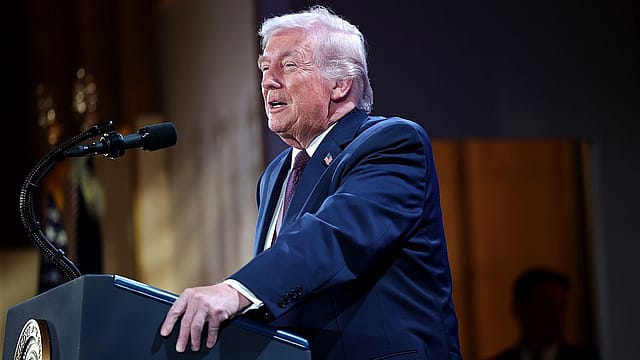
Tensions in West Asia have sharpened dramatically after US President Donald Trump’s latest remarks on Iran, prompting a measured but firm response from China that underscores the risks of further escalation.
China has issued a clear warning against rising hostilities after US President Donald Trump threatened severe military action against Iran, signalling growing global unease over the trajectory of the conflict.
Responding to Trump’s statement that the United States could “bring them back to the stone ages,” Beijing stressed that force is not a sustainable solution.
"Military means cannot fundamentally solve any issue, and escalation of the conflict does not serve any party's interest," China Daily quoted Chinese Foreign Ministry spokesperson Mao Ning as saying.
What exactly did Trump say about Iran?
Trump’s remarks came amid an already volatile situation in West Asia, where tensions have been building for over a month.
In a national address, he struck an aggressive tone while also hinting at ongoing diplomatic engagement.
"We are going to hit them extremely hard over the next two to three weeks. We are going to bring them back to the stone ages, where they belong. In the meantime, discussions are ongoing," the US President said.
He also suggested that US and Israeli military actions had already reshaped Iran’s leadership landscape.
"Regime change was not our goal. Regime change was not our goal. We never said regime change, but regime change has occurred because of the deaths of all of their original leaders. They're all dead," Trump said.

Open Minds 2026
26 Jun 2026 - Vol 05 | Issue 26
The power of ideas and arguments in 50 portraits
Is the conflict moving towards escalation or resolution?
Despite the strong rhetoric, Trump indicated that negotiations are still underway, even as military preparations continue.
"We will continue until our objectives are fully achieved. Thanks to the progress we've made, I can say we are on track to complete all of America's objectives shortly, very shortly," he added.
China’s response, however, highlights a contrasting approach—one rooted in de-escalation and dialogue rather than confrontation.
What does this mean for global stability?
China’s intervention reflects broader international concern that any further escalation between the US and Iran could destabilise not just West Asia, but global markets and geopolitical balances.
As rhetoric intensifies and military options remain on the table, the gap between diplomacy and confrontation appears to be narrowing—raising the stakes for all involved.
(With inputs from ANI)