US, UK and Allies Condemn Iran's 'Lethal Plotting': What We Know
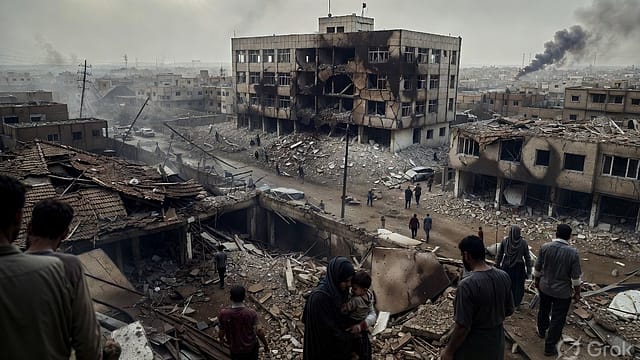
A coalition of 22 countries, including the United States, the United Kingdom, several European nations and Pacific partners, has issued a rare joint condemnation of Iran, accusing Tehran of orchestrating a campaign of killings, kidnappings, intimidation and other hostile activities beyond its borders.
The statement marks one of the strongest coordinated diplomatic rebukes of Iran in recent years and comes amid growing concerns over Tehran's alleged use of intelligence agencies and criminal networks to target dissidents, journalists and Jewish and Israeli communities across multiple continents.
What Did the 22-Nation Coalition Accuse Iran Of?
The joint statement accused Iran of engaging in a range of covert and hostile operations across Europe, North America and Australia.
According to the coalition, Iranian state-linked entities have been involved in attempts to silence critics and perceived opponents abroad through intimidation, harassment, kidnapping plots and assassination attempts.
The statement specifically said: "Attempts to kill, kidnap, harass, intimidate, or otherwise attack people on our soil undermine national sovereignty and international norms."
The signatories added: "These actions must stop immediately."
The declaration framed these alleged activities not merely as criminal acts but as direct challenges to the sovereignty of the countries where they occurred.
Which Iranian Organisations Were Named in the Statement?
The coalition directly named three Iranian institutions as being responsible for the alleged operations.

The Great Indian Male Makeover
03 Jul 2026 - Vol 05 | Issue 27
The craze for a perfect look is reshaping masculinity
These included the Islamic Revolutionary Guard Corps-Intelligence Organisation (IRGC-IO), the Quds Force and Iran's Ministry of Intelligence and Security.
Western governments have long accused these organisations of conducting overseas intelligence operations and supporting proxy networks. By explicitly identifying them in a joint statement, the signatories signalled a more coordinated international effort to hold Tehran accountable for activities beyond its borders.
Why Are Criminal Networks Becoming a Key Concern?
A major focus of the statement was the alleged relationship between Iranian security agencies and international criminal organisations.
The coalition claimed that Iranian operatives increasingly rely on criminal proxies to conduct activities abroad, allowing Tehran to maintain a degree of separation from operations while still pursuing strategic objectives.
The signatory nations described the use of such criminal intermediaries as "deplorable" and warned that these networks pose a growing threat to public safety and international stability.
The statement suggested that the blending of state intelligence operations with organised crime is becoming a significant security challenge for Western governments.
What Is the Significance of the HAYI Allegation?
The declaration specifically referred to a series of attacks across Europe that were claimed by Harakat Ashab al-Yamin al-Islamiya (HAYI).
According to the coalition, these operations were conducted with the support of Iranian intermediaries.
By highlighting the HAYI case, the signatories sought to demonstrate what they view as a broader pattern of Iranian-backed activities carried out through third parties and proxy actors rather than direct state involvement.
Which Countries Signed the Joint Declaration?
The statement was endorsed by Albania, Australia, Belgium, Bulgaria, Canada, Czechia, Denmark, Estonia, Finland, France, Germany, Ireland, Latvia, Lithuania, the Netherlands, New Zealand, North Macedonia, Norway, Portugal, Sweden, the United Kingdom and the United States.
The geographic spread of the signatories—from North America and Europe to the Pacific region—underscores the breadth of international concern over the allegations.
It also reflects increasing cooperation among Western and allied governments on countering perceived foreign interference and transnational security threats.
What Further Action Could Be Taken Against Iran?
Perhaps the most significant element of the statement was the coalition's indication that diplomatic criticism may be followed by concrete action.
The countries said they are:
"together resolved to undertake further measures"
to stop what they described as Iran's malign activities.
While no specific measures were announced, such actions could potentially include sanctions, intelligence cooperation, legal prosecutions, diplomatic restrictions or additional security measures.
The language suggests that the coalition views the issue as an ongoing challenge rather than an isolated incident.
How Does This Connect to Wider US-Iran Tensions?
The diplomatic statement comes at a time of heightened tensions between Washington and Tehran.
On the same day, US President Donald Trump reiterated his claims about the effectiveness of a US naval blockade targeting Iran's economic activities.
In a post on Truth Social, Trump wrote:
"The Fake News Media refuses to report how EFFECTIVE the U.S. Naval BLOCKADE is, the most successful Blockade in the history of Naval Warfare. NOTHING GETS THROUGH unless we want it to. IT IS A STEEL WALL! Iran is doing ZERO business, not paying their military, or any of their bills, and quickly becoming a FAILED NATION! Lots of oil is getting out. Praise be to Allah! President DONALD J. TRUMP."
Trump also suggested that Iran had delayed negotiations over a potential agreement and would face consequences, though he did not provide further details.
The timing of the coalition's statement and Trump's remarks reflects a broader hardening of Western positions toward Iran's regional and international activities.
Why Does This Matter Internationally?
The coordinated condemnation represents more than a diplomatic protest. It signals growing international concern over allegations that state-sponsored operations are increasingly crossing borders and targeting individuals in foreign countries.
For Western governments, the issue is tied not only to national security but also to protecting political freedoms, journalists, dissidents and minority communities from foreign intimidation.
Whether the coalition follows through with additional measures could shape the next phase of relations between Iran and many Western nations, potentially adding another layer of tension to an already volatile international landscape.
(With inputs from ANI)