US Senate Passes Resolution to Limit Trump's Military Powers Against Iran
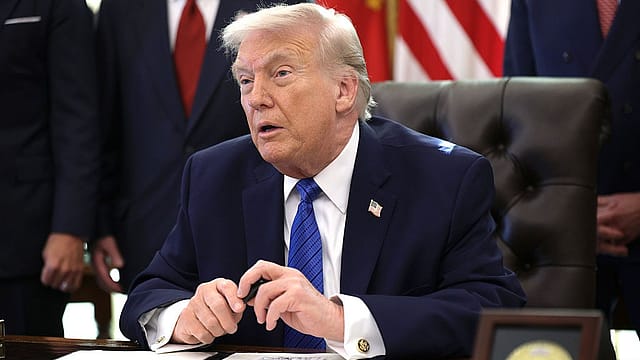
In a rare bipartisan move, the US Senate has approved a resolution directing President Donald Trump to remove American military forces from any hostilities involving Iran. The vote underscores growing congressional concerns over presidential war powers and the risk of further escalation in the Middle East.
Bipartisan Support Pushes Resolution Through Senate
The Senate passed the resolution on Tuesday by a 50-48 vote, marking an unusual rebuke of the Trump administration's military authority. According to CNN, Republican Senators Rand Paul, Susan Collins, Lisa Murkowski and Bill Cassidy joined Democrats in backing the measure, while Democratic Senator John Fetterman voted against it.
The absence of Republican Senators Mitch McConnell and Dave McCormick, both of whom had previously opposed similar war powers initiatives, contributed to the resolution's passage.
The vote follows sustained efforts by Democrats in both chambers of Congress to curb the president's ability to engage in military action against Iran without congressional approval. Support for such measures has gradually expanded among some Republicans in recent weeks.

Flood and Fury
04 Sep 2026 - Vol 05 | Issue 36
Devighat, Nepal, August 29, 2026
The resolution had earlier cleared the House of Representatives by a narrow 215-208 margin, with four Republicans joining Democrats in support.
Following the House vote, Trump criticised lawmakers backing the measure on Truth Social, describing them as "GRANDSTANDERS" and calling their actions "unpatriotic".
White House Dismisses Measure as Symbolic
Despite passing both chambers of Congress, the resolution is a concurrent resolution, meaning it does not require the president's signature and does not carry the force of law.
Reacting to the Senate vote, a White House official downplayed its significance.
"Concurrent resolutions do not go to the president and have no force of law," the official said, according to CNN.
The official also argued that the measure was largely symbolic and suggested its passage was aided by the absence of several Republican senators.
The resolution directs the president to remove US armed forces from hostilities involving Iran. However, the White House maintained that such a requirement was unnecessary because "there are no hostilities from which to remove US forces, as hostilities terminated with the ceasefire on April 7th".
A Democratic aide involved in advancing the measure disputed that interpretation, arguing that the resolution would be binding and that any disagreement over its impact would likely be settled through legal channels.
Debate Over War Powers Continues
The Senate has now voted ten times on Iran-related war powers measures since the beginning of the year, according to CNN.
An earlier Senate-backed proposal advanced last month but has yet to receive a final vote as Democratic lawmakers continue working to build sufficient support for passage.
Even as diplomatic contacts between Washington and Tehran continue, several Democratic senators have maintained pressure for stronger congressional oversight of any future military action involving Iran.
The latest resolution reflects the ongoing debate in Washington over the balance of authority between Congress and the president when it comes to military engagement abroad, particularly in the Middle East.
(With inputs from ANI)