US-Iran Peace Deal Explained: Why Israeli Expert Calls It ‘Another 60 Days of Ceasefire’
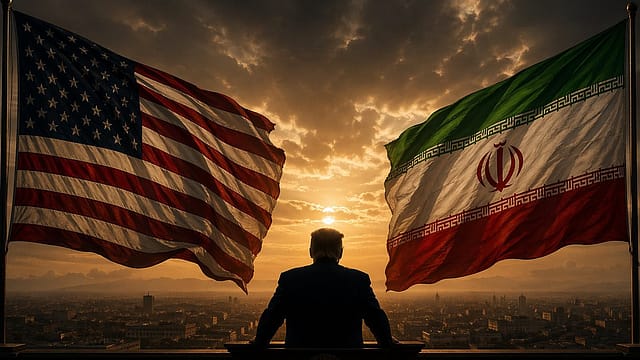
A major diplomatic breakthrough between the United States and Iran has been announced, with US President Donald Trump declaring that the agreement would bring “peace and security” to West Asia and help reopen the strategically vital Strait of Hormuz.
However, not everyone is convinced that the agreement represents a lasting peace settlement.
Sagiv Steinberg, CEO of the Jerusalem Center for Security and Foreign Affairs (JCFA), has questioned the substance of the deal, describing it as a short-term arrangement rather than a genuine peace accord.
Why Is the Deal Being Questioned?
Speaking to ANI, Steinberg argued that the agreement appears to be temporary in nature.
"As far as I can see it is not a peace deal, it is another 60 days of ceasefire."

Greening the Future
23 Jul 2026 - Vol 05 | Issue 30
Securing a sustainable India
He noted that the full text of the agreement has not yet been released publicly, making it difficult to assess its long-term implications. According to him, both Washington and Tehran may be presenting different interpretations of what has been agreed.
Steinberg suggested that observers should wait until the official signing ceremony and publication of the deal before drawing firm conclusions.
What Are the Main Criticisms?
Steinberg contended that the objectives behind the conflict were not achieved through the agreement.
"If we take what the Iranians are saying now and the feeling which is coming from Washington about this agreement-- is that nothing was achieved in the goals of the war that the US started. The Iranian people didn't get the freedom, didn't get their help. We remember, President Trump promised them help is on the way. It got even worse. The Iranians can now, if the agreement is true, can now rebuild and rebuild the proxies. The Hezbollah, the Houthis, they can rebuild their gain in Iraq and in Syria. And that's a huge problem."
According to Steinberg, the deal could potentially allow Iran and its regional allies to recover politically, financially and militarily after a period of confrontation.
Concerns Over Iran’s Nuclear Programme
One of Steinberg’s strongest criticisms relates to the nuclear issue, which has been at the centre of tensions between Tehran and Washington for years.
"There wasn't any solution for the nuclear issue. Nothing was dealt as we can see with this deal. And as far as we can tell, it's a ceasefire for 60 days in order to allow President Trump to get closer to the elections."
His comments reflect concerns among some security analysts that the agreement may not include significant new restrictions or long-term arrangements regarding Iran’s nuclear activities.
A Warning About Regional Stability
Steinberg also expressed concern about the broader implications for West Asia.
"I don't think it's a good day for the Middle East. It's a bad day for the Middle East because Iran got everything it wanted. They will get no deal about the nuclear industry. They will get a lot of money in order to revive a proxies and an infrastructure. And I think It won't give the Middle East any stability."
His assessment contrasts sharply with the optimism expressed by Washington, highlighting the divisions that remain over how the agreement should be interpreted.
What Has Been Announced So Far?
President Trump announced the agreement on Sunday through his Truth Social platform.
"The deal with the Islamic Republic of Iran is now complete," US President Donald Trump announced on Sunday on his Truth Social platform. "Ships of the world, start your engines. Let the oil flow!"
The agreement is expected to ease tensions around the Strait of Hormuz, one of the world's most important energy transit routes.
What Happens Next?
Iran's Deputy Foreign Minister for Legal and International Affairs, Kazem Gharibabadi, has confirmed the agreement and outlined conditions for future negotiations.
According to Iran's state-affiliated Press TV, the official signing ceremony is scheduled to take place in Switzerland on Friday. Following the signing, the Memorandum of Understanding will be made public.
Iran has indicated that it will enter a proposed 60-day negotiation period for a broader and more permanent agreement only after verifying that the United States has fulfilled commitments related to ending hostilities, lifting the blockade and releasing Iranian assets.
The Bigger Picture
The upcoming signing and publication of the agreement are expected to provide greater clarity on its scope and durability. For now, supporters view the development as a significant diplomatic breakthrough, while critics such as Steinberg see it as a temporary pause in tensions rather than a comprehensive peace settlement.
Whether the agreement evolves into a lasting framework for stability or merely serves as a short-term ceasefire remains one of the key questions facing the region in the weeks ahead.
(With inputs from ANI)