US Deploys B-52 in Operation Epic Fury as Israeli Strikes Kill Health Workers in Lebanon
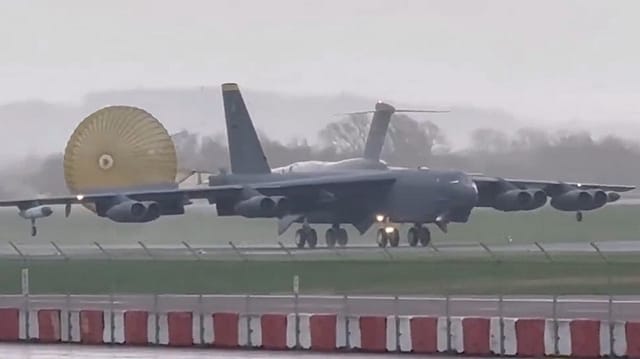
The United States Central Command said a B-52 Stratofortress bomber of the US Air Force took off for a night mission as part of Operation Epic Fury, aimed at "eliminating threats" posed by the Iranian "regime" and preventing the Persian Gulf country from rebuilding its capabilities in the future.
CENTCOM said strikes from US forces continue to be unpredictable, dynamic, and decisive.
Amid the escalating hostilities, the Keir Starmer government in the United Kingdom is also considering deploying thousands of interceptor drones to the Middle East, according to a report by The Telegraph published on Saturday.
The newspaper indicated that UK defence officials are evaluating the possibility of redirecting cutting-edge equipment initially intended for Eastern Europe to meet new regional demands.
Specifically, military experts are assessing if the "Octopus" interceptor anti-drone system, produced in the UK to support Ukraine in countering Russian threats, could be repurposed to strengthen British protection against Iran's Shahed drones.
What happened at the Bourj Qalaouiyeh healthcare centre during the Lebanon strike?
The humanitarian situation in Lebanon has deteriorated sharply, with the World Health Organization confirming the deaths of 14 health workers in the country's south.
The Director-General of the WHO, Tedros Adhanom Ghebreyesus, described the events as a "tragic development in the escalating Middle East crisis."

Youth Issue 2026
24 Apr 2026 - Vol 04 | Issue 68
50 Portraits of Icons and Achievers
In a statement posted on X on Saturday, Ghebreyesus revealed that 12 medical staff members, including doctors, paramedics, and nurses, were killed during a strike on the Bourj Qalaouiyeh primary healthcare centre late on Friday night.
Lebanon's Health Ministry confirmed the victims were on duty at the facility, which forms a key part of the nation's primary healthcare network, when the strike occurred.
According to the Director-General, this fatal incident followed another attack just hours earlier, where "two paramedics lost their lives in attacks on a health facility in Al Sowana."
Search and rescue teams have continued their efforts to locate missing persons at the sites, while the ministry noted that at least one additional health worker was injured in the Bourj Qalaouiyeh strike.
Ghebreyesus emphasised that these latest casualties are part of a broader pattern, stating that these incidents "highlight the ongoing assault on Lebanon's healthcare system, which is crucial for the populations it serves."
Condemning the violence, the ministry asserted that such actions "contradict international humanitarian law," as medical personnel "should never be attacked or militarised."
The scale of the crisis is reflected in WHO data, which shows that since March 2, the organisation has verified 27 attacks on healthcare in Lebanon, resulting in 30 deaths and 35 injuries.
How many deaths were reported across Lebanon after the wave of Israeli attacks, according to NNA?
The strike on Bourj Qalaouiyeh was part of a broader wave of Israeli attacks early Saturday that, according to National News Agency, resulted in at least 20 deaths across the country.
This intensification of strikes coincides with fierce ground combat between Hezbollah fighters and Israel Defense Forces along the Maroun al-Ras, Bint Jbeil, and Aita al-Shaab axes.
Hezbollah's military wing, the Islamic Resistance, announced it had carried out various operations, including rocket and suicide drone strikes on Israeli positions in the Ya'ara settlement and Khiam.
The current escalation follows Hezbollah's initial rocket launch on 2 March, the first since the November 2024 ceasefire. This move has triggered sustained Israeli airstrikes across southern and eastern Lebanon, as well as Beirut's southern suburbs.
In light of these events, Ghebreyesus called for "urgent action" to de-escalate the crisis and protect the health of people throughout the region, adding that "peace is the best medicine."
(With inputs from ANI)