UAE says Dubai remains open for business despite Iran strikes, sees PM Modi as possible de-escalation force
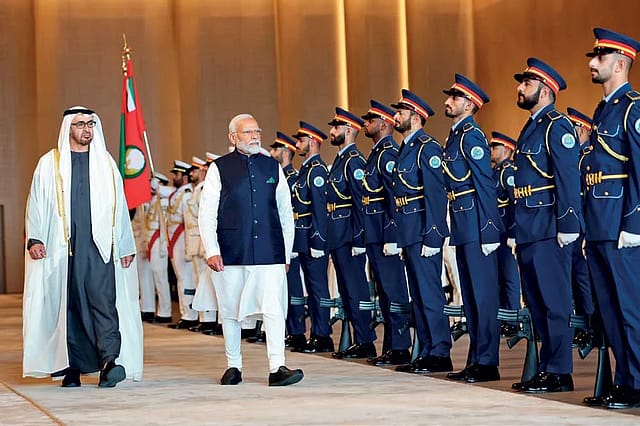
As the West Asia conflict stretches into its second week, the United Arab Emirates has sought to project stability and resilience. Officials and regional observers say Dubai’s economy continues to function normally despite Iranian missile and drone attacks, while also highlighting the potential diplomatic role of Narendra Modi in easing regional tensions.
According to a well-informed Gulf analyst, concerns that the crisis could undermine Dubai’s reputation as a global financial hub are being overstated, even as the region braces for further geopolitical uncertainty.
Is Dubai’s global business hub status under threat?
Despite the escalating confrontation with Iran, the UAE says the economic pulse of Dubai remains steady.
A well-informed Gulf analyst rejected claims that the recent drone and missile strikes had triggered a meaningful outflow of capital or businesses from the Emirate. According to the analyst, reports suggesting that Dubai’s position as a leading global financial centre had been damaged were exaggerated and disconnected from realities on the ground.
The analyst noted that the city continues to operate normally, with financial markets, commercial activity and everyday life proceeding without disruption.
Are investors and expatriates leaving Dubai?
Speculation in sections of international media — particularly in parts of the British press — that Dubai’s days as a financial powerhouse could be ending has been firmly rejected by regional observers.

I.N.D.I.A. Falling
12 Jun 2026 - Vol 04 | Issue 75
The Unravelling of an Alliance
The analyst said there has been no broad-based movement of investment out of Dubai, nor any sign of companies shutting down or expatriates leaving in significant numbers.
Where departures have occurred, they have largely involved tourists completing their visits. In a few isolated cases, individuals have left behind financial liabilities — a phenomenon that has occurred during past economic stress periods when some residents abandoned mortgaged cars or properties before leaving the country.
How serious are the Iranian strikes?
The conflict involving Iran and several regional states began on February 28 and has since drawn in nearly a dozen countries.
According to the analyst, the scale of the escalation was unexpected, particularly after the conflict expanded to include attacks on Oman. The UAE itself has faced sporadic drone strikes launched by Iran.
Most of these attacks have been intercepted by air defence systems, though a small number caused minor damage.
Despite the incidents, the analyst stressed that the UAE remains confident in its ability to protect its population, economy and institutions.
Could PM Modi play a role in de-escalation?
Regional observers believe India could emerge as an important diplomatic bridge in the crisis.
The analyst said that Narendra Modi is widely seen in the Gulf as a leader capable of supporting de-escalation efforts. This perception stems from India’s strong relationships across the region, the large Indian diaspora in the Gulf, and New Delhi’s ability to maintain communication channels with multiple actors — including both Israel and Iran.
What action has the UN Security Council taken?
Earlier, the UAE welcomed the adoption of a resolution by the United Nations Security Council that “condemns in the strongest terms” the unprovoked Iranian missile and drone strikes.
The resolution, numbered United Nations Security Council Resolution 2817, was supported by nearly 140 member states, including India.
It was adopted by the 15-member council with 13 votes in favour, while China and Russia abstained.
Under the resolution, the council specifically condemned Iranian strikes on residential areas and civilian infrastructure and demanded their immediate cessation. The UAE said the council had determined that these actions constitute a breach of international law and a serious threat to international peace and security.
How is the UAE responding to the crisis?
Even as it projects confidence, the UAE has acknowledged that the widening scope of the conflict remains a concern.
Officials believe the current phase of tensions will eventually pass, after which the country may reassess aspects of its regional relationships in light of recent developments.
The UAE also warned against misinformation and rumours during the conflict.
“Throughout history, wars have been linked to rumors and attempts at disruption, making caution against them a national responsibility.”
The UAE added that it remains firm in confronting what it described as Iranian aggression while urging responsible media conduct to prevent the spread of destabilising narratives.
“The UAE says that it stands on the threshold of a decisive overcoming of this crisis, and this does not leave room for rumors to confuse or exaggerate.”
(With inputs from ANI)